Space-conscious shared-kitchen bakers
If the mixer must be put away after each use, its dimensions, weight and tool storage matter alongside the bowl size. Leave room to use it without occupying a shared worktop permanently.


In a shared kitchen, start with a mixer that fits the agreed storage space and has a cleaning routine everyone can manage. Check its supplied tools and stated pastry capacity against the shortcrust batches you make; a compatible pastry beater is an option for frequent use, while a larger machine is worth the extra space and lifting only when its particular capacity meets your needs.
If the mixer must be put away after each use, its dimensions, weight and tool storage matter alongside the bowl size. Leave room to use it without occupying a shared worktop permanently.
If you regularly make pies, tarts, scones or biscuits, pay particular attention to the supplied beater, available controls and whether a pastry-specific accessory fits the exact mixer.
If several people rely on one mixer for larger bakes, compare stated pastry-flour capacities as well as bowl sizes. A heavier machine also needs a storage place that everyone agrees on.
For shortcrust in a shared kitchen, check the tool and batch capacity first, then make sure the machine can be stored, moved and cleaned between users.
| Concern | What to check | Who this matters to |
|---|---|---|
| Shortcrust mixing | Identify the supplied beater and available low-speed or pulse controls. For a separate pastry beater, confirm compatibility with the exact mixer. | When I make shortcrust regularly, I want a tool and mixing routine suited to working cold butter into flour without unnecessary handling. Around 31% of consumers would put this need first. |
| Space and storage | Measure the appliance and its storage spot, including clearance to raise the head; consider its weight if it must be moved. | If I have to clear the worktop for other users, I need a mixer I can put away and retrieve comfortably. This would be the first concern for around 25% of consumers. |
| Cleaning between uses | Check which individual parts are dishwasher-safe and how the bowl, tools, controls and surrounding worktop will be cleaned. | When someone else needs the kitchen next, I want a practical way to hand over clean equipment, particularly where allergens need managing. Around 25% of consumers would prioritise that handover. |
| Batch capacity | Compare stated pastry-flour capacity, not bowl volume alone, and check whether any accessories you intend to use fit the model. | If one machine serves larger bakes or several people, I need its pastry capacity to match those batches. That would be the primary need for around 19% of consumers. |
A wattage figure alone cannot tell you how the exact mixer and tool will handle your pastry recipe. The listed mixers have different tools, controls and stated capacities, without a common independent shortcrust test.
Compare the supplied beater, compatible accessories, pastry-flour capacity and physical dimensions before using wattage as a secondary specification.
KitchenAid specifies its 5KSMTHPBSS pastry beater for 4.3 and 4.7 L tilt-head mixers; the brand name alone does not establish compatibility with another model.
Match the accessory code to the exact mixer model, bowl size and head configuration before buying.
An incompatible attachment may need to be returned or replaced before you can use it.
A dishwasher-safe bowl or tool does not clean the mixer controls or shared worktop. For a kitchen used by a food business, GOV.UK also calls for food areas and equipment to be cleaned and disinfected after contact with raw food.
Agree who cleans each part and the surrounding surfaces after use. Where food is supplied through a business, follow a cleaning process appropriate to that operation.
For example, Kenwood GB lists the Chef KVC3100W at 7.52 kg and 38 × 28 × 30 cm. Its stated 1.3 kg pastry-flour capacity may be useful for larger batches, but those dimensions and weight matter if it must go back into a cupboard.
Measure both the shelf and the worktop, allow space to raise the mixer head, and agree whether a larger machine can stay in place.
Kenwood has relevant options at different sizes, including the Multi Tasker KHC30.000WH and Chef KVC3100W. Compare the particular model rather than assuming the same capacity or storage needs across the range.
KitchenAid is relevant if you want to consider a pastry-beater accessory for a compatible tilt-head mixer.
The Bosch MUMS2VM40G is worth considering when cupboard dimensions and a conventional set of mixing tools are central to the choice.
These stand mixers offer different starting points for shortcrust and shared-kitchen use. Compare each model's stated pastry capacity, tools and cleaning instructions with your routine; a larger bowl or a longer tool list does not settle those questions on its own.
 No image available
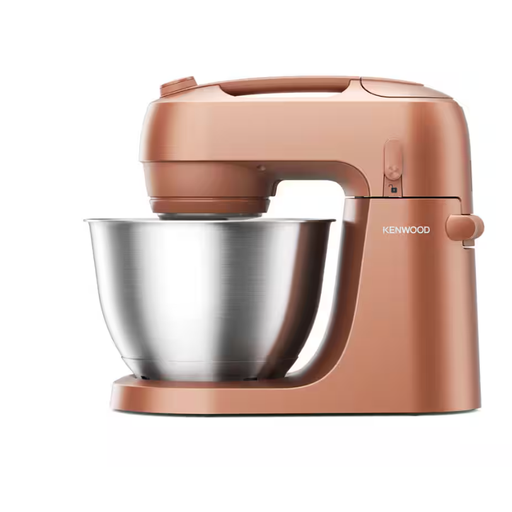
Consider this model if a mixer that can be put away between shared-kitchen uses suits your routine. Its product name specifies three bowl tools and a 4.3 L bowl; check which tool your shortcrust recipe calls for and confirm the pastry batch capacity.
 No image available
If you want one mixer for shortcrust and wider baking, check this model's stated pastry-flour capacity against your usual batch before choosing it. Plan an agreed storage place if the machine will not stay on the worktop.
 No image available
For a mixer you intend to store after making pastry, measure the available shelf and worktop space against the appliance dimensions. Check the supplied beater and the cleaning instructions for the bowl and tools before setting a shared-use routine.
 No image available
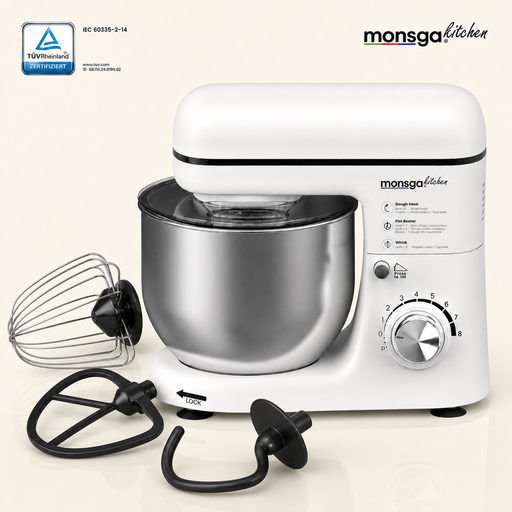
If several people will use the mixer, check that its pastry batch capacity suits their recipes and that the appliance itself fits the storage space. The product name specifies eight speed settings, a whisk, beater, dough hook and splash guard; confirm which tool suits your shortcrust method.
 No image available
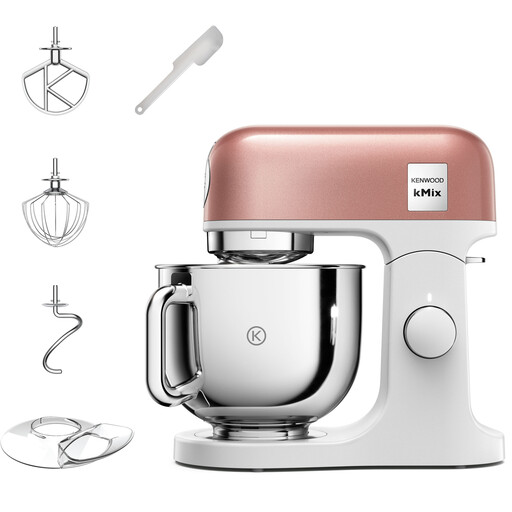
If this mixer will move between a cupboard and a shared worktop, check its dimensions and whether its weight is manageable for the people using it. Confirm the supplied pastry-suitable tool, batch capacity and cleaning instructions before buying.
No: it is an optional accessory, not a requirement for every shortcrust recipe. KitchenAid says its 5KSMTHPBSS beater is designed to work cold butter into dough, but it fits specified 4.3 and 4.7 L tilt-head mixers. Otherwise, check the mixer's supplied beater, controls and recipe guidance.
No. KitchenAid specifies the 5KSMTHPBSS for its 4.3 and 4.7 L tilt-head mixers. Match the accessory code, bowl size and mixer model before purchasing it.
For food businesses, GOV.UK says work surfaces, utensils, dishes and cooking equipment need regular cleaning, and food areas and equipment should be cleaned and disinfected after contact with raw food. A cleaning schedule should identify what is cleaned, how often and which products are used; dishwasher-safe mixer parts do not replace those wider steps.
Yes, consider who will use the equipment and how to avoid cross-contact between recipes. Where food is supplied through a food business, GOV.UK guidance calls for allergen information and effective allergen management during preparation. For a private household kitchen, agree practical cleaning and ingredient-handling arrangements with the other users rather than assuming those food-business duties apply.