Small-batch breakfast makers
If you usually make batter for one or two people, the deciding question is whether the chosen beater can mix your usual quantity. A stand mixer may take up more space than this task warrants.


If pancakes are your only regular mixing task, consider a manual batter mixer and dispenser before buying a stand mixer. A compact stand mixer makes more sense if you also make cakes, whisked mixtures or dough; choose a larger format for recurring heavier batches, not for bowl size alone. For any stand mixer, check whether its tool can mix the small quantity of batter you actually make.
If you usually make batter for one or two people, the deciding question is whether the chosen beater can mix your usual quantity. A stand mixer may take up more space than this task warrants.
If you also make cakes, whipped mixtures or dough, a stand mixer has more than one potential use. Check whether you can store and retrieve it comfortably for a short breakfast task.
If larger batches or heavier doughs are regular tasks, you have a reason to consider greater capacity beyond pancake batter. You still need to check small-batch mixing separately.
Consider it when: You want a powered mixer for pancakes and other baking, but have limited storage space.
Trade-off: A compact body or smaller bowl does not establish that the beater reaches a one- or two-portion batter.
Consider it when: Larger batches or heavier mixtures are recurring tasks alongside pancakes.
Trade-off: Its capacity and storage demands may be disproportionate if small pancake batches are your main use.
Consider it when: Pancake batter is your only regular mixing job and you want to mix and pour from one tool.
Trade-off: It does not take the place of powered mixing for cakes or dough.
| Concern | What to check | Who this matters to |
|---|---|---|
| Mixing a small batch | Ask about the minimum workable quantity of thin batter for the exact model, bowl and supplied mixing tool. | If I make batter for one or two people, I need the tool to reach and incorporate that amount. Around 50% of consumers put small-batch mixing first. |
| Space and handling | Compare assembled dimensions, weight and clearance needed to raise a tilt head. | When I have to put the mixer away after breakfast, lifting it and finding room for it matter most. Around 30% of consumers prioritise space and handling. |
| Use beyond pancakes | Identify the other recipes you will regularly make and confirm which tools come with the exact model. | If I also bake cakes or make dough, I want the appliance to serve those tasks rather than buying it just for pancakes. Around 20% of consumers make broader use their primary concern. |
A bowl rating describes capacity, not whether the beater reaches a small amount of pancake batter. Even a compact machine may leave your usual portion below the tool.
Ask the manufacturer or retailer about thin batter in the exact model and bowl, or check the model’s instructions before relying on it for a one- or two-portion batch.
A larger machine brings more capacity to store and handle without establishing that it will mix a smaller pancake batch effectively.
Choose that format for genuinely recurring larger batches or heavier mixtures; assess your smallest regular batch separately.
If batter is the only regular task, a manual mixer and dispenser offers a different way to mix and pour without committing to a countertop stand mixer.
List the other recipes you would actually use a stand mixer for before deciding between the two formats.
A picture or generic product title does not establish which market an individual appliance is supplied for or what documentation accompanies it.
Confirm the seller supplies the exact model for Great Britain and check the accompanying product documentation before ordering.
Kenwood’s Go KZM35.000GY is one compact example to compare when worktop space matters.
KitchenAid offers tilt-head mixers in small-to-medium bowl capacities as well as bowl-lift formats associated with heavier, more frequent mixing.
Bosch’s Series 2, 4 and 6 give buyers different physical scales and bowl capacities to consider.
These stand mixers are options to compare if you expect uses beyond pancakes. Check the minimum workable batter quantity for the exact model before choosing one primarily for small batches.
 No image available
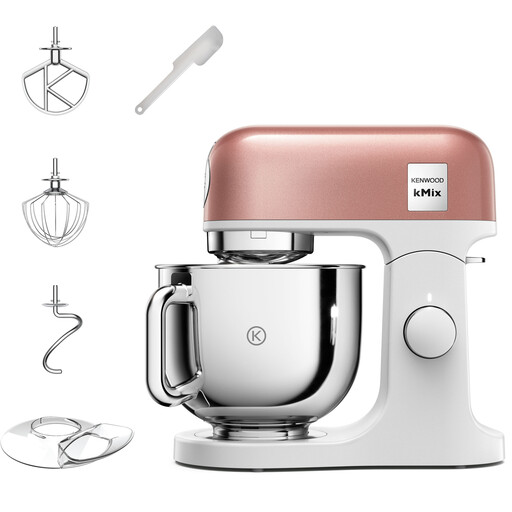
Consider this model if you want a stand mixer for tasks beyond pancake batter and can accommodate its bowl. The product name specifies a 4.3L bowl, a 1000W rating and three bowl tools.
Confirm whether its mixing tool reaches your usual small batter quantity, and check the assembled size against your storage space.
 No image available
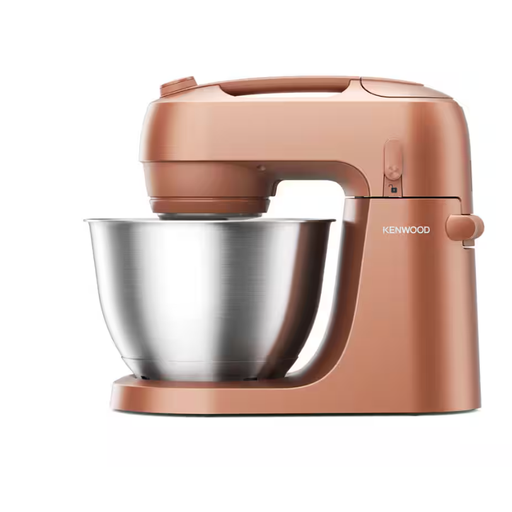
Consider this model if bowl access and uses beyond pancakes are important to you. Check the supplied tools and whether your usual batter quantity reaches the appropriate one.
If you will store the mixer between uses, check its weight and the clearance needed to raise the head.
 No image available
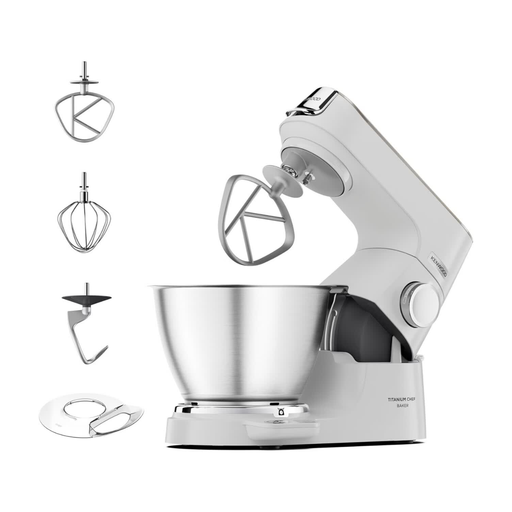
Consider this model if storage and other mixing tasks both matter. Compare its dimensions and handling with the space available in your kitchen.
Before relying on it for pancakes for one or two people, confirm the minimum workable batter quantity for this exact variant.
 No image available
Consider this model if you plan to use a stand mixer for baking beyond pancakes. Before choosing it for a short breakfast task, consider how often you would need to move and store it.
Confirm the minimum workable quantity of thin batter for the exact model rather than relying on a maximum capacity figure.
 No image available
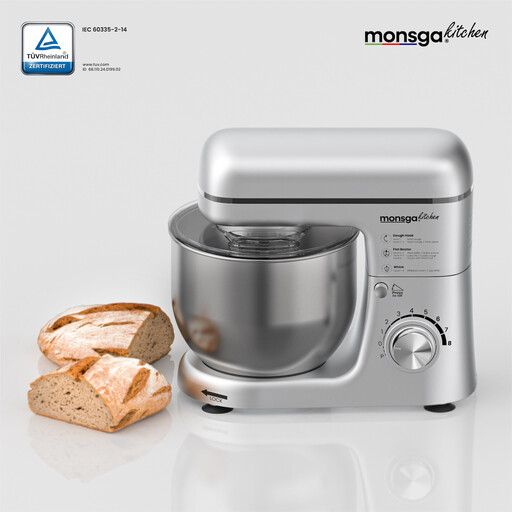
Consider this model if you want mixing and whisking options for recipes beyond pancakes. Its product name specifies a 5.0L stainless-steel bowl, eight speed settings, a whisk, dough hook and splash guard; the 1000W figure is labelled peak power.
Check its assembled dimensions and whether the appropriate tool reaches your normal small batter quantity.
Not necessarily: if pancakes are your only regular mixing task, a manual batter mixer and dispenser is worth considering. A stand mixer is easier to justify when you also expect to use it regularly for cakes, whisked mixtures or dough.
A compact tilt-head format is a starting point when storage and access to the bowl matter, while a larger format is more relevant to recurring heavier or larger batches. KitchenAid UK associates its bowl-lift range with frequent, heavy use; neither format alone establishes performance with a small pancake batch.
Ask the manufacturer or retailer about the minimum workable amount of thin batter for the exact mixer, bowl and tool you intend to use. A bowl’s maximum capacity is not an answer to that question.
Confirm that the seller supplies the exact model for Great Britain and check what product documentation accompanies it. A listing’s image or generic title cannot establish the status of an individual appliance.