Small-batch bakers with limited space
If you make a modest household batch and put the mixer away afterwards, compare your recipe quantity, the supplied tools and the machine’s dimensions before choosing by bowl size.


For small batches of spiced cookie dough, choose a stand mixer only after checking that its supplied tool suits your recipe, the attachment can reach your usual quantity and the machine fits your storage space. A larger bowl may be useful if you also make bigger doughs or want features such as built-in weighing, but bowl volume alone does not establish how well a mixer handles a modest batch.
If you make a modest household batch and put the mixer away afterwards, compare your recipe quantity, the supplied tools and the machine’s dimensions before choosing by bowl size.
If cookies are your main use but other doughs are on the menu, check the exact model’s dough tool, stated capacity and instructions. A wattage rating on its own cannot tell you how it will mix your recipe.
If you also make cakes or bread, weighing features, supplied tools and optional attachments may matter more to you than compact storage. Check what comes with the particular variant you plan to buy.
Start with the quantity you normally mix and the space you have; then consider thicker doughs and any other baking you expect the mixer to handle.
| Concern | What to check | Who this matters to |
|---|---|---|
| Small batches and storage | Compare your recipe quantity with the model’s pastry or dough guidance, and measure the space where you will use and store it. | If cupboard space is tight and I usually make one modest batch, I need a mixer that fits my kitchen without overlooking how little dough I mix. Around 42% of consumers put small-batch and storage fit first. |
| Thicker dough | Confirm the supplied dough tool and the manufacturer’s stated pastry or dough capacity; follow the model’s speed instructions. | When my spiced-cookie dough gets thick, I want to know which supplied tool and quantity guidance apply to my recipe. For around 33% of consumers, handling thicker dough is the primary concern. |
| Other baking tasks | Check the in-box tools, weighing features and compatibility of any attachments you expect to use. | If I also bake cakes or bread, I need the mixer’s other functions to justify the space it takes up. Versatility comes first for around 25% of consumers. |
Bowl volume and maximum dough capacity do not tell you the smallest amount an attachment can reach. That distinction matters when you make just one batch of cookies.
Compare your usual recipe with the exact model’s capacity guidance, then ask the manufacturer about minimum working quantities if the guidance does not settle the question.
A rated wattage is not a comparable test of how different mixers handle thick cookie dough.
Check the supplied tool, stated pastry or dough capacity and manual instructions for the model you intend to use.
A mixer intended for use in the UK needs the appropriate plug and fuse. Electrical Safety First advises checking these when buying a hand or stand mixer.
Confirm the plug and fuse for the exact product before purchase, particularly if it is offered by a third-party seller.
An advertised attachment range does not mean every accessory is supplied with the base mixer.
Read the in-box list for the exact model and variant, and check compatibility before planning a recipe around an optional tool.
These product lines illustrate different specifications worth checking; the brand name alone does not establish suitability for your smallest recipe.
Kenwood’s Go KZM35.000RD and Titanium Chef Baker KVC65.001WH offer different approaches to space and capacity.
The Bosch MUMS2VM40G and MUM58259GB provide bowl and dough-capacity specifications for comparison.
The Artisan 5KSM125 is a 4.7 L tilt-head option for bakers interested in supplied mixing tools and optional attachments.
These stand mixers offer different bowl sizes and variants to consider for spiced-cookie baking. Check the tools supplied with the exact listing and whether your usual batch quantity suits the machine before choosing.
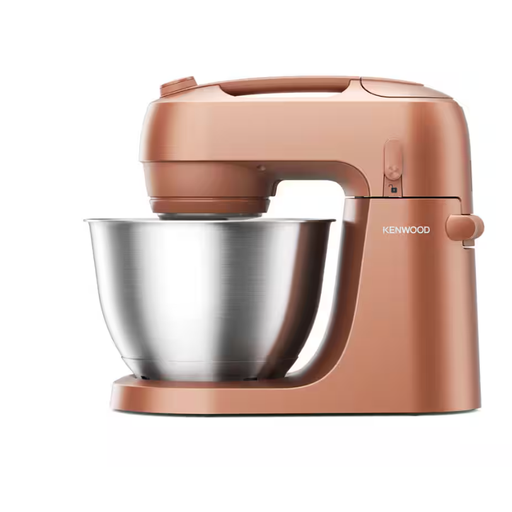 No image available
If storage space is a priority, check this Red Clay variant’s dimensions and supplied tools against your kitchen and recipe quantity.
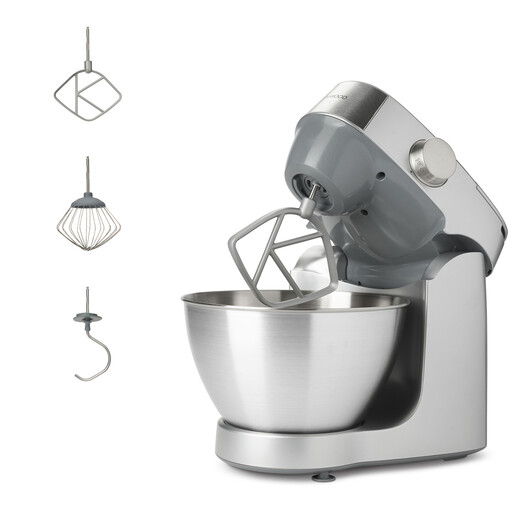 No image available
For cookie dough alongside other baking, check whether the three bowl tools listed for this variant suit your recipes. Its product name specifies a 4.3 L bowl and 1000 W rating; neither figure establishes a minimum working quantity.
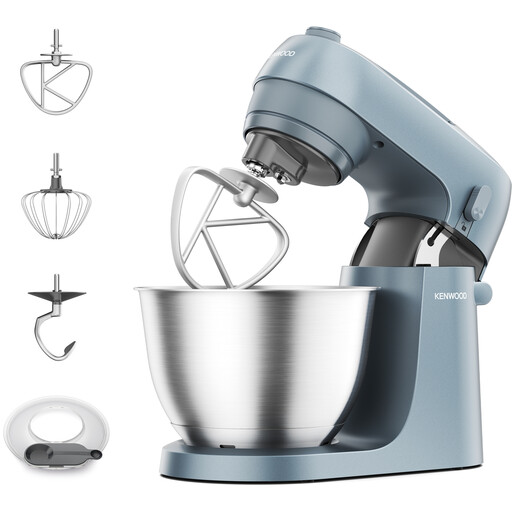 No image available
If you are considering a Go mixer for limited counter space, confirm this Blue model’s dimensions, supplied tools and working quantities for your cookie recipe. Do not apply specifications for a different Go model to KZM35.000GY.
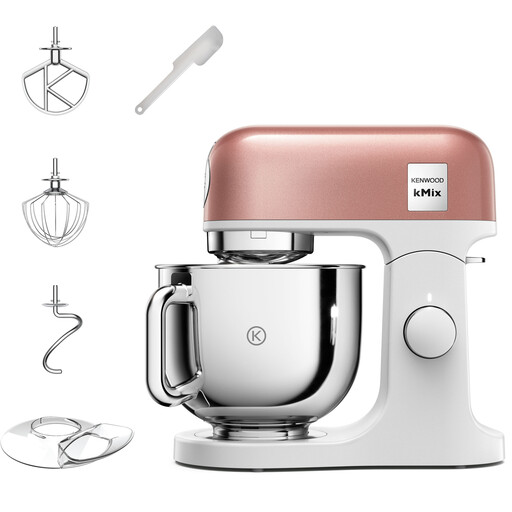 No image available
If the mixer will serve other baking tasks as well as cookies, check the supplied tools and the space this variant needs. Confirm that its attachment can work with the amount of dough you normally make.
Not automatically: the attachment also needs to reach the amount you make. Kenwood GB states a 0.5 kg pastry-flour capacity for the Go KZM35.000RD, but that figure is not a guaranteed minimum or a test of every cookie recipe. Check guidance for the exact model and your usual quantity.
No: wattage alone is not a comparable cookie-dough performance measure. Check the supplied dough tool, the exact model’s stated capacity and its instructions before deciding whether it suits your recipe.
Unplug it before cleaning, as Electrical Safety First advises, and follow the instructions for your exact model. Check which individual tools may go in the dishwasher rather than assuming all mixer accessories have the same care requirements.
Check that the exact appliance has a suitable UK three-pin plug and fuse; Electrical Safety First also advises registering it so you can be contacted about recalls. If you are buying a variant intended for another market, confirm its suitability before use.