Small-batch bakers short on space
If you usually make one small sponge or occasional cupcakes, the mixer must fit where you will use or store it. Compare its full dimensions as well as its bowl capacity.


Choose around the smallest sponge batch you make regularly, rather than an occasional large bake. A compact mixer is a sensible starting point when worktop and storage space are tight; if you also make larger cakes, consider a standard-size mixer only after confirming that a smaller bowl fits the exact model. In either case, check how its whisk and beater handle your usual quantity, not just the bowl capacity.
If you usually make one small sponge or occasional cupcakes, the mixer must fit where you will use or store it. Compare its full dimensions as well as its bowl capacity.
If you alternate between small sponges and larger family cakes, a standard-size mixer with a smaller bowl made for the exact model may give you more flexibility. Check bowl compatibility and tool reach before choosing that route.
If you also expect to make dough or use food-preparation attachments, consider those tasks alongside sponge mixing. Check which accessories fit the model and where you would keep them.
Start with the size of your regular sponge batch and the space available. Then check mixing coverage and everyday access before deciding whether you need capacity or accessories for other recipes.
| Concern | What to check | Who this matters to |
|---|---|---|
| Bowl size and fit | Compare the exact model’s bowl capacity and full dimensions with your usual recipe and storage space. | If cupboard space is tight, I want a mixer I can put away without choosing a bowl around rare, larger bakes. Around 33% of consumers put compact fit and small-batch scale first. |
| Whisk and beater reach | Check the supplied tools and look for model-specific sponge tests that assess batter left on the bowl sides. Which? counts how often its testers need to stop and scrape. | When I make a small sponge, I want the tools to combine my usual quantity without repeated stops to gather batter from the sides. Mixing coverage comes first for around 33% of consumers. |
| Access and cleaning | Inspect how the bowl and tools are removed, and follow the exact accessory’s cleaning instructions. | For an occasional weekday bake, I need to reach the bowl easily and clean up without making the mixer a chore to use. Around 20% of consumers prioritise that convenience. |
| Room for other uses | Check whether the bowls and attachments you would actually use fit the exact model, and whether they are supplied or optional. | If small sponges are only part of my baking, I want to know the mixer can accommodate the other recipes or preparation tasks I have in mind. Roughly 14% of consumers put that flexibility first. |
A motor rating does not tell you whether the whisk or beater reaches a small quantity of batter. Which? assesses sponge mixing by recording how often testers must scrape the bowl sides.
Compare the exact bowl-and-tool combination, and seek model-specific sponge results where available.
Extra bowl capacity gives room for larger recipes, but does not establish how well a whisk reaches a small sponge mixture. KitchenAid UK offers a separate 3 L bowl for specified tilt-head models, illustrating why the exact bowl-and-mixer pairing matters.
If you want a second bowl, confirm its part number and compatibility with both the mixer and the tools you intend to use.
A second bowl also needs somewhere to be stored.
KitchenAid UK and Kenwood GB publish cake and egg-white maximums for particular compact models. Those limits do not show how evenly the same models mix your smallest recipe.
Use the stated maximum to assess larger bakes, then check small-batch tests or a demonstration for the quantity you normally make.
Additional tools and bowls may suit broader food preparation, but each needs a practical place in your baking routine and kitchen.
List the tasks you expect to do regularly, then check the included accessories and compatible extras for the exact mixer.
Consider its 3.3 L tilt-head format if space is the main constraint, or investigate a compatible smaller bowl if you also want a standard-size mixer.
Kenwood GB lists a 4 L bowl for the Go KZM35.000GR, while its Titanium Chef Baker range offers a different route for broader baking.
The Series 2 is worth considering if you want a compact mixer and may also use compatible food-preparation accessories.
Consider its stand-mixer range if you are assessing a conventional larger-bowl format rather than choosing primarily for the smallest batches.
These Kenwood Go, Prospero+ and kMix listings give you models to consider for sponge preparation. Compare each model’s bowl, supplied tools and fit with your usual batch before choosing.
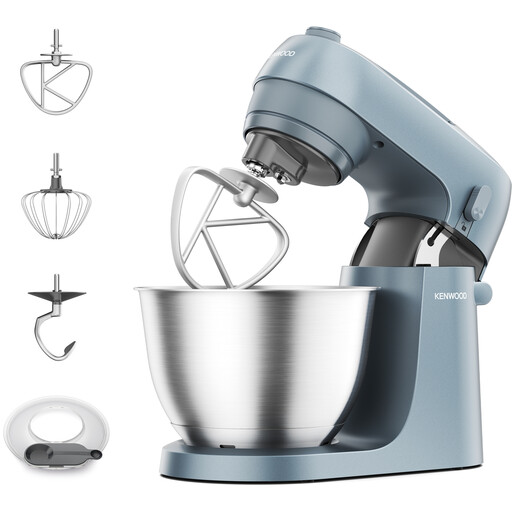 No image available
For regular small sponge batches in a kitchen with limited space, compare this model’s dimensions with where you would keep it. Check the supplied tools and whether they reach your usual batter quantity.
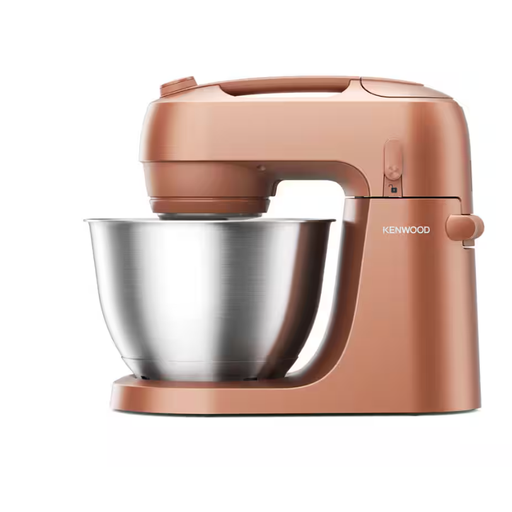 No image available
If storage clearance matters for your small-batch baking, check this model’s full dimensions against the available space. Confirm its bowl size and how the supplied whisk and beater handle your smallest recipe.
 No image available
If you make small sponges as well as larger recipes, assess whether this model’s bowl works for the quantities you actually use. Its listing identifies a 4.3 L bowl and a 1000 W rating; check tool reach separately for small batches.
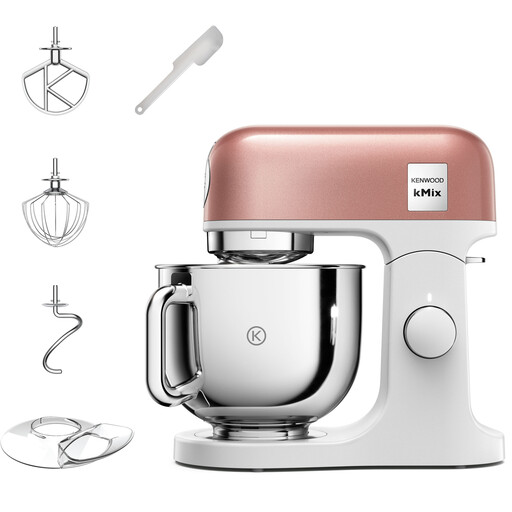 No image available
For a mixture of small sponges and other bakes, compare this model’s bowl size with your usual recipes. Confirm which whisk and beater are supplied and whether they reach a small quantity effectively.
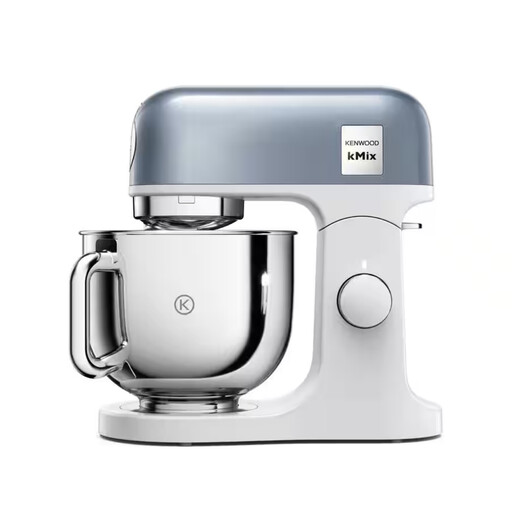 No image available
If sponge cake is one of several recipes you plan to make, compare this model’s bowl with both your smallest and larger batches. Check the exact variant’s supplied tools and look for small-batch mixing results rather than relying on bowl capacity alone.
Start with your regular recipe size and the space you have. A compact 3.3–4 L format is worth considering, but capacity is not a measure of how well the tools reach a small mixture. If you also make larger cakes, check whether a smaller bowl is compatible with the exact standard-size mixer you are considering.
No particular head layout guarantees good small-batch mixing. KitchenAid UK notes that a tilt-head gives access to the bowl and beater; whichever layout you choose, check that you can add ingredients, remove the bowl and scrape its sides comfortably in your available space.
Look for tests of the exact mixer and a sponge batch close to yours, rather than judging by wattage or advertised mixing action alone. Which? makes a sponge in each mixer it tests and counts how often testers stop to scrape the sides. Follow your recipe’s mixing stages and scrape down when needed rather than simply running the mixer longer.
Check each part’s instructions for the exact model. Bosch describes accessories for its MUMS2VM40G as generally dishwasher-safe, while KitchenAid UK identifies its specified 3 L stainless-steel bowl as dishwasher-safe; neither statement establishes the cleaning instructions for every mixer tool.