For a family sweet tart, choose a stand mixer whose bowl fits your usual batch and whose beater suits your recipe. A medium tilt-head model offers straightforward bowl access for ordinary batches; a larger bowl-lift model makes more sense if you regularly double recipes. A dedicated pastry beater is optional for methods that allow a standard beater, but any accessory must fit the exact mixer.
Who is this for?
Family tart bakers
If you usually make one tart, focus on a bowl that accommodates your recipe and a suitable beater rather than capacity intended for repeated large batches. KitchenAid UK’s pâte sucrée method allows a standard beater in place of its pastry beater; Tom Kerridge’s sweet pastry method uses a beater to cream butter and sugar.
Frequent batch bakers
If gatherings regularly involve double batches or several bakes, compare larger bowls and model-specific mixture limits. KitchenAid UK suggests considering a bowl-lift mixer for regular double or triple batches, though you will also need room to keep and use it.
Small-kitchen, multipurpose buyers
If the mixer will be stored between bakes or used for other preparation, weigh up bowl access, clearance and tools you will actually use. Kenwood and Bosch offer named models with different bowl sizes and features; check the exact model rather than assuming those features apply across either range.
What matters when choosing?
Start with the sweet-pastry method you use, then size the bowl for your normal batch—not the largest gathering you might host once. Check kitchen clearance and extra functions after those essentials.
| Concern | What to check | Who this matters to |
|---|
| Pastry method and beater |
Check for a standard beater and controllable low speeds. If you want a pastry beater, confirm compatibility with the exact mixer. |
If I cream butter and sugar or cut cold butter into flour, I want the right tool and enough control to stop mixing at the recipe’s cue. Around 36% of consumers put pastry method and beater suitability first. |
| Usual batch capacity |
Compare bowl volume and the exact model’s stated mixture limits with your normal recipe and any regular double batches. |
When I make several tarts for a gathering, I need room for the batches I actually prepare. Around 29% of consumers place their usual batch capacity first. |
| Space and bowl access |
Measure storage and working clearance, including room to lift the head or use attachments above the mixer. |
If I put the mixer away after baking, I need to be able to store it and reach the bowl comfortably. For around 21% of consumers, space and access take priority. |
| Use beyond pastry |
Check the supplied tools and whether features such as a scale or optional attachments match tasks you regularly do. |
I would use the mixer for other baking and preparation, so those functions matter more to me than extra pastry capacity. Around 14% of consumers prioritise wider use. |
Buying pitfalls
-
Choosing by wattage alone
A power rating does not tell you whether the supplied tool matches your sweet-pastry recipe or how its speed settings feel in use. KitchenAid UK’s and Tom Kerridge’s methods specify beater choice and when to stop mixing.
Confirm the beater, speed controls and bowl size for the recipe before comparing power ratings.
-
Assuming every pastry beater fits
KitchenAid UK lists pastry-beater options for different mixer families, so the brand name alone does not establish compatibility.
Match the accessory’s compatibility information to the precise mixer model and bowl format before ordering.
An incompatible separately purchased attachment may need replacing.
-
Buying a large mixer for one occasional tart
A larger bowl-lift format is useful to consider for regular big batches, but its size changes how much room you need. KitchenAid UK describes easier beater access with a tilt-head, while Bosch advises allowing clearance for the mixer and top-connected attachments.
Use your usual recipe volume to choose capacity, then measure the space where the machine will be used and stored.
-
Overlooking guests’ allergies
The mixer choice does not remove the need to know what has gone into a tart or whether ingredients may have come into contact with allergens.
Ask guests about allergies, keep ingredient information available and avoid describing a bake as allergen-free unless you can account for cross-contact. GOV.UK’s allergen guidance addresses food businesses; check the applicable requirements if you sell or cater food.
Brands to consider for sweet-pastry baking
KitchenAid
A range worth comparing if beater choice and mixer format are central to your sweet-pastry plans. KitchenAid UK publishes a pâte sucrée method using either its pastry beater or a standard beater.
- KitchenAid UK lists medium tilt-head bowls of 4.3L and 4.7L/4.8L, alongside a 6.6L bowl-lift model for larger batches.
- A dedicated pastry beater needs to be matched to the exact compatible mixer family; its availability does not make it essential for every recipe.
Kenwood
A kitchen-machine option to examine if you want bowl tools for other baking as well as tart pastry.
- Kenwood GB specifies a 4.6L bowl, K-Beater, whisk and dough tool for the Chef KVC3100W, with a stated flour-for-pastry capacity of 1.3kg.
- Those tools and limits describe the KVC3100W specifically; check the supplied tools and space requirements of any other Kenwood model separately.
Bosch
A range to consider if weighing ingredients as part of wider kitchen preparation appeals to you.
- Bosch GB specifies a 3.9L usable bowl, integrated scale, 1,000W rating and planetary mixing for the MUM5XW49GB.
- Check the exact model’s tools and usable capacity; the scale and specifications of the MUM5XW49GB do not describe every Bosch mixer.
Stand mixers for family tart baking on Joybuy
These stand mixers offer different bowl sizes and supplied-tool combinations to consider for sweet tart pastry. Choose against your usual batch and recipe, and confirm any uncertain tool or speed details for the exact variant.
 No image available
Kenwood Prospero+ KHC29.A0SI, 4.3L, silver
Consider this for ordinary family batches if its mixing beater suits your sweet-pastry method.
The named variant has a 4.3L bowl, a 1,000W rating and three bowl tools. Check its lowest operating speed against your recipe before buying.
View on Joybuy
 No image available
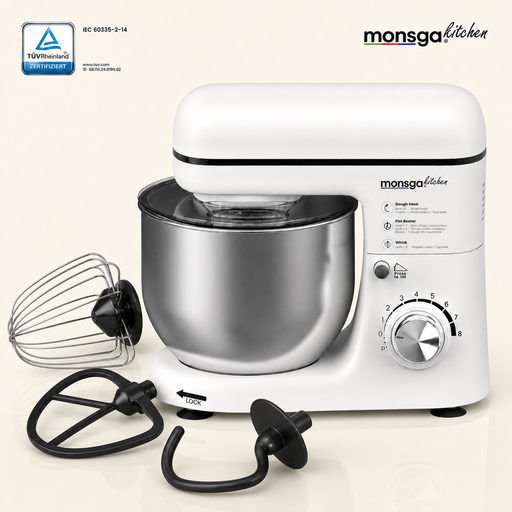
MONSGA SM100, cream white, 5.0L with beater
This variant is worth checking for family batches and recipes using a standard beater.
Its name specifies a 5.0L bowl, eight speed settings, a beater, whisk, dough hook and splash guard. Confirm the lowest operating speed and the mixer’s actual dimensions for your worktop.
View on Joybuy
 No image available
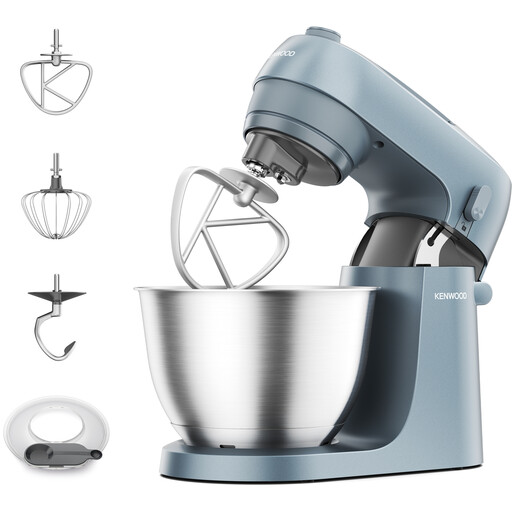
Kenwood Go KZM35.000GY, blue
Consider its compact format if storage matters and you usually prepare smaller pastry batches. A beater is listed for this mixer.
Check whether its 3.5L bowl accommodates your normal recipe, especially if you double it, and confirm the lowest speed needed for your method.
View on Joybuy
 No image available
Honinst 6.5QT tilt-head stand mixer with beater
The larger stated bowl may suit households preparing several bakes; check whether that capacity matches how often you make big batches.
The named mixer has 10 speed settings and lists a beater, whisk and dough hook. Confirm the exact HS-K120-series variant, supplied tools and lowest operating speed before buying.
View on Joybuy
 No image available
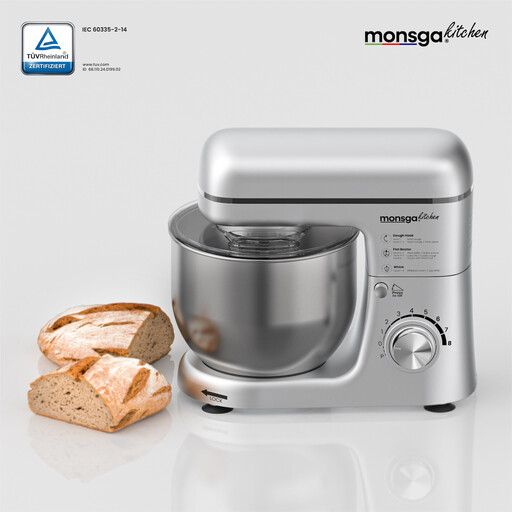
MONSGA SM100, 5.0L with whisk and dough hook
The bowl size may suit a family batch, but confirm that this particular variant includes a standard beater if your sweet-pastry recipe calls for one.
Its name specifies a 5.0L bowl and eight speed settings. Also check the lowest operating speed and the appliance’s dimensions for your kitchen space.
View on Joybuy
Questions about sweet tart pastry
Do I need a dedicated pastry beater?
No: KitchenAid UK’s pâte sucrée method says its standard beater can replace the pastry beater. If you prefer a dedicated tool for a cold-butter method, check its compatibility with your exact mixer and bowl format.
Should I use a dough hook for sweet tart pastry?
Follow the beater specified by your recipe rather than assuming a dough hook is required. KitchenAid UK’s pâte sucrée method uses a pastry or standard beater, while Tom Kerridge’s sweet pastry method creams butter and sugar with a beater before adding flour at reduced speed.
Is a 6.6L bowl-lift mixer necessary for a family tart?
Not if your usual recipe fits a smaller mixer with the right beater. KitchenAid UK presents its 6.6L bowl-lift model for bigger batches and suggests considering bowl-lift capacity when you regularly make double or triple batches; measure your available space as well.
What should I tell guests about allergens in a homemade tart?
Tell guests what ingredients you used and discuss possible cross-contact if anyone has an allergy. GOV.UK’s allergen guidance addresses food businesses rather than private family sharing; if you sell or cater food, check the applicable food-business requirements.


