For an occasional Swiss roll in a shared kitchen, start with a stand mixer that includes a wire or balloon whisk and has a bowl suited to your recipe, then choose a size you can put away between uses. A larger or second-bowl configuration becomes more relevant if you also make varied batches, but it brings more equipment to store and clean. Where allergens need managing or the kitchen is used for a food business, the cleaning routine is part of the decision.
Who needs to consider what?
Swiss-roll sponge bakers
If your recipe whisks eggs and sugar to ribbon stage before the flour is folded in, check that the exact mixer includes a suitable whisk and gives you usable speed control. James Martin Chef describes this whisking step in its Swiss-roll recipe; motor wattage alone does not tell you how a particular batch will turn out.
Bakers with limited shared space
If the worktop must be cleared after baking, measure the intended storage spot and consider the machine’s weight as well as its bowl and attachments. Bosch publishes dimensions and weight for its Series 2 range, providing a more useful starting point for a space check than a general description of a mixer as compact.
People managing shared-use hygiene
If several people use the bowl and tools, agree who cleans, dries and stores each part. Where allergens must be controlled or food is prepared as a business, check how the mixer will fit into the kitchen’s cleaning procedures; the Food Standards Agency highlights preparation and hygiene practices as part of preventing allergen cross-contamination in food businesses.
What matters when choosing?
For a whisked-egg Swiss roll, establish the whisk and recipe quantity first, then check whether the whole machine and its accessories fit your shared storage and cleaning routine.
| Concern |
What to check |
Who this matters to |
| Whisking the sponge |
Confirm that the exact configuration includes a wire or balloon whisk, and compare its stated batch guidance with your recipe’s egg quantity. |
If I make a whisked-egg sponge, I need the right attachment and a bowl that suits the mixture before I fold in the flour. Around 40% of consumers put that whisking need first. |
| Space and storage |
Check the appliance’s dimensions, weight and storage space for its bowl and tools. |
When the worktop belongs to everyone, I need to be able to move the mixer and put it away after baking. Storage is the primary concern for around 40% of consumers. |
| Cleaning between users |
Read the care instructions for each food-contact part and agree who will wash and dry it. |
Where equipment is shared, I need a dependable way to remove residues before the next use, particularly if allergens are managed. Around 20% of consumers place cleaning and cross-contamination control first. |
Buying pitfalls
-
Choosing by wattage alone
A power rating cannot, by itself, establish how a mixer will handle the whisked-egg stage of your Swiss-roll recipe. The attachment, batch quantity and space the machine takes up also affect whether it suits this kitchen.
Check the supplied whisk and the manufacturer’s guidance for your intended batch, then measure the space available for use and storage.
-
Assuming every part can go in the dishwasher
A cleaning claim for one component should not be applied to the bowl, whisk, beater and splash guard alike. In a shared kitchen, unclear care responsibilities can also leave parts unready for the next user.
Read the exact model’s instructions for each component and agree a wash-and-dry routine before sharing the mixer.
-
Treating bowl volume as a batch guarantee
A bowl’s capacity in litres does not establish how well every small or large recipe quantity will mix. Manufacturer guidance may instead give task-specific examples, such as a quantity of egg whites.
Compare your recipe’s egg and batter quantities with guidance for the exact model, and confirm that its configuration includes the whisk you intend to use.
-
Overlooking residues between users
Food left on a bowl or whisk matters when a kitchen manages allergens. Food businesses have additional food-safety responsibilities: GOV.UK says they must make and follow a system for managing food safety, while the Food Standards Agency addresses hygiene practices to avoid allergen cross-contamination.
Clean and dry food-contact parts between users. If the kitchen is a food business, incorporate the mixer into its food-safety procedures rather than relying on a quick visual check.
Brands to consider
These ranges illustrate different space and bowl arrangements; the exact model and included tools matter more than the brand name alone.
Kenwood
Kenwood positions its Go range for bakers short on space, alongside larger kitchen-machine options.
- Kenwood states that a Go bowl can accommodate up to 8 egg whites, a more recipe-specific reference than bowl volume alone.
- Check the dimensions, included whisk and care instructions for the particular Go model; the capacity example does not establish its results with every Swiss-roll recipe.
Bosch
Bosch describes Series 2 as compact and publishes dimensions and weight for the range.
- Bosch lists a 3.8 L stainless-steel bowl for MUMS2VM40G, giving shoppers a stated bowl size to compare with their recipe.
- Bowl volume and power rating do not establish results for a particular sponge batch; check the tools included with the exact configuration.
KitchenAid
The cited 5KSM175PS Artisan configuration is a tilt-head mixer supplied with a wire whisk, a 4.7 L main bowl and an additional 3 L bowl, according to KitchenAid.
- Two supplied bowls offer a choice of bowl size when making different mixtures.
- Both bowls and their accessories need storage and cleaning, which may be an important trade-off on a shared worktop.
Stand mixers on Joybuy
These stand mixers offer choices to assess for whisked Swiss-roll batter and shared-kitchen storage. Check the supplied whisk, the batch guidance and the care instructions for the exact configuration before deciding.
 No image available
Kenwood Prospero+ KHC29.A0SI, Silver
Consider this configuration if you want a stand mixer for sponge preparation but need to compare its bowl size with your usual batch. Its name specifies a 4.3 L bowl, 1000 W rating and three bowl tools; confirm which tools are supplied and how each should be cleaned.
View on Joybuy
 No image available
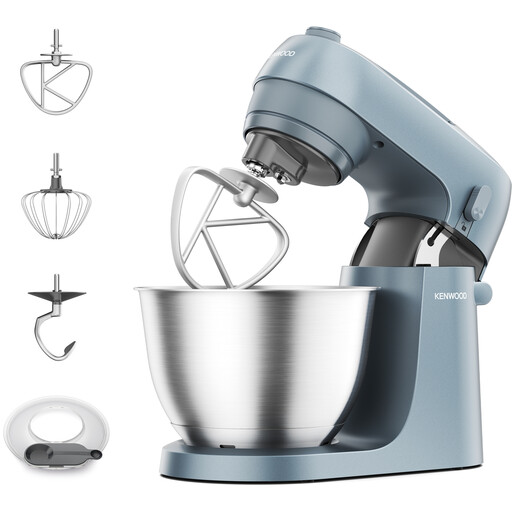
Kenwood Go KZM35.000GY, Blue
For a mixer you plan to put away after baking, compare this Go variant’s dimensions with your storage spot and confirm its supplied whisk and care instructions. Check the colour variant before ordering.
View on Joybuy
 No image available
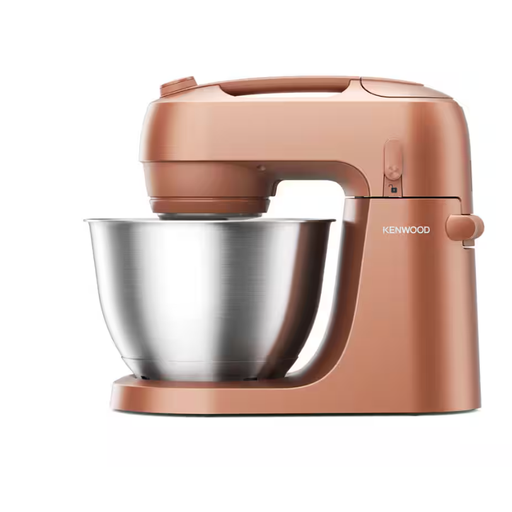
Kenwood Go, Red Clay
If this mixer would be moved between baking sessions, check that its size and weight suit the route to its storage place. Confirm the supplied whisk, batch guidance and cleaning instructions for this Red Clay configuration.
View on Joybuy
 No image available
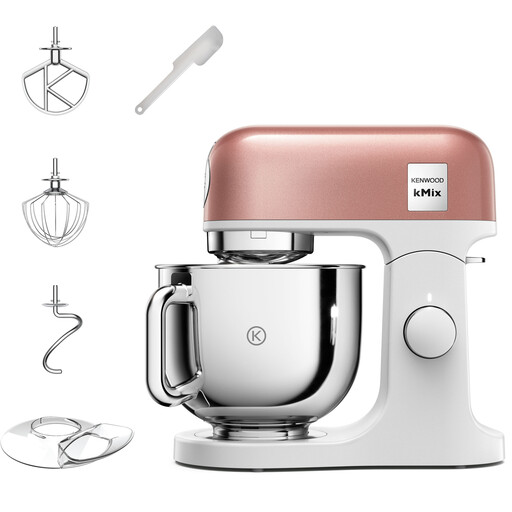
Kenwood kMix Editions KMX760API, Apricot Pink
If the mixer cannot remain on the worktop, check its dimensions and weight against your storage arrangement. For Swiss-roll batter, confirm the supplied whisk and suitable batch quantity rather than relying on the mixer’s size alone.
View on Joybuy
 No image available
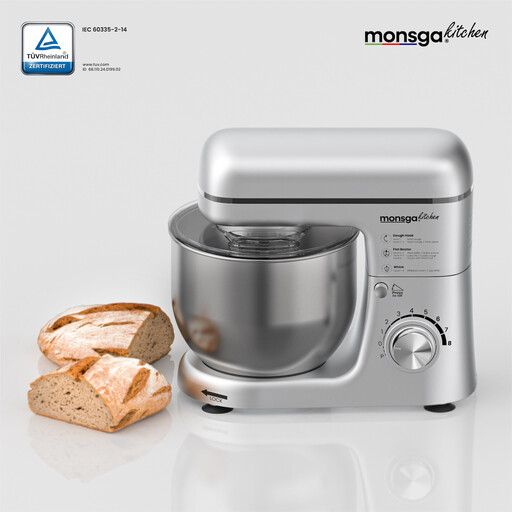
Monsga SM100 Stand Mixer
Consider this configuration if an included whisk is important for your sponge recipe. Its name lists a 5.0 L stainless-steel bowl, eight speed settings and a splash guard; check the appliance’s dimensions, suitable batch quantity and care instructions for each part before planning shared use.
View on Joybuy
Frequently asked questions
What should I check first for Swiss-roll batter?
Check that the exact mixer configuration includes a wire or balloon whisk suited to your whisked-egg recipe. James Martin Chef’s Swiss-roll method whisks eggs and sugar to ribbon stage before the flour is folded in; compare your recipe quantity with the mixer’s batch guidance rather than choosing by wattage alone.
How do I tell whether a mixer bowl is large enough?
Compare your recipe’s egg and batter quantities with the manufacturer’s guidance for the exact model, not just its bowl volume in litres. Kenwood states that a Go bowl can accommodate up to 8 egg whites, while Bosch lists a 3.8 L bowl for MUMS2VM40G; those are different kinds of capacity information, not interchangeable batch guarantees.
How should we clean a stand mixer used by several people?
Agree who will wash, dry and store the bowl and attachments after each use, following the exact model’s care instructions for every part. If food is prepared as a business, GOV.UK says food areas and equipment must be cleaned and disinfected after contact with raw food; the Food Standards Agency also calls for hygiene practices that avoid allergen cross-contamination.
Do food-business rules apply simply because the kitchen is shared?
No: sharing a kitchen does not by itself establish that it is a food business. GOV.UK’s requirement to make and follow a food-safety management system applies when you run a food business, so assess the activities carried out there rather than the stand-mixer purchase alone.


