Occasional bakers with limited space
If you make one household-sized batch at a time, consider how readily you can access, clean and put away the mixer, rather than choosing capacity you rarely use.


For a household batch of gingerbread, look for a stand mixer with a flat beater, controllable low speeds and a stated batch capacity that suits your recipe; a 4.7–5L tilt-head model may be easier to accommodate in a small kitchen. If you regularly make large or stiff batches, compare larger bowl-lift or high-capacity models while allowing for their extra size and weight. Which? reports differences in mixing time, ease of use and how well attachments reach the bowl, so wattage alone should not decide the choice.
If you make one household-sized batch at a time, consider how readily you can access, clean and put away the mixer, rather than choosing capacity you rarely use.
If you make gingerbread, biscuits or bread regularly, compare stated dough capacities and bowl stability alongside the machine’s footprint.
If you make gingerbread dough and icing in the same session, a second bowl or direct-to-bowl weighing may be more useful to you than extra capacity alone.
Start with the quantity and consistency of your recipe, then check whether the mixer fits your kitchen and the way you bake.
| Concern | What to check | Who this matters to |
|---|---|---|
| Thick or large batches | Check the supplied beater, low-speed control and the exact model’s stated capacity for the type of mixture you plan to make. A yeast-dough limit is not automatically a gingerbread limit. | If I make several trays or a stiff dough, I need to know my intended quantity is within the mixer’s instructions. Around 33% of consumers put heavy-batch capability first. |
| Kitchen space | Measure both storage and working space, including clearance to raise a tilt-head or remove a bowl. | With little cupboard or worktop room, I would rather split an occasional large mix than struggle to store the machine. For around 25% of consumers, compact everyday use is the primary concern. |
| Multi-stage baking | Check whether weighing is built in and whether a second compatible bowl comes with the exact model. | When I make dough and icing in succession, switching bowls or weighing into one could make preparation more convenient. Around 25% of consumers prioritise that workflow. |
| Bowl coverage and cleaning | Look for exact-model tests of bowl-side coverage and confirm which tools can go in the dishwasher. | Sticky mixture left on the bowl wall means I may need to stop and scrape, while cleanup also affects how often I use the mixer. Even mixing and easier cleaning come first for around 17% of consumers. |
Motor wattage does not tell you whether the beater reaches the bowl sides or whether your intended batch fits the machine’s stated limits.
Compare the exact model’s capacity guidance, supplied tools and low-speed control, then consult independent mixing and usability tests where available.
KitchenAid describes its bowl-lift design as taller and larger than its tilt-head designs, despite the locked bowl’s intended stability for heavy mixtures.
Measure the working and storage positions, including overhead clearance and space to remove a filled bowl.
Which? found differences among tested stand mixers in whether attachments reached all parts of the bowl.
Check tests for the exact model where possible, and be prepared to pause and scrape if sticky ingredients collect at the sides.
Additional bowls and weighing features can help with several components, but a larger machine also takes more space; Kenwood lists its Titanium Chef Baker XL KVL85.004SI at 11.5kg.
Match the bowl arrangement and machine size to the batches you actually prepare.
Kenwood’s Titanium Chef Baker XL KVL85.004SI is an example for bakers considering large batches, direct-to-bowl weighing and two bowls.
KitchenAid offers a 4.7L tilt-head 5KSM125 and a 5.6L bowl-lift 5KSM60SPX as different format choices.
Bosch’s stand-mixer series offer different bowl sizes for buyers weighing storage against batch capacity.
These stand mixers offer options to consider for household gingerbread batches, compact storage or preparing multiple components. Check the exact model’s instructions against the quantity and consistency of your recipe, particularly for stiff dough.
 No image available
Consider this model if you need a mixer you can put away after making a household batch. Check the instructions before using it for a stiff or unusually large gingerbread mix.
The product name specifies a 4.3L bowl, 1000W motor and three bowl tools.
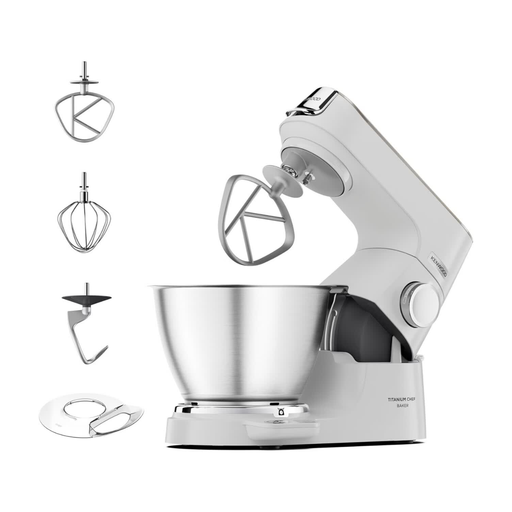 No image available
Consider this model if weighing ingredients while preparing gingerbread is important to your routine. Check its dimensions against your space and its instructions against your intended dough quantity.
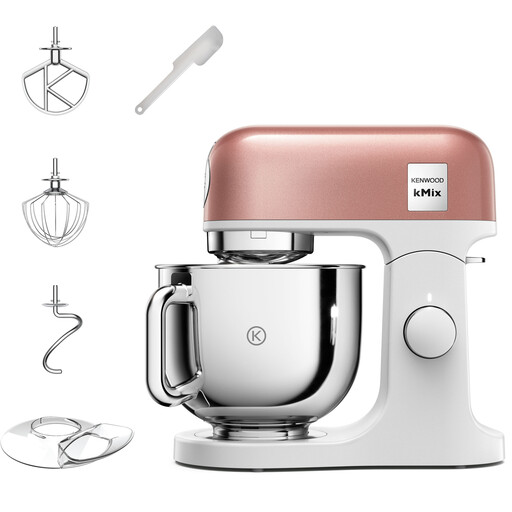 No image available
Consider this tilt-head model if access to the bowl matters when adding gingerbread ingredients gradually. Check the instructions for your mixture’s batch size and for any required pauses between heavy batches.
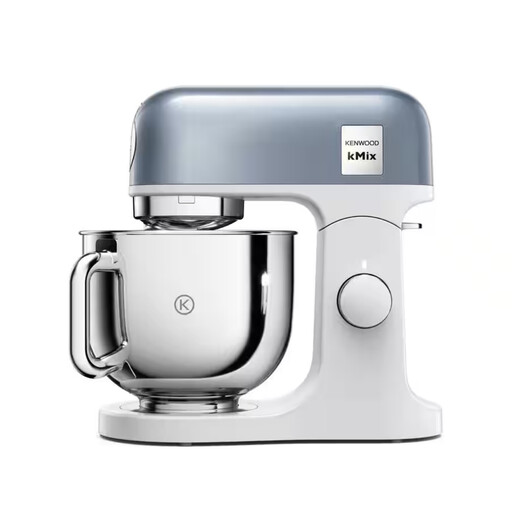 No image available
Consider this model for a household gingerbread batch if its controls and bowl access suit the way you add ingredients. Check the manual for the quantity and consistency you intend to mix, and measure your storage space.
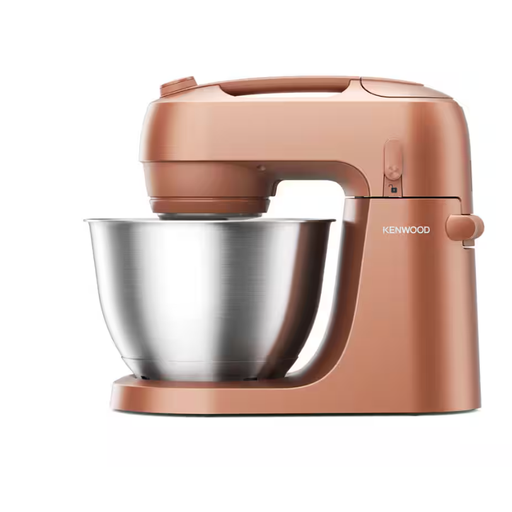 No image available
Consider this model if cupboard fit is a priority for occasional gingerbread baking. Before making a heavy batch, check the manual for a suitable quantity and mixture consistency.
Use a paddle or flat beater when the recipe calls for creaming or mixing batter; a dough hook is more relevant if the recipe produces a genuinely stiff dough. Follow the recipe and your mixer’s instructions, adding flour gradually at a low speed.
Not necessarily: wattage alone does not establish mixing performance or a suitable batch size. Compare the exact model’s stated capacity, tools and speed control; Which? also identifies mixing time, usability and bowl coverage as differences between tested mixers.
A 4.7–5L bowl can suit an ordinary home batch, while a larger bowl may be useful when you repeatedly make more at once. Bowl volume alone does not establish a safe limit for stiff gingerbread dough, so check the model’s instructions and allow for its storage footprint.
Check the food-business guidance that applies to where and how you will sell it, rather than treating the activity as domestic baking alone. The Food Standards Agency’s guidance covers selling food from home; its allergen-labelling guidance cited here applies to England, Northern Ireland and Wales, so consult current guidance for your nation and selling format before trading.