
24/7 Customer Support

Free returns

Same-day & Next-day Delivery

Quality Guaranteed

Unlock Your Welcome Offers: FREE Delivery | Up to 80% OFF | Free 30-day JoyPlus trial
Download the APP
A quality stand mixer can transform your kitchen, turning laborious baking and cooking tasks into effortless creations. From airy meringues to perfectly kneaded bread dough, the right machine acts as a reliable kitchen assistant. However, the market is filled with models that promise professional performance but often fall short. Before you invest, it's crucial to understand the difference between marketing hype and genuine functionality.
As the Joybuy Product Recommendation Officer, my role is to help you navigate these choices. We will look past the glossy advertisements and focus on the practical features that determine whether a stand mixer will become a cherished appliance or a dust-collecting disappointment.
Many shoppers are swayed by impressive-sounding specifications that don't always translate to real-world performance. Here are three common pitfalls to watch out for.
It's easy to assume that a higher wattage motor (e.g., 1500W vs. 1000W) automatically means a better, more powerful machine. This is a frequent marketing tactic. In reality, motor efficiency and torque are far more important than raw wattage. A well-engineered food mixer with a high-torque motor can handle dense bread dough more effectively and with less strain than a poorly designed high-wattage model that overheats and struggles under load. Don't let a big number be your only guide; consider the motor's overall design and cooling capabilities.
The term "all-metal construction" can be misleading. While the outer housing might be made of die-cast metal, the most critical components—the internal gears—are sometimes made of plastic. Under the strain of kneading heavy dough, these plastic gears can strip or crack, leading to a costly failure just outside the warranty period. A truly durable kitchen mixer will have metal gears to ensure longevity and reliable performance.
A stand mixer is only as good as its attachments. Many mixers come with a whisk, beater and a stand mixer with dough hook. However, lower-quality attachments often have a thin coating that can chip or peel off after a few washes, even if labelled "dishwasher-safe." This can lead to oxidation, leaving an unappealing black residue in your food. Look for attachments made from stainless steel or those with a robust, high-quality non-stick coating.
To make a smart purchase, focus on these core parameters that directly impact your daily use.
The heart of any electric mixer for baking is its motor and mixing mechanism. The most effective models use a planetary mixing action. This means the beater spins on its own axis while also sweeping around the bowl in a wider orbit, ensuring all ingredients from the sides and bottom are thoroughly incorporated. This eliminates the need to constantly stop and scrape the bowl, a common frustration with less advanced mixers.
Bowl size is a crucial consideration. A 5L stand mixer is a popular and versatile choice for most UK families, providing enough capacity to bake a standard loaf of bread, a large cake or a dozen cookies. For those who bake in larger batches or for bigger households, a 6-litre or larger bowl may be more suitable. Always look for a bowl made from food-grade 304 stainless steel, which is durable, non-reactive, and easy to clean.
Pay close attention to the included attachments. A good dough mixer needs a sturdy, well-designed C-shaped or spiral dough hook to effectively knead yeast doughs. The flat beater is your workhorse for cake batter and cookie dough, while the balloon whisk is for whipping air into cream and egg whites. Check the material—stainless steel is ideal for whisks, while coated beaters and hooks should feel substantial and well-finished.
Based on these practical criteria, here are a few stand mixers that align with different user needs and avoid the common pitfalls.

Why This Fits Their Persona: This is an excellent all-rounder for the home baker who needs a reliable machine for cakes, bread and general meal prep. The 5L bowl is ideal for family-sized recipes, and the tilt-head design makes it easy to add ingredients or swap attachments.
It features a high-quality copper motor for better efficiency and a super non-stick Teflon dough hook, directly addressing the attachment quality gamble. The accessories are also specified as dishwasher-safe.
It combines a 1000W motor with 360° planetary mixing for thorough results. The inclusion of a splash guard and handle on the bowl are practical touches for clean and easy use.
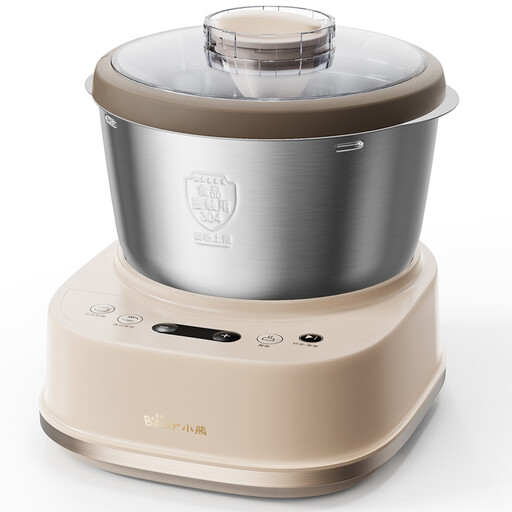
Why This Fits Their Persona: For those who primarily bake bread, pizza or other yeast-based goods, this specialised machine is a game-changer. It's not a traditional stand mixer; it's a dedicated dough maker that automates both kneading and proving.
It sidesteps the wattage myth entirely. Its 200W DC motor is engineered for high-torque, low-speed kneading—the exact force needed for dough—rather than high-wattage whipping. It focuses on one job and does it exceptionally well.
The "set-and-forget" functionality with microcomputer control and constant temperature fermentation frees up your hands and guarantees consistent results for your dough every time.
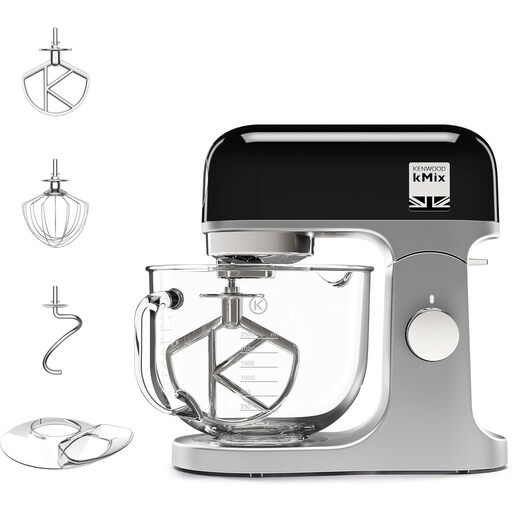
Why This Fits Their Persona: For those seeking a blend of iconic design, robust engineering and future-proof versatility. This Kenwood model is a statement piece that delivers on performance, with a durable metal body that feels built to last.
It counters the "durable metal" deception with a genuine, heavy-duty metal construction. The included attachments are premium and non-stick and the slow-speed outlet for optional extras shows a commitment to long-term functionality.
The unique 'Fold' function provides gentle, controlled mixing for delicate recipes like soufflés. Its expandability with over 10 optional attachments (like pasta rollers or meat grinders) turns it into a complete kitchen hub.
We have compiled a complete, real-time list of products that fully satisfy these strict selection criteria and UK safety regulations.
Focus on motor quality over wattage. For most home use, including bread dough and dense batters, a mixer with a well-designed motor of around 600W to 1000W is perfectly sufficient. A high-torque DC motor is often more effective for heavy tasks than a higher-wattage AC motor.
This comes down to personal preference and kitchen space. Tilt-head models are common and convenient for adding ingredients, as the head lifts up and out of the way. They are great for most users but may feel less stable with very heavy loads. Bowl-lift models, where the bowl is cranked up to the mixing head, are generally more stable and robust, making them a favourite for those who frequently make large, dense batches of dough.
A "walking" or vibrating mixer is usually a sign that the load is too heavy or unbalanced. To prevent this, ensure your mixer is on a flat, stable surface. Start on a low speed and gradually increase it. If kneading dough, try not to exceed the manufacturer's recommended capacity. Most modern mixers also come with suction-cup feet to help secure them to the worktop.