Batch-focused bake-sale baker
You need dough for several trays or repeated mixes. The exact model’s dough limit, its minimum batch and the space it occupies will shape your choice.


Choose a mixer around the dough weight you need to make in one batch: check the exact model’s stated dough limit and minimum workable mixture rather than relying on bowl volume alone. A planetary stand mixer suits focaccia alongside cakes and other bakes, while a spiral mixer is worth considering when dough is the main repeated task; check the chosen machine’s weight and space requirements too.
You need dough for several trays or repeated mixes. The exact model’s dough limit, its minimum batch and the space it occupies will shape your choice.
Focaccia is one part of your baking plans, alongside cakes or other sale items. A planetary mixer with the appropriate dough, beating and whisking tools may cover more of those jobs.
You usually make only one or two trays at a time. Check that your normal dough weight meets any stated minimum mixture requirement before choosing a larger-capacity machine.
Start with the weight of your largest planned focaccia batch, then decide whether the mixer also needs to handle other baking jobs. A stated maximum for bread dough, yeast dough or another mixture should be read in its own terms, not treated as a guarantee for every focaccia recipe.
| Concern | What to check | Who this matters to |
|---|---|---|
| Dough capacity | Compare your planned batch weight with the exact model’s stated limit, including the type of dough used for that figure. | When several trays are due together, I want the planned dough to fit without another mixing cycle; around 37% of consumers put single-batch capacity first. |
| Dough-focused design | Decide whether dough is the main job and check the chosen mixer’s stated dough range and included tools. | If focaccia is my regular main bake, I care more about a dough-focused machine than extra baking functions; roughly 27% of consumers prioritise that need. |
| Versatility | Check which dough tool, beater and whisk come with the exact package. | When the sale also involves cakes, I want one machine for dough and other mixtures; about 18% of consumers put versatility first. |
| Small batches and space | Compare your smallest usual mix with any stated minimum, then check dimensions and weight for storage. | If I make test batches and store the mixer between uses, the minimum mixture and space it takes matter; around 18% of consumers put that fit first. |
A bowl’s volume does not establish how much dough its mixer can handle. Kenwood GB states a 2.42 kg dough capacity for the Chef XL KVL4100W despite its 6.7 L bowl, while KitchenAid UK states up to 3.7 kg of bread dough for its 5.6 L Artisan bowl-lift model.
Screen models by the maker’s dough limit for the exact variant and dough category, then consider bowl size and tools.
A machine chosen for a large sale-day batch must also accommodate your smaller mixes. Ooni UK states minimum mixture weights of 1 kg for Halo Pro and 0.4 kg for Halo Core.
Weigh your smallest usual recipe and compare it with the minimum stated for the model you are considering.
Ooni UK lists Halo Pro at 14.5 kg and Halo Core at 10.5 kg. Moving either machine between a cupboard and a worktop is a practical consideration.
Measure the intended space, allow access to the bowl and decide whether the mixer can remain in place.
GOV.UK guidance on placing UKCA- or CE-marked products on the market in Great Britain applies to England, Scotland and Wales; Northern Ireland follows different processes.
If the mixer is being delivered to Northern Ireland, ask the seller about documentation applicable to that supplied model and destination.
These model-specific examples show why dough limits, tools and minimum batches deserve separate checks; a figure for one model should not be applied to every mixer from its brand.
The Chef XL KVL4100W illustrates a planetary mixer intended for dough and other baking tasks.
Its documented options include a 5.6 L Artisan bowl-lift mixer and a smaller 4.3 L Classic tilt-head family.
The MUM58W20GB provides a 3.9 L planetary-mixer example with a stated yeast-dough limit.
Halo Core and Halo Pro are spiral mixers aimed at dough-centred use, with different batch ranges.
These planetary mixers are choices to examine if your bake sale includes focaccia alongside other baking. Match your dough weight to the exact model’s instructions before settling on one; the products here do not represent the spiral-mixer route.
 No image available
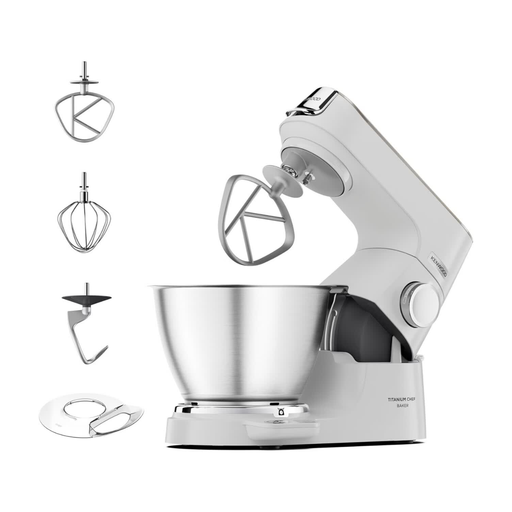
Consider this model when focaccia shares the workload with other bakes and your planned mix fits its stated 1.3 kg dough limit. Check the batch weight and supplied tools for the jobs you intend to do.
 No image available
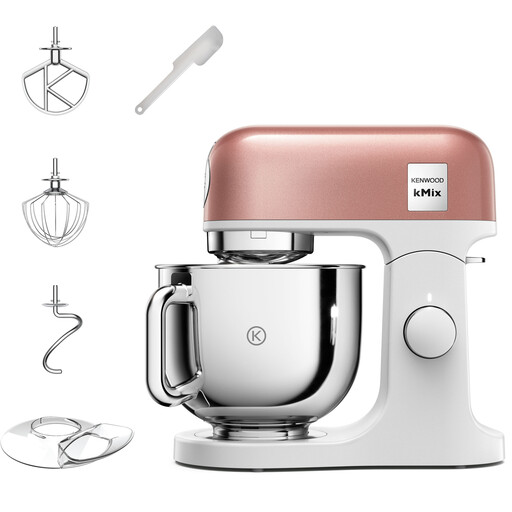
This model is worth checking for focaccia alongside other baking if your recipe fits its stated 1.35 kg limit for stiff yeast dough; that figure does not establish a limit for every focaccia recipe. For heavy mixtures such as bread dough, follow the listed 10-minute running limit and cooling instructions between batches.
 No image available
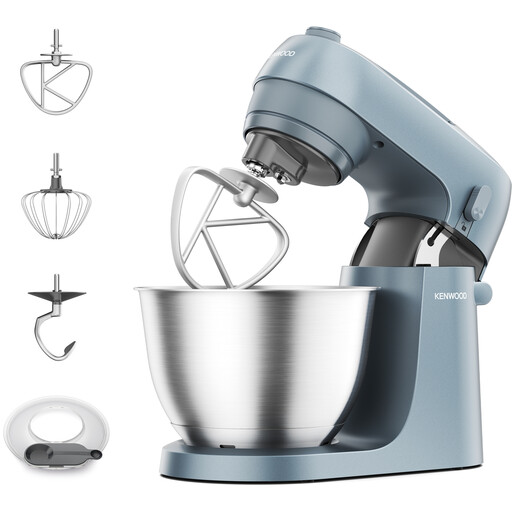
Consider this stand mixer if you want a dough-mixing option for a smaller kitchen. Check the maker’s dough-weight limit against your focaccia batch before buying, and confirm the colour of the supplied variant.
 No image available
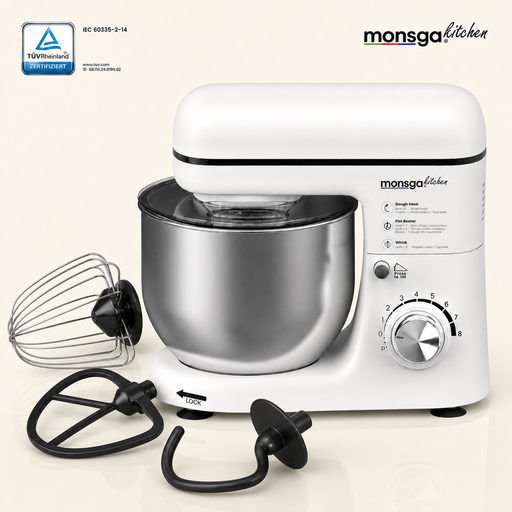
Its named dough hook, whisk and beater make it an option to examine for focaccia and other baking tasks. The 5.0 L bowl figure is not a dough-weight limit: confirm the maker’s limit for your planned batch.
 No image available
The named dough hook, whisk and beater make this an option to assess for focaccia and other home baking. Treat the 6.5QT bowl size separately from dough capacity: confirm the exact variant’s maximum dough weight, minimum workable batch and instructions.
Use the weight of your largest planned mix to screen each model’s stated dough limit, checking which type of dough the figure describes. For scale, Bosch GB states up to 1.9 kg of yeast dough for the MUM58W20GB, while Ooni UK states a 5 kg maximum dough batch for Halo Pro; those differently described limits are planning references, not a performance test.
Consider a spiral mixer if dough is the main repeated job; choose a planetary model if you also regularly need the supplied tools for beating and whisking. In either case, check the exact model’s batch range and the space it needs rather than assuming one mixer design suits every bake sale.
Only choose it for that batch if the mixture meets the model’s stated minimum. Ooni UK lists a 1 kg minimum mixture for Halo Pro and 0.4 kg for Halo Core, so compare those figures with the weight of your smallest usual recipe.
For Great Britain—England, Scotland and Wales—GOV.UK says UKCA and CE markings indicate that the manufacturer believes the product meets the relevant requirements. For delivery to Northern Ireland, check the supplied model’s applicable documentation with the seller rather than assuming the Great Britain guidance covers it.