Space-limited cottage bakers
You plan to make one or two cakes, but worktop space, cupboards or room in the car may be limited. Machine dimensions and handling matter more to you than maximum bowl capacity.


For one or two yoghurt cakes in a cottage with limited space, start with a compact stand mixer that has a suitable beater and controllable speeds, rather than choosing the largest bowl. A standard tilt-head model makes more sense if you will also bake regularly at home; a large multi-bowl machine is easier to justify for repeated batches, provided you can accommodate its weight and size.
You plan to make one or two cakes, but worktop space, cupboards or room in the car may be limited. Machine dimensions and handling matter more to you than maximum bowl capacity.
You will use the mixer after the trip and want controllable speeds, a cake beater and a bowl that suits your usual recipes as well as the cottage bake.
You may prepare several bakes or use the machine for dough and other recipes. Extra bowl capacity or features may be worth accommodating if you will use them often enough.
Decide how much space and carrying weight the cottage can accommodate, then match the beater, controls and bowl to the cakes you actually expect to make. If there is no practical place for a stand mixer, a hand mixer is another option, though it requires you to hold it while mixing.
Choose it when: You are making an occasional cake and need to carry or put the machine away between uses.
Trade-off: A smaller bowl leaves less room for repeated large batches.
Choose it when: The machine will also see regular use at home and gentle mixing control matters to you.
Trade-off: Check its actual weight and storage dimensions before planning to travel with it.
Choose it when: You expect repeated large batches or have a continuing use for multiple bowls and in-bowl weighing.
Trade-off: It needs more worktop and storage room than an occasional cottage cake may warrant.
| Concern | What to check | Who this matters to |
|---|---|---|
| Space and transport | Measure the available worktop and storage space; compare assembled dimensions and machine weight. | If I have to bring the mixer and put it away after baking, I need one I can place and move comfortably. Around 34% of consumers put space and transport first. |
| Batter control | Check the supplied cake beater, low-speed options and model-specific information on bowl-edge coverage. | When I add ingredients gradually, I want control without repeatedly stopping to scrape the bowl. Around 33% of consumers prioritise batter mixing and speed control. |
| Setup and cleaning | Check which tools are supplied and how each may be washed, using the exact model’s instructions. | During a short stay, I would rather spend less time handling and washing attachments. Roughly 20% of consumers make setup and cleaning their primary concern. |
| Batch capacity | Compare stated cake-mixture capacity with bowl volume, then check the space needed for the machine and any extra bowl. | If several people are baking, I need enough room for the batches I will actually prepare. Around 13% of consumers put capacity and wider baking use first. |
Neither figure tells you how convenient a mixer will be for one cake in a temporary kitchen. Which? reports differences between stand mixers in mixing time, ease of use and how well attachments reach the bowl.
Compare the machine’s dimensions, weight, beater and low-speed controls alongside its capacity.
A mixer may still need stopping so that you can scrape ingredients from the sides. Which? includes attachment reach among the differences it assesses.
Check model-specific testing where available and confirm which beater is supplied; treat a brand’s bowl-coverage description as its own claim.
Kenwood lists its Titanium Chef Baker XL at 11.5kg and 22.5 × 37 × 40cm, while Bosch lists its Series 2 range at 3.0kg and 27 × 27 × 28cm. That difference matters if the mixer must be carried and stored during a short stay.
Measure the available space and allow room to lift the mixer head and remove the bowl before choosing a larger format.
Electrical Safety First warns about risks from faulty electrical products. A cottage mixer and its socket may be unfamiliar to you.
Do not use a mixer with visible damage to its plug, lead, housing or attachments. Set it on a dry, stable surface and follow the model’s instructions.
These product lines illustrate different sizes and configurations; check the exact model rather than assuming every mixer from a brand has the same tools or dimensions.
The Series 2 range is a compact reference point for an occasional cake in a small kitchen.
The cited 4.7L Artisan Plus offers a standard-size tilt-head format for baking beyond the cottage stay.
Kenwood’s cited lines range from 5L kMix models to the larger Titanium Chef Baker XL.
Smeg’s stand-mixer range provides another standard-size format to compare for cake preparation.
These mixers offer different approaches to the cottage cake: consider the Prospero+ and Go when space is a concern, and the kMix and SM100 models if their mixing controls or bowl choices better suit baking at home as well. Check each machine’s dimensions and carrying weight against your own arrangements.
 No image available
Consider this model if a smaller bowl suits your cottage cake and you want a mixer you can put away between uses.
The product title specifies 1000W, a 4.3L bowl and three bowl tools. Check the assembled size against the cottage worktop and follow the instructions for the supplied tools when cleaning them.
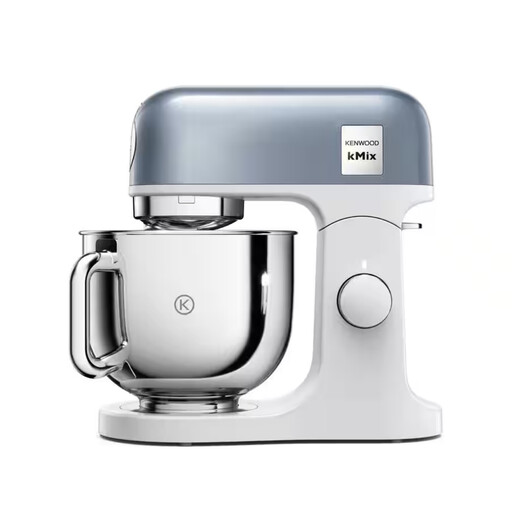 No image available
This is worth considering if you bake regularly at home as well as at the cottage and want a folding control for finishing cake batter.
Before travelling with it, decide whether carrying its stated 9.1kg weight is manageable and check that the worktop and storage space will accommodate it.
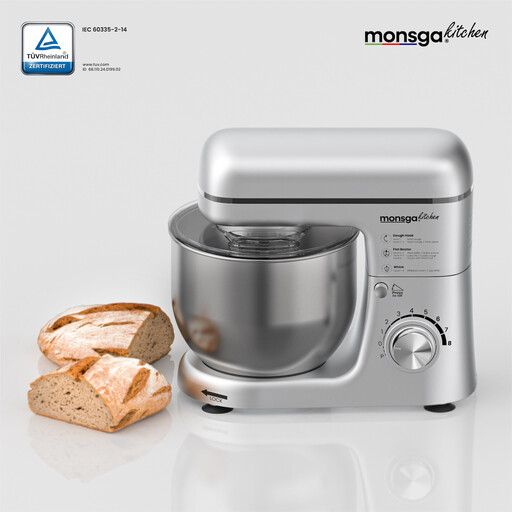 No image available
Consider this model if you want a larger bowl and adjustable speeds for cakes beyond a single cottage bake.
The product title specifies a 5.0L stainless-steel bowl and eight speed settings. Check the usable capacity for your recipe and the space needed to store the machine; if noise matters, confirm the relevant noise information before choosing it.
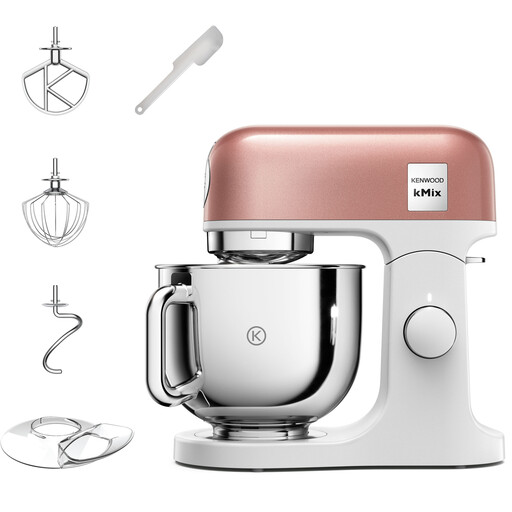 No image available
This model may suit a cake recipe that calls for gently incorporating ingredients, with a Fold function described for this variant.
If you intend to carry it to the cottage, confirm its weight before buying. Check the exact tool-cleaning instructions rather than assuming that every attachment can go in a dishwasher.
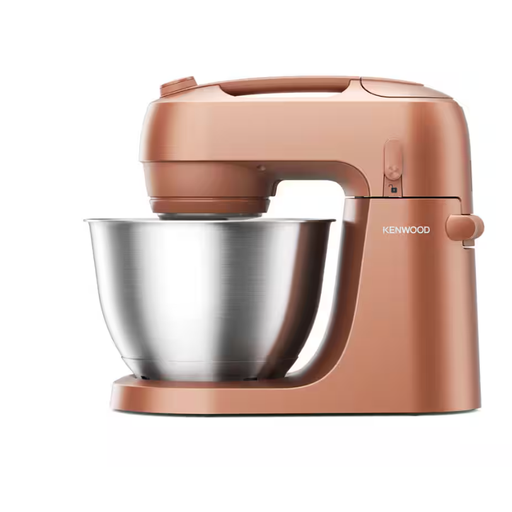 No image available
Consider this model if a cake beater and adjustable mixing are your priorities, but assess it as a machine to carry rather than relying on its name to judge portability.
Its stated weight is 6.3kg. Check whether you can transport and store it comfortably, and consult the instructions for cleaning its supplied attachments.
Choose for your actual recipe batch, not the largest available bowl. Bosch lists a 3.8L bowl for its compact Series 2 range, while the cited standard-size KitchenAid Artisan Plus has a 4.7L bowl; check the exact mixer’s stated cake-mixture capacity as well as its bowl volume.
Do not count on a beater type alone to eliminate scraping. Which? identifies attachment reach as a difference between stand mixers, so check the exact supplied beater and model-specific testing where available.
Make sure there is a dry, stable worktop with enough clearance, and do not use an appliance with visible damage to its plug, lead, housing or attachments. If the mixer belongs to the property, confirm that guests may use it and follow its instructions; Electrical Safety First warns about risks from faulty electrical products.
Follow the instructions for the exact model and each tool. Bosch describes accessories for its MUMS2VM40G as generally dishwasher-safe, but that does not establish the cleaning method for another mixer or every attachment.