What matters when choosing?
Start with your usual dough batch, then decide how much worktop space and preparation time you are willing to give the mixer.
| Concern |
What to check |
Who this matters to |
| Dough capacity |
Compare the exact model’s stated limit for the relevant type of dough with the quantity you normally make; bowl volume and wattage are not dough limits. |
When I make several loaves at once, I want my usual batch to fit without splitting it. Around 43% of consumers put batch capacity first. |
| Footprint and bowl access |
Measure the intended space, including overhead clearance and room to raise or remove the bowl. |
For a weekly loaf, I need a mixer I can accommodate and reach without rearranging the kitchen each time; roughly 29% of consumers prioritise that practical fit. |
| Tools, use and cleaning |
Confirm the included dough tool, follow the exact model’s kneading-speed instructions and check care guidance for each part. |
If bread is only part of my lunchbox baking, I want preparation and clean-up to remain manageable. About 28% of consumers place that workflow first. |
Stand mixers to consider on Joybuy
These mixers are options to assess for lunchbox bread-making and mixed baking. For each one, match its exact dough limit and instructions to your recipe before deciding whether its size or additional features are worthwhile.
 No image available
Kenwood Prospero+ KHC29.A0SI, silver
Consider this for a modest bread batch if its dough limit suits the quantity in your recipe.
The product name specifies a 4.3 L bowl, 1000 W rating and three bowl tools. Confirm the dough tool supplied, the applicable dough limit and the exact model’s kneading guidance before buying.
View on Joybuy
 No image available
Kenwood Chef Baker KVC65.001WH, white
Assess this model if you make bread alongside other baking and want to check whether its preparation features fit that routine.
Before choosing a batch size, confirm its dough capacity, the supplied dough hook and the kneading-speed instructions for KVC65.001WH. Do not apply the specifications of a different Chef Baker variant.
View on Joybuy
 No image available
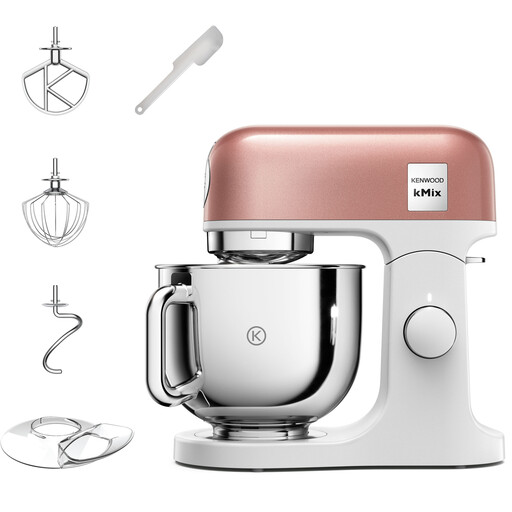
Kenwood kMix Editions KMX760API, apricot pink
For repeated bread batches, check whether this model’s dough and operating-time limits suit your planned session.
Its guidance for heavy mixtures calls for no more than 10 minutes of operation at a time and at least 45 minutes of cooling between heavy batches; follow the exact manual. Check care instructions before putting the bowl or tools in a dishwasher.
View on Joybuy
 No image available
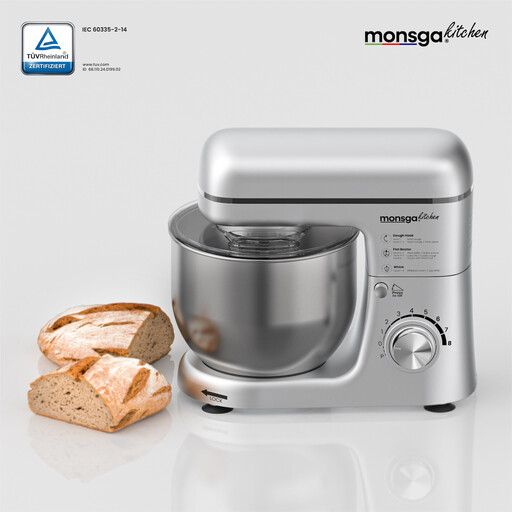
Monsga SM100 stand mixer, 5.0 L
Consider this for bread preparation only after confirming that its permitted dough quantity covers your usual batch.
The product name specifies a 5.0 L stainless-steel bowl, eight speed settings and 1000 W peak power. Peak power and bowl volume do not establish a dough-weight limit; check the exact model’s kneading instructions too.
View on Joybuy
 No image available
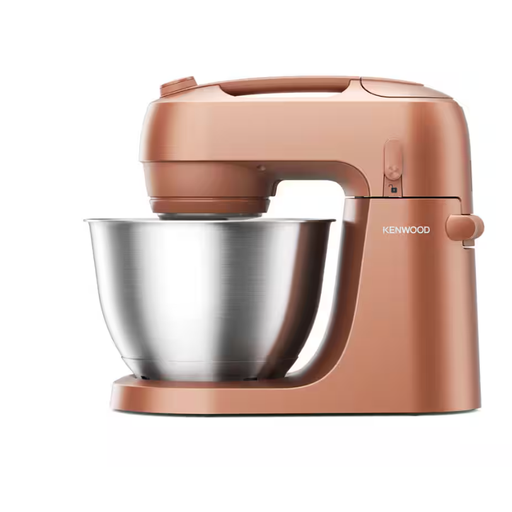
Kenwood Go stand mixer, red clay
If storage space is a priority, compare this mixer’s dimensions and bowl access with the place you intend to keep it.
For lunchbox bread, confirm the exact dough-capacity limit, supplied dough tool and model-specific kneading-speed guidance before settling on a recipe batch.
View on Joybuy
Frequently asked questions
Is a larger bowl always better for lunchbox bread dough?
No. Choose around the dough quantity you normally make, using the exact model’s stated limit for the relevant dough type rather than bowl volume alone. KitchenAid UK, for example, states up to 3.7 kg of bread dough for the 5KSM60SPX; that figure does not describe every mixer with a similar-sized bowl.
What speed should I use to knead yeast dough in a KitchenAid mixer?
KitchenAid UK says to use its dough hook at speed 2 for yeast dough and not to exceed speed 2. Check the manual for your exact mixer; do not assume the same setting applies to another brand or model family.
Can I put every stand-mixer bowl and tool in the dishwasher?
No. Bosch describes accessories for the MUM58259GB as generally dishwasher-safe, but that does not establish the care requirements of another model or every individual part. Check the bowl, hook and any coated tools against their own care instructions.
What should I check when ordering an electrical mixer for a UK address?
Check that the plug, instructions and conformity information are appropriate for the intended delivery location. GOV.UK guidance on the Electrical Equipment (Safety) Regulations 2016 addresses Great Britain, while Business Companion notes that Northern Ireland has separate provisions; do not apply GB guidance unchanged to a Northern Ireland purchase.


