Small-kitchen cracker bakers
If you make occasional small batches, storage height and room to use the bowl may matter as much as capacity. Kenwood GB states that the Go KZM35.000RD is 30 cm high and supplies a K-Beater and dough tool.


Choose a stand mixer with a supplied beater or dough tool, a stated capacity that covers your usual cheese cracker recipe, and enough room to store and operate it. Kenwood Go KZM35.000RD is a compact route for batches within its pastry-flour limit; Bosch MUMS2VM40G has a published dough limit for those planning larger batches. Those limits measure different things, and a KitchenAid 5KSM125 is worth considering for wider baking only after you have checked its fit in your kitchen.
If you make occasional small batches, storage height and room to use the bowl may matter as much as capacity. Kenwood GB states that the Go KZM35.000RD is 30 cm high and supplies a K-Beater and dough tool.
If you make larger or repeated batches, compare your recipe with a published dough limit rather than judging by bowl size alone. Bosch GB lists a 2.0 kg maximum dough content for the MUMS2VM40G.
If the mixer will also handle cakes and other baking, the supplied tools and room for optional attachments may influence your choice. KitchenAid UK lists a dough hook, paddle and whisk for the 5KSM125, with further attachments sold separately.
Start with the space available for storage and use, then compare your usual recipe with the exact mixer’s stated capacity; consider broader baking tasks after those checks.
| Concern | What to check | Who this matters to |
|---|---|---|
| Storage and workspace | Measure the storage space and allow clearance to use and remove the bowl. Kenwood GB states that the Go KZM35.000RD is 30 cm high; Bosch GB lists the MUMS2VM40G at 266 × 266 × 277 mm. | If cupboards and preparation space are tight, I need the mixer to fit where I can actually use it. Around 42% of consumers put storage and workspace fit first. |
| Dough-batch capacity | Compare your recipe’s flour or dough weight with the corresponding limit for the exact model, and confirm the supplied tools. Kenwood GB states 0.5 kg flour for pastry for Go; Bosch GB states 2.0 kg maximum dough content for the MUMS2VM40G. | When I make a larger batch, I need to know it stays within the mixer’s stated limit. Around 33% of consumers prioritise dough-batch handling. |
| Wider baking use | Check which tools come with the exact package and whether you would use optional attachments. KitchenAid UK lists a hook, paddle and whisk for the 5KSM125; its additional attachments are optional. | If I also bake cakes and make other mixtures, I want the same appliance to cover those tasks without assuming extras are included. Around 25% of consumers put wider baking use first. |
A bowl’s litre capacity does not tell you how much cracker dough a mixer can handle. Kenwood GB gives a flour-for-pastry limit for Go, while Bosch GB gives a finished-dough limit for the MUMS2VM40G; the figures cannot be compared as the same measure.
Work out the flour weight and expected total dough weight of your usual recipe, then use the matching measure and instructions for each model.
A mixer may fit on a shelf yet leave too little room to remove its bowl or change tools.
Measure where you will store and operate it, allowing clearance beyond the published appliance dimensions.
KitchenAid UK lists three supplied core tools for the 5KSM125 but describes its wider attachment range as optional.
Confirm the contents of the exact package and choose additional attachments only for tasks you expect to do.
Additional attachments also need storage space.
The Kenwood Go KZM35.000RD is relevant when storage height and smaller pastry-style batches shape the decision.
The Bosch MUM Series 2 MUMS2VM40G offers a published finished-dough limit alongside dimensions you can check against your kitchen.
The KitchenAid Artisan 5KSM125 is a route for buyers who want to use a tilt-head mixer beyond cracker dough.
These stand mixers cover compact-storage decisions and broader baking use. Compare each exact model with your available space and usual cracker-dough batch; bowl capacity alone does not establish a suitable dough quantity.
 No image available
For a limited-space kitchen, check the mixer’s dimensions and your usual dough batch against the exact model’s instructions.
Its stated features include a 4.3 L bowl and three bowl tools; bowl volume is not a dough limit.
 No image available
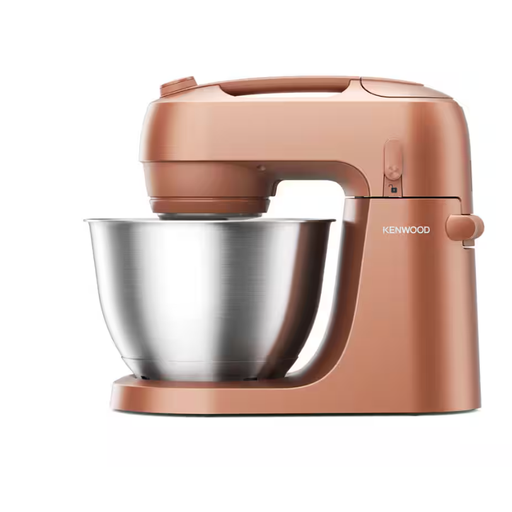
Consider this model when storage height matters and your recipe fits its stated pastry-flour limit.
Kenwood GB lists a 30 cm height, 4 L bowl, K-Beater, whisk, dough tool and 0.5 kg flour-for-pastry capacity for the KZM35.000RD. Allow additional room to operate it.
 No image available
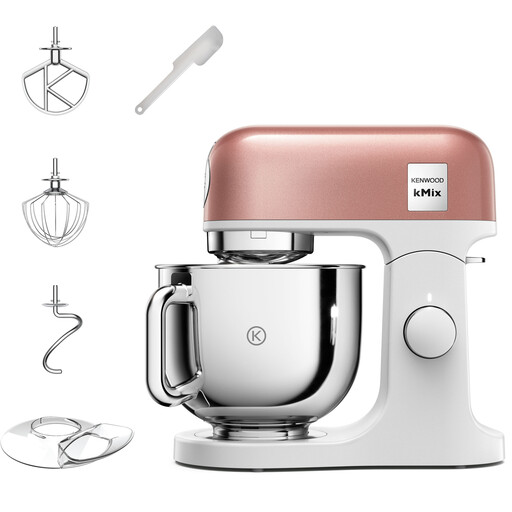
If you want one mixer for crackers and other baking, check this exact model’s dimensions, supplied tools and dough limit against your plans before choosing it.
 No image available
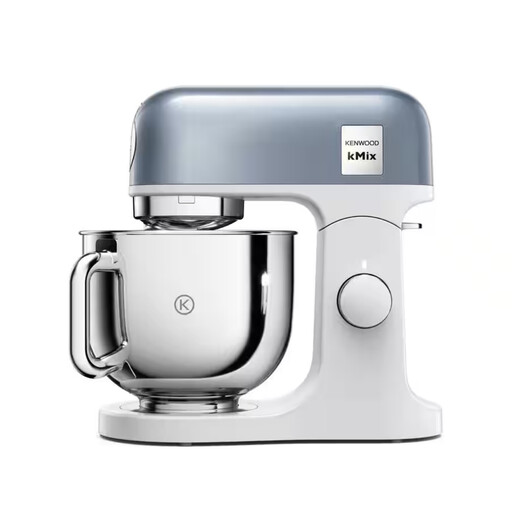
For wider baking use alongside crackers, confirm that this exact variant fits your storage and operating space and that its stated dough limit covers your recipe.
 No image available
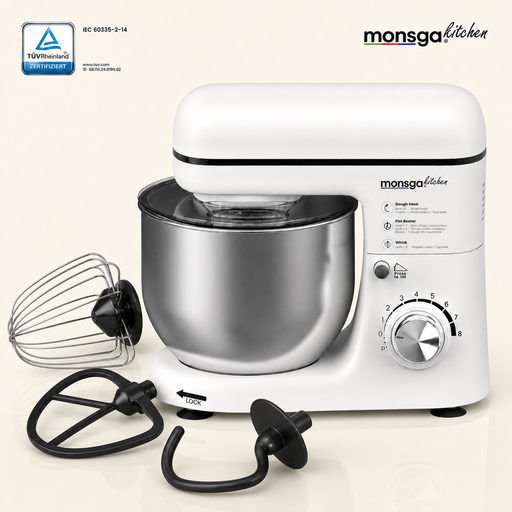
If you need a supplied beater and dough hook, check the mixer’s dimensions and model-specific dough limit before deciding whether it suits your small kitchen.
The named package includes a 5.0 L stainless-steel mixing bowl, whisk, dough hook, beater and splash guard, with eight speed settings. The bowl figure does not establish a dough limit.
Yes, if your batch stays within the exact model’s stated limit and you use a suitable supplied tool according to its instructions. Kenwood GB lists a K-Beater and dough tool with a 0.5 kg flour-for-pastry limit for Go KZM35.000RD; Bosch GB lists a kneading hook and 2.0 kg maximum dough content for MUMS2VM40G. Flour and finished dough are different measures.
No. Compare your recipe with the exact mixer’s ingredient or dough limit instead. Kenwood GB pairs the Go KZM35.000RD’s 4 L bowl with a 0.5 kg flour-for-pastry limit, while Bosch GB lists a 3.8 L usable bowl and 2.0 kg maximum dough content for the MUMS2VM40G.
Not necessarily. GOV.UK guidance updated in August 2026 says CE marking continues to be recognised alongside or in place of UKCA marking for products placed on the Great Britain market where the relevant product regulations allow it. Check the requirements applicable to the exact product and market; Northern Ireland has different processes.