Routine lunchbox cracker maker
If you usually make a modest batch, look for a suitable flat beater and a bowl that works with your recipe quantity rather than choosing capacity for batches you rarely make.


For routine lunchbox batches, start with a manageable stand mixer with a flat beater and controllable low speeds, and check that it can mix your usual recipe quantity. A larger bowl-lift machine makes more sense if you regularly bake substantial batches too, but it takes more space and can make access to the bowl less convenient.
If you usually make a modest batch, look for a suitable flat beater and a bowl that works with your recipe quantity rather than choosing capacity for batches you rarely make.
If crackers are part of a wider baking routine or you make several trays at once, compare the manufacturer’s stated batch limits as well as bowl size.
If avoiding overworked dough is your main concern, prioritise brief, controlled mixing with a flat beater. Kenwood’s shortcrust method uses a K-Beater and calls for chilling the dough after mixing.
Check the beater and your usual recipe quantity before deciding whether a larger bowl is useful.
| Concern | What to check | Who this matters to |
|---|---|---|
| Controlled mixing | Check for a flat beater or K-Beater and controllable low speeds. Mix briefly and stop once the dough comes together. | If I want crisp crackers, I need to avoid working warm, fat-rich dough for too long. Around 40% of consumers put texture control first. |
| Everyday batch size | Compare the bowl with your recipe quantity and check the model’s batch guidance and storage dimensions. | When I make one lunchbox batch at a time, I want a machine I can store and use without relying on spare capacity. Roughly 30% of consumers prioritise a manageable size. |
| Larger batches | Check the stated pastry or dough limit for the exact model; bowl volume alone does not establish either limit. | If I make several trays or also prepare bread dough, I need room for those jobs. About 20% of consumers make batch capacity their main concern. |
| Cleaning and support | Check the exact accessories’ cleaning instructions, replacement-tool availability and warranty terms. | After frequent cheese-dough mixing, I want tools I can clean and maintain without difficulty. Around 10% of consumers put ongoing upkeep first. |
Wattage does not tell you which beater comes with the mixer or how much pastry dough it can handle.
Check the exact model’s supplied tools and relevant batch limits. Where a pastry-specific limit is stated, use that rather than treating bowl volume as a substitute.
KitchenAid describes its bowl-lift format as suited to heavier mixtures, but its greater size and height matter if the mixer will spend most of its time stored away.
Measure the intended space and consider how often you will actually make multiple trays before choosing the larger format.
Kenwood’s pastry guidance warns that overhandling and warmth can leave shortcrust dough dry, hard and difficult to roll.
Use the flat beater briefly, add liquid gradually, stop when the mixture comes together and chill it before rolling.
A batch that becomes difficult to roll may take more ingredients and preparation time to replace.
A shortened product name may not identify the precise model and supplied tools you intended to buy.
Compare the complete model number, included accessories and electrical details on the current product page before ordering.
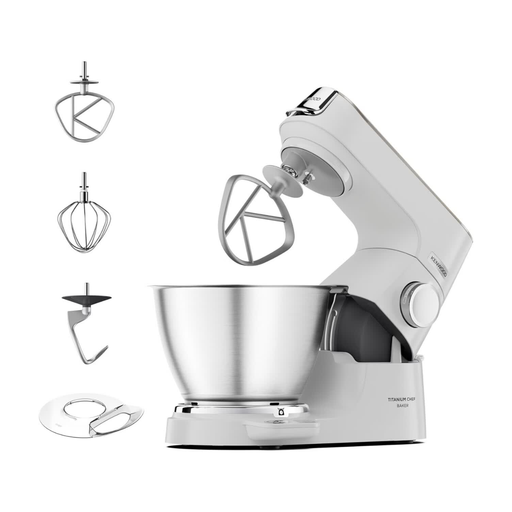
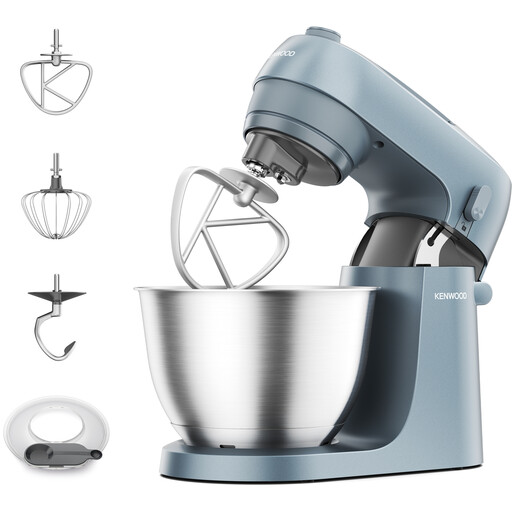
Kenwood’s Chef KVC3100W is a 4.6L model supplied with a K-Beater, whisk and dough tool.
Bosch’s MUMS2VM40G is a 3.8L MUM Series 2 mixer with seven speed settings and a supplied whisk, stirrer and kneading hook.
KitchenAid’s 5KSM60SPX is a 5.6L bowl-lift mixer supplied with a paddle and spiral dough hook.
These stand mixers offer different bowl sizes and formats for cheese-cracker baking. Check the included beater and whether the exact model can handle your usual batch before choosing by bowl size.
 No image available
Consider this format for routine batches if its beater works with your recipe quantity. The product name specifies a 4.3L bowl, 1000W rating and three bowl tools; check which tools are included and confirm the relevant pastry limit before ordering.
 No image available
Consider this model if you want to check pastry-batch guidance for a named Chef Baker variant. Confirm its supplied beater, pastry-flour limit and ability to mix your usual smaller batch; also measure the space where you would keep it.
 No image available
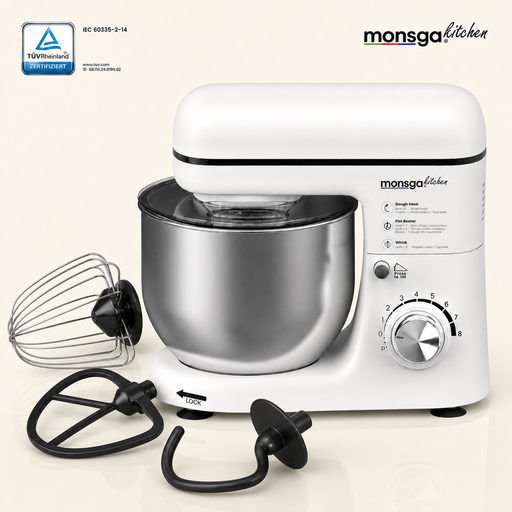
For a modest lunchbox recipe, compare this model’s bowl, beater and storage dimensions with the space and quantity you have in mind. Confirm its pastry capacity and how small a batch it can mix effectively.
 No image available
The named flat beater makes this a model to check for the fat-and-flour stage of cracker dough. Its product name specifies a 5.0L bowl and eight speed settings; confirm suitability for your smaller batch, along with the exact variant’s UK electrical details.
 No image available
Consider the larger bowl if you also plan to make substantial batches, rather than assuming it will suit a single tray. The product name specifies a 6.5QT bowl and includes a beater; check the minimum effective batch size, pastry limit and exact variant’s UK electrical details.
Use a flat beater or K-Beater for the fat-and-flour stage of a shortcrust-style dough. Kenwood’s shortcrust method specifies its K-Beater; a dough hook intended for kneading does not replace the need for brief, controlled mixing.
It may, but check whether the exact model can mix your recipe quantity effectively before choosing it for extra capacity. KitchenAid positions its bowl-lift format for larger, heavier mixtures, while its tilt-head format offers quicker access to the beater.
Stop mixing rather than trying to work it longer. Kenwood warns that warm, overhandled pastry can become dry and hard; add liquid gradually during preparation, handle the dough briefly and chill it before rolling.
Raise the issue with the seller and keep the order record and product description. The UK Consumer Rights Act 2015 requires goods supplied under a consumer contract to be of satisfactory quality; the appropriate remedy depends on the circumstances, which are distinct from a change-of-mind return.
Check an electrical-equipment recycling route rather than assuming the mixer belongs in ordinary household waste. UK guidance on waste electrical and electronic equipment addresses recovery and recycling; your local authority or an applicable retailer take-back arrangement can advise on the available route.