Space-first cheesecake makers
If the mixer must live in a small cupboard or on a crowded worktop, compare its width, depth, height and weight before focusing on bowl size.


Start with the space available for storing and using a stand mixer, then check that the exact bundle has a beater and whisk suitable for your cheesecake recipe. A compact machine suits tight storage; a larger-bowl tilt-head model is worth considering for bigger batches or wider baking use, provided its footprint and raised-head clearance fit your kitchen.
If the mixer must live in a small cupboard or on a crowded worktop, compare its width, depth, height and weight before focusing on bowl size.
If you want to beat cream-cheese filling and sometimes whisk a separate component, look closely at the supplied bowl tools and speed controls.
If you will use the machine beyond cheesecake, a roomier bowl or compatible attachments may justify giving it more storage space.
Measure the space first, check the tools supplied with the exact model next, then decide whether extra bowl room or attachments will earn their storage space.
| Concern | What to check | Who this matters to |
|---|---|---|
| Worktop and storage fit | Measure width, depth and height where the mixer will be used and stored; allow room to raise a tilt head. | If cupboard or worktop space is tight, I need a machine I can realistically keep and use there. Roughly 42% of consumers put space fit first. |
| Controlled mixing | Check the exact bundle for a beater or paddle, a whisk and selectable speeds. | When making filling and whisked components, I want the appropriate tools without assuming every bundle contains them. Around 33% of consumers prioritise mixing tools and control. |
| Batch and multi-use flexibility | Compare bowl capacity for your usual batch, included tools and compatibility of any attachments you would use. | If I regularly bake larger batches or prepare other foods, more bowl room and useful accessories matter enough to take up extra space. About 25% of consumers place that flexibility first. |
A larger bowl does not tell you how much room the appliance needs. Kenwood GB lists the 5L kMix KMX751 at 38.5 × 24 × 35.3 cm and 8.86 kg, while Bosch UK lists the MUMS2VM40G at 266 × 266 × 277 mm.
Measure the intended spot and compare the exact model’s dimensions and weight before choosing its bowl capacity.
KitchenAid UK lists two bowls and several mixing tools for the 5KSM175PS bundle, but contents vary by model and bundle.
Check the full model number and in-box list for the beater and whisk you need, rather than relying on a range name or product photograph.
Wattage alone does not compare how different mixers will handle cheesecake filling; the documented models also differ in tools, speed settings, capacity and size.
Prioritise the supplied tools, controllable speeds and physical fit, then assess other specifications for the exact model.
Kenwood describes kMix slow-speed-hub attachments as optional, while Prospero+ attachments come in different configurations. They are not needed for ordinary cheesecake filling.
Choose an attachment-compatible setup for specific tasks you expect to do, and check which parts are actually included.
Additional attachments also need somewhere to be stored and cleaned.
The MUM Series 2 offers a compact model to compare when storage dimensions are the main constraint.
Prospero+ and kMix provide different size and bowl-capacity options for occasional cheesecake making and wider baking.
The Artisan tilt-head range is relevant if supplied bowl tools and broader baking use matter alongside cheesecake filling.
These stand mixers offer compact-kitchen and roomier-bowl options to assess for cheesecake filling. Compare each exact listing’s footprint and supplied tools before deciding which trade-off suits your kitchen.
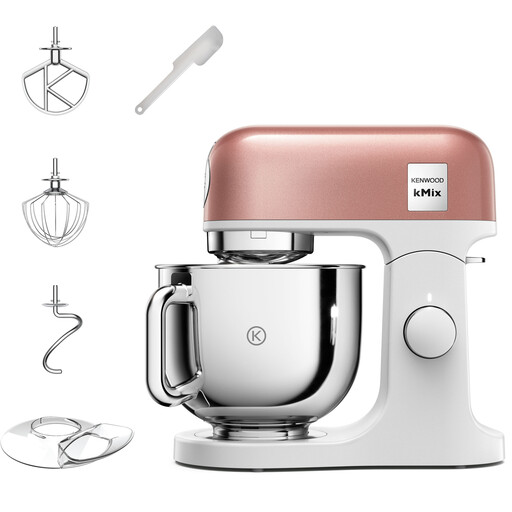 No image available
Consider this model if a tilt-head mixer suits your baking plans; check its footprint, head-opening clearance and supplied bowl tools against your available space and cheesecake recipe.
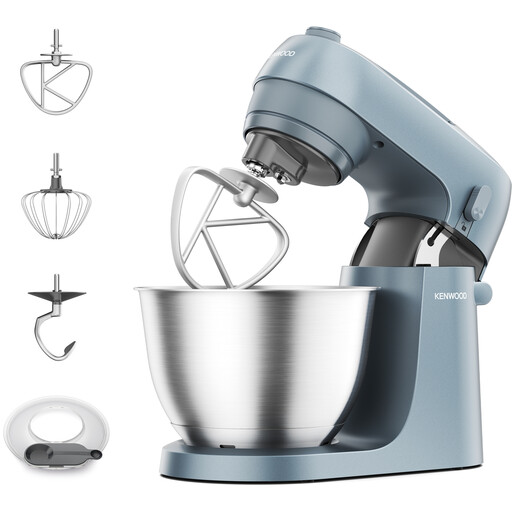 No image available
For a small kitchen, compare its dimensions and supplied mixing tools with the space and recipe you have in mind. Confirm the colour of model KZM35.000GY before ordering.
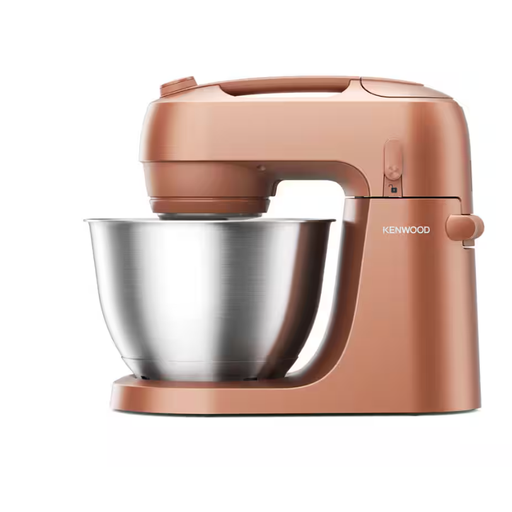 No image available
If storage height matters, check the space this mixer needs both stored and in use, as well as whether the supplied tools suit your filling and any whisked components.
 No image available
Its stated bowl size makes this a compact-route model to consider for your usual cheesecake batch, but confirm the dimensions for your intended spot before ordering.
The product name specifies a 4.3L bowl, 1000W and three bowl tools; check which tools the bundle supplies.
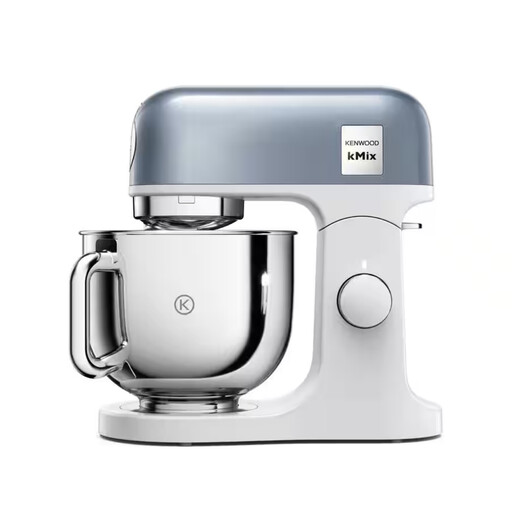 No image available
Consider this tilt-head option if you also want a mixer for broader baking use. Check its dimensions, raised-head clearance and exact bowl-tool bundle before giving it worktop or cupboard space.
There is no single required size: choose a bowl that accommodates your normal recipe while leaving room to store the mixer. Bosch UK lists a 3.8L usable bowl for the compact MUMS2VM40G, while KitchenAid UK lists 4.7L and 3L bowls in the specified 5KSM175PS bundle; bowl litres alone do not tell you which machine fits your kitchen.
Check that the exact bundle includes a beater or paddle for the filling and a whisk if your recipe has a whipped component. Bosch UK lists a whisk and stirrer for the MUMS2VM40G, while KitchenAid UK lists a wire whisk, paddle and flex-edge beater for the 5KSM175PS bundle.
Follow the care instructions for each tool in the exact model you buy rather than assuming all accessories can go in the dishwasher. Bosch describes accessories for the MUMS2VM40G as generally dishwasher-safe, and Kenwood says Prospero+ bowl tools are dishwasher-safe; check any coated or separately purchased accessory on its own instructions.
Check the eggs and the recipe’s food-handling guidance rather than assuming the mixer changes the risk. The Food Standards Agency’s June 2023 risk profile assessed Salmonella risk from UK-produced hen eggs under recognised farm-assurance schemes as very low; that assessment does not automatically apply to eggs outside those schemes or to every imported egg product.