Shared-kitchen batch bakers
If you make doughnut batter regularly, the mixer needs to handle your planned batch while still fitting on a worktop used by other people.


For occasional or moderate batches, a domestic planetary stand mixer can suit doughnut batter if its working capacity covers your batch and its supplied beater suits the recipe. If production is frequent and substantially larger, assess a commercial planetary mixer instead. Either way, check how the machine will be cleaned, accessed and stored by everyone sharing the kitchen.
If you make doughnut batter regularly, the mixer needs to handle your planned batch while still fitting on a worktop used by other people.
If several people use the machine, removable tools, washing instructions and a clear place to dry and store parts matter alongside mixing capacity.
If you make doughnuts for sale in a shared kitchen, assess production volume as well as the cleaning, cross-contamination and registration responsibilities that apply to the operation.
Consider it when: Batches are occasional or moderate and an exact model's stated mixture limit covers the recipe.
Trade-off: A larger domestic bowl does not establish a higher doughnut-batter limit or suitability for sustained production.
Consider it when: Frequent, larger food-business batches call for an assessment of equipment designed for that workload.
Trade-off: Check that the machine can be accommodated and cleaned in the shared workspace; commercial equipment does not replace a hygiene routine.
For doughnut batter in a shared kitchen, start with the batch you intend to make, then check how the mixer will fit into handovers and the available space.
| Concern | What to check | Who this matters to |
|---|---|---|
| Batch capacity | Compare your batch with the exact model's stated limit for the relevant mixture; do not use bowl litres as a substitute. | If I make repeated batches, I want to know whether the mixture fits within the machine's working limit rather than splitting it unexpectedly. Around 33% of consumers put batch capacity first. |
| Cleaning and handovers | Check the bowl and tools' care instructions and agree a cleaning, allergen and storage routine. | When someone else needs the mixer next, I need its parts ready for a clean handover without overlooking cross-contamination. Cleaning is the primary concern for around 27% of consumers. |
| Worktop and storage fit | Measure the allocated space and compare it with the mixer's dimensions, including clearance for head movement. | I need to use and put away the mixer without obstructing other people's work. For around 20% of consumers, shared-space fit comes first. |
| Mixing control | Check for a suitable supplied beater, adjustable speeds and operating guidance rather than judging by wattage alone. | For a batter recipe, I want to control ingredient additions and mixing without assuming a higher watt figure answers that need. Around 20% of consumers prioritise mixing control. |
Neither figure establishes how much doughnut batter the exact mixer can handle. Kenwood and Bosch publish mixture limits for particular models, while Joybuy Insights advises checking working capacity rather than relying on headline bowl volume.
Compare the manufacturer's applicable mixture limit and operating instructions with your recipe and planned batch; check dimensions separately.
A mixer may fit in its allocated spot but leave too little room to raise a tilt head, remove the bowl or put the appliance away.
Measure width, depth, height and overhead clearance where it will be used and stored, then compare them with the exact model.
Additional bowls and attachments still need washing, drying and storage between users. Food Standards Agency MyHACCP guidance calls for cross-contamination risks to be identified and addressed through layout or appropriate controls.
Agree who cleans each part, where it dries and how allergens and raw-to-ready-to-eat separation are managed.
Frequent large batches need an assessment against the machine's stated workload and mixture limits. Selling doughnuts can also bring food-business responsibilities into the decision.
Check the model's operating guidance, investigate commercial equipment if the workload warrants it and confirm applicable registration and food-safety requirements with the relevant local authority.
These manufacturer examples show specifications worth checking for particular models, not features shared by every mixer from each brand.
Kenwood GB specifies a 6.7 L bowl for the Chef XL KVL4100W, making that model a reference point when considering larger domestic batches.
KitchenAid UK lists the tilt-head 5KSM175PS with 4.7 L and 3 L bowls, four mixing accessories, a pouring shield and ten speeds.
Bosch GB specifies a 3.9 L bowl and a maximum of 2.7 kg cake mixture for the MUM58W20GB, offering model-specific figures to compare with planned batches.
These domestic stand mixers offer different bowl sizes, tools and controls to assess against your doughnut-batter recipe. Before choosing one, confirm the applicable working limit and the space available for cleaning and storage.
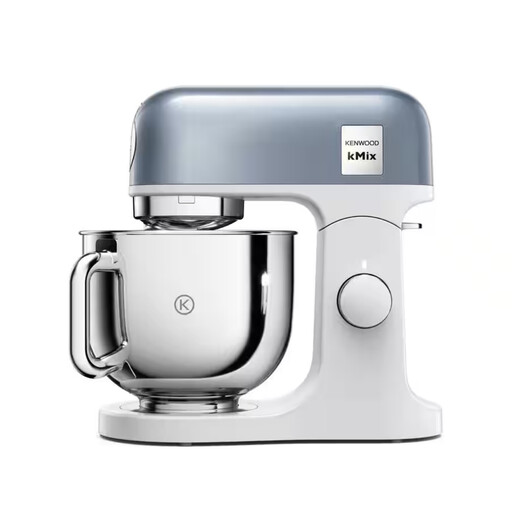 No image available
Consider this domestic mixer for shared-kitchen batches once you have checked that the applicable working limit covers your recipe.
Allow room to access the bowl and clean the machine between users.
 No image available
Consider this model where a 4.3 L bowl fits the planned workflow and the mixer has an accessible place on the shared worktop.
The product name lists three bowl tools. Confirm which tool suits your batter and check the applicable mixture limit before settling on a batch size.
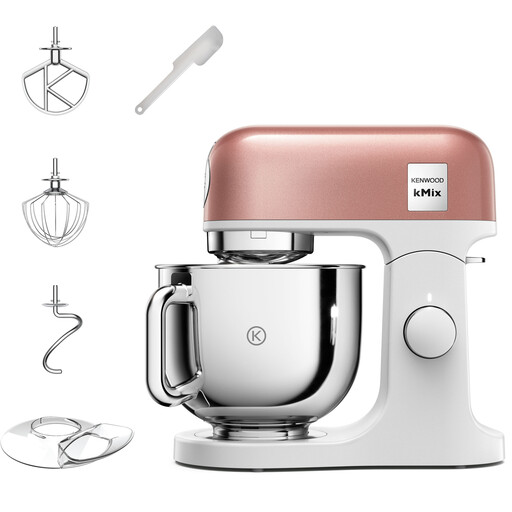 No image available
Consider this model if you can confirm a suitable beater and working limit for your doughnut-batter recipe.
Check the care instructions for the exact bowl and tools, as well as the space needed to access and store the mixer.
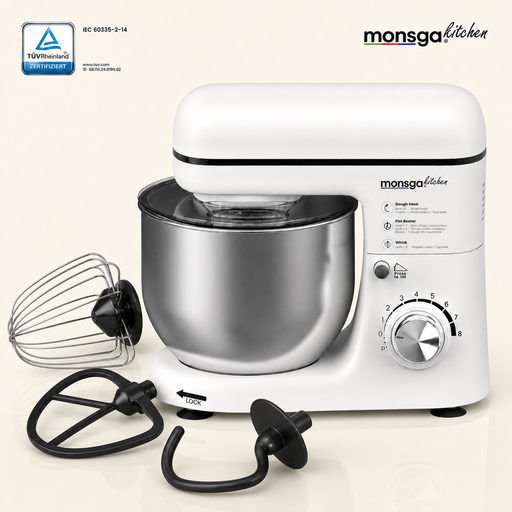 No image available
Consider this model if its stated bowl size and supplied tools suit your workflow, subject to checking the applicable batter limit.
The product name lists eight speed settings, a beater and a splash guard. Check its dimensions and the cleaning instructions for the parts your shared kitchen will use.
No. The exact mixer's applicable working limit matters more than bowl litres alone. Kenwood and Bosch publish model-specific cake-mixture figures, while Joybuy Insights advises distinguishing usable mixing capacity from headline bowl volume; check which limit applies to your batter.
For a pourable batter, check your recipe and mixer manual for the appropriate supplied paddle, stirrer or flat beater rather than assuming you need a dough hook. Confirm the attachment is included with the exact variant you plan to buy.
Agree a routine for cleaning and storing the bowl, tools, guard and mixer exterior, with allergen and raw-to-ready-to-eat separation considered. Food Standards Agency MyHACCP guidance calls for cross-contamination risks to be identified and addressed through layout where possible, or through defined areas and management controls.
If you are starting or taking over a food business in England, Wales or Northern Ireland, GOV.UK guidance says to register with the local authority at least 28 days before trading. If the kitchen is in Scotland or you are unsure how the activity is classified, confirm the applicable requirements with the relevant local authority.