Small-kitchen doughnut makers
If the mixer will live on a narrow worktop or move in and out of a cupboard, its dimensions and the space needed to use it matter alongside bowl volume.


For an ordinary home batch of doughnut batter, a compact stand mixer with a bowl of around 3.8–4L is a sensible starting point when kitchen space is tight. Check its stored footprint, clearance for using the bowl and included batter-mixing tool before comparing wattage; a larger bowl-lift machine is worth considering if you regularly make much bigger batches or heavy yeast dough.
If the mixer will live on a narrow worktop or move in and out of a cupboard, its dimensions and the space needed to use it matter alongside bowl volume.
If you normally make one home batch at a time, compare your recipe quantity with the exact mixer’s bowl and stated cake-mixture capacity, where available, rather than choosing capacity for much larger batches.
If doughnut batter is only one use for the mixer, check the supplied whisk and dough tool, model-specific accessory compatibility and instructions for cleaning each part.
Start with the space available for both storing and operating the mixer. Then compare the bowl and batter-mixing tool with your usual recipe before considering uses beyond doughnuts.
| Concern | What to check | Who this matters to |
|---|---|---|
| Usable space | Measure height, width and depth, plus clearance for opening the head and removing the bowl. | I need to store the mixer without giving up the worktop space required to use it; roughly 50% of consumers put usable space first. |
| Batch and mixing control | Compare your recipe with the stated bowl or cake-mixture capacity, and check for a flat beater, K-Beater or stirrer. | My usual batch needs enough room for mixing and adding ingredients without moving to a bigger machine; around 33% of consumers chiefly prioritise batch size and control. |
| Other uses and upkeep | Check supplied tools, compatibility by model and cleaning instructions for removable parts. | I want the mixer to handle other recipes and be straightforward to clean between uses; about 17% of consumers make versatility and upkeep their primary concern. |
Wattage does not establish whether a mixer fits your kitchen, includes a suitable batter tool or holds your usual recipe quantity.
Compare the exact model’s dimensions, bowl capacity and supplied beater or stirrer before treating wattage as another specification to consider.
A tilt-head mixer needs room above it when open. Even a machine that fits under a cupboard when closed may be awkward to use there.
Check the space needed to open the head, add ingredients and remove the bowl in the position where you plan to mix.
Bowls and accessories can differ between mixer models; KitchenAid advises checking attachment compatibility against the particular machine.
Use the full model number when choosing additional tools or a replacement bowl.
Buying equipment for home baking does not settle the requirements for operating a food business.
If you intend to sell doughnuts, check the rules that apply where you operate. The Food Standards Agency advises registering a new food business with the local authority at least 28 days before trading.
The Kenwood Go KZM35.000GR is a compact model to compare when cupboard height and worktop width are tight.
The Bosch MUM Series 2 MUMS2VM40G offers a compact, multi-purpose format with a stated 3.8L usable bowl volume.
KitchenAid presents its 3.3L tilt-head mini as a small-kitchen option alongside larger tilt-head and bowl-lift formats.
These stand mixers are choices to assess for home doughnut-batter batches. Their bowl sizes and available fit information differ, so compare each model with your recipe and the space where you will use it.
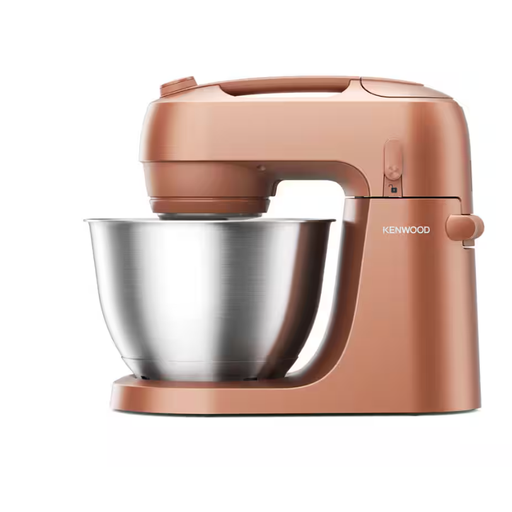 No image available
If cupboard height is your main constraint, the stated 30 cm height gives you a measurement to compare with your storage space. Allow room to access and remove the bowl when deciding where to use it.
 No image available
For a home batch, compare the stated 4.3L bowl with your recipe quantity and the mixer’s footprint with your available space. The product name lists three bowl tools; check which mixing tool is included before choosing it for batter.
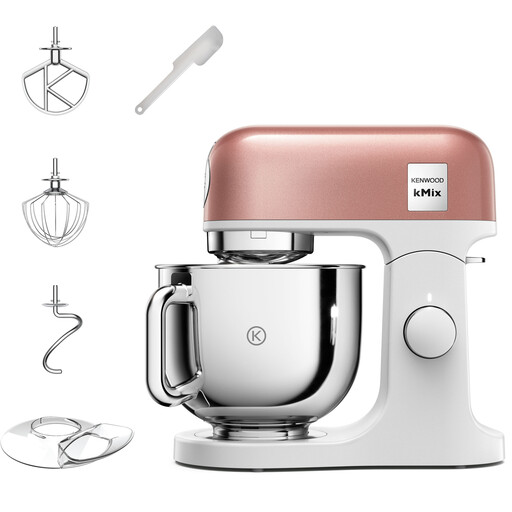 No image available
If this model appeals for doughnut batter, confirm the exact included mixing tool and compare the machine’s operating clearance with your worktop space. Check the permitted quantity against your usual recipe.
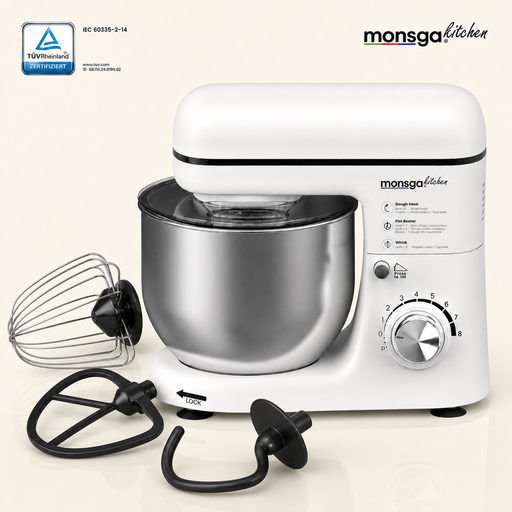 No image available
If you want a 5.0L bowl, check whether the mixer itself fits the space left for preparation. Its product name lists a beater, whisk, splash guard and eight speed settings; compare the permitted batter quantity with your recipe.
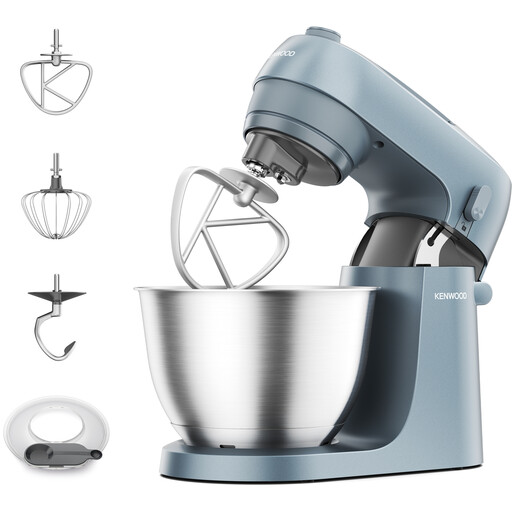 No image available
For a mixer you intend to put away between batches, check the dimensions and bowl-access space against your kitchen layout. Confirm the included batter tool and permitted quantity for the exact KZM35.000GY variant.
Start with the quantity in your usual recipe, not the largest bowl available. Kenwood GB lists a 4L bowl and 1.8 kg cake-mixture capacity for KZM35.000GR, while KitchenAid lists a 1.8 kg maximum cake mixture for its 3.3L 5KSM3311X; check the limit for the exact mixer you plan to buy.
For cake-style doughnut batter, check for the manufacturer’s flat beater, K-Beater or stirrer rather than choosing a mixer solely for its dough hook. A dough hook becomes relevant if you also plan to make yeast dough.
Check the appliance’s safety marking and follow its manual for setup, attachments and cleaning. Staffordshire Fire & Rescue Service advises against overloading sockets and recommends keeping to one appliance per plug where possible.
Owning a home mixer does not itself satisfy food-business requirements. The Food Standards Agency says a new food business must register with its local authority at least 28 days before trading; check the food-safety and allergen requirements that apply where you operate.