Small-kitchen lunchbox baker
If you make one modest batch at a time, check both cake capacity and the space available to store the mixer. Kenwood specifies a 30cm height and 1.8kg cake capacity for its 4L Go KZM35.000RD.


For a modest almond cake batter, choose a stand mixer with a suitable cake-mixing beater and a stated cake capacity that covers your largest planned batch; bowl size or wattage alone cannot settle the choice. A compact model makes sense when storage is tight, while a larger mixer or integrated scales are worth considering if you will regularly use the extra capacity or weighing function.
If you make one modest batch at a time, check both cake capacity and the space available to store the mixer. Kenwood specifies a 30cm height and 1.8kg cake capacity for its 4L Go KZM35.000RD.
If lunchbox cakes are only part of your baking, consider which tools you will use for cookies, whipping or dough as well. KitchenAid lists a paddle, whisk and dough hook for its 4.3L Classic, and gives 2.5kg as the maximum cake quantity for its 4.3L tilt-head model.
If weighing ingredients directly into the bowl would simplify preparation, an integrated scale may matter more to you than the smallest footprint. Bosch specifies integrated scales, a 3.9L bowl and a maximum 2.7kg cake mixture for the MUM5XW40G.
Start with the largest cake batch you expect to make, then decide how much storage space, mixing control and preparation convenience matter in your routine.
| Concern | What to check | Who this matters to |
|---|---|---|
| Capacity and storage | Compare the exact model’s stated cake capacity with your largest batch, then measure its height against your storage space. | If I usually make a modest lunchbox cake, I want enough capacity without giving up cupboard space. Roughly 40% of consumers put right-sized capacity and storage first. |
| Mixing and cleanup | Check for a supplied paddle or K-beater and usable speed settings; check care instructions for each attachment. | When I mix cake batter regularly, I want the right tool and manageable washing-up afterwards. Around 30% of consumers prioritise mixing control and cleanup. |
| Weighing and future use | Check whether scales are integrated and whether the included tools suit the other recipes you plan to make. | If I weigh ingredients as I mix or expect to branch into other baking, I want those functions to earn their place in the kitchen. Roughly 30% of consumers put weighing convenience or broader use first. |
Bowl volume is not the same as maximum cake quantity. KitchenAid publishes model-specific cake limits, so two bowl sizes should not be compared by litres alone.
Check the manufacturer’s cake-mixture limit for the exact model against your largest likely recipe, then check its storage dimensions.
Wattage alone does not tell you which supplied tool or speed setting you would use for a small batter. Kenwood’s cake recipe, for example, specifies a K-beater and a recipe-specific mixing sequence.
Check the included cake-mixing beater, speed controls and stated cake capacity, and follow your recipe’s mixing instructions.
Care instructions can differ within one set: KitchenAid says the Classic bowl, paddle and dough hook are dishwasher-safe, but its whisk should be hand-washed in warm soapy water.
Check the instructions for the exact bowl and attachments if dishwasher cleaning is important to you.
Electrical-equipment requirements differ between Great Britain and Northern Ireland. GOV.UK’s guidance on the Electrical Equipment (Safety) Regulations 2016 addresses products placed on the Great Britain market; Northern Ireland has separate guidance.
Before ordering, check the product version, plug and supply information, seller details, instructions and warranty route. For delivery to Northern Ireland, check the applicable Northern Ireland guidance rather than assuming the Great Britain position is identical.
These examples show different features to compare for lunchbox cakes; the specifications apply to the named models, not every mixer from each brand.
The Go KZM35.000RD is a compact option for bakers balancing a modest cake batch against storage space.
The 4.3L Classic is a conventional tilt-head option if cake batter is one of several home-baking tasks.
The MUM5XW40G is relevant if weighing ingredients into the mixer is a regular part of your cake-making routine.
Smeg’s 4.8L stand mixer range is another option to examine if you want a conventional accessory set for cakes and other baking.
These stand mixers offer options to consider for almond cake batter, from a compact Go model to mixers worth checking for larger batches or broader baking plans. Match the exact model’s tools and cake capacity to your recipes rather than treating bowl size as a capacity guarantee.
 No image available
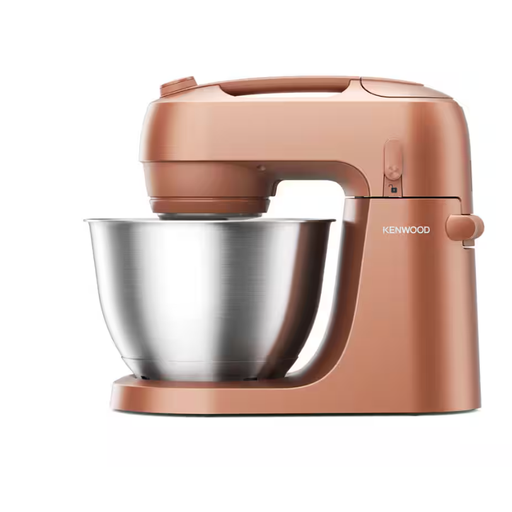
Consider this model for modest cake batches when storage height matters. Kenwood specifies a 4L bowl, 30cm height, K-Beater and 1.8kg cake capacity for the KZM35.000RD; compare that limit with your largest recipe.
 No image available
Consider the Chef Baker if weighing ingredients as you mix is a priority. Confirm the scale function, supplied beater and stated cake capacity for the KVC65.001WH before deciding whether it suits your usual batch.
 No image available
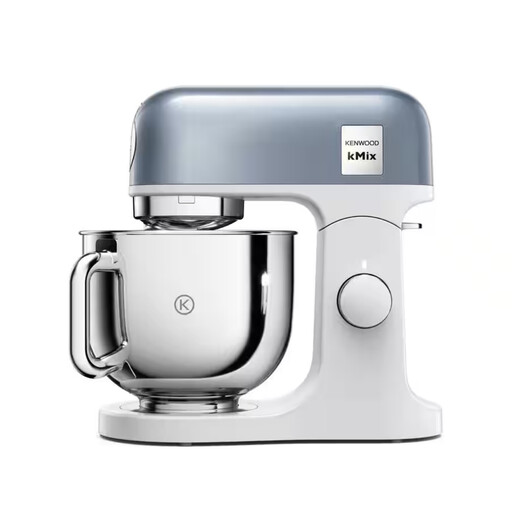
Consider this mixer if your plans extend beyond small lunchbox cakes. Check the exact Blue edition’s cake capacity, supplied beater and dimensions against both your recipes and available storage space.
 No image available
Consider this 4.3L model if you want a mixer for cake batter and other baking tasks. Its product name specifies 1000W and three bowl tools; check which tool is supplied for cakes and confirm the maximum cake-mixture quantity for your planned batch.
 No image available
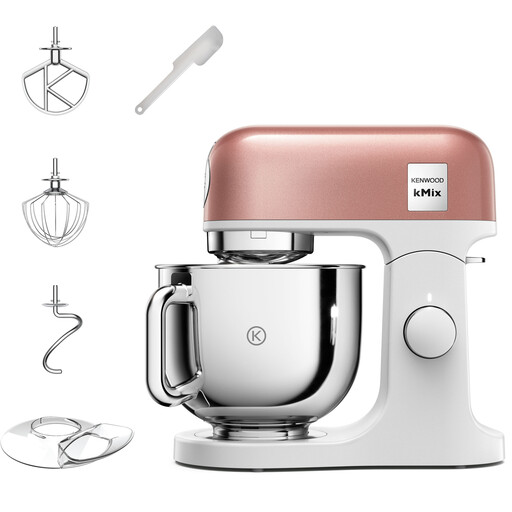
Consider this edition if you want to compare a kMix model for cakes and other baking. Check its maximum cake-mixture quantity and the care instructions for the exact bowl and attachments before ordering.
Use the cake-mixing tool specified by your recipe and mixer instructions, commonly a flat beater, paddle or K-beater. Kenwood’s cake recipe uses a K-beater, starting on low speed before increasing speed as that recipe directs; follow your own recipe’s mixing time and speed.
A 4L mixer may suit a modest batch if its stated cake capacity covers your largest recipe. Kenwood specifies a 1.8kg cake capacity for its 4L Go KZM35.000RD, so check the cake limit for the particular mixer rather than relying on bowl litres alone.
Check the care instructions for each part of the exact model. KitchenAid says the bowl, paddle and dough hook of its Classic 5K45SS can go in the dishwasher, while its whisk should be hand-washed in warm soapy water.
Integrated scales are useful to consider if you regularly weigh ingredients directly into the mixing bowl. Bosch specifies that its MUM5XW40G can weigh ingredients in the bowl or accessories; still check the model’s cake capacity, tools and current availability.
Check the exact product version, plug and supply information, instructions, seller details and warranty route. GOV.UK’s guidance on the Electrical Equipment (Safety) Regulations 2016 covers requirements for products placed on the Great Britain market; Northern Ireland has separate guidance, so confirm the applicable requirements if delivery is there.