Home dessert makers short on space
If you make mousse, cream fillings or meringue in a compact kitchen, you need to account for cupboard or worktop space as well as the room required to use the mixer.


For mousse filling in a small kitchen, start with a stand mixer that fits both its storage spot and the space needed to use its bowl and whisk; a 3.3–4L model is a sensible starting point for ordinary household batches. Check the exact whisk bundle, speed controls and your usual cream or egg-white quantity, and consider a larger bowl if you regularly make bigger batches or use the machine for other baking.
If you make mousse, cream fillings or meringue in a compact kitchen, you need to account for cupboard or worktop space as well as the room required to use the mixer.
If you usually make fillings for family desserts or occasional cakes, a suitable whisk and a bowl that handles your usual quantity matter more than maximum bowl capacity.
If the same appliance will also beat cake mixtures or occasionally knead dough, check its included tools and where you will keep and clean them.
For mousse filling in a small kitchen, establish where the mixer will be used and stored, then match its whisk and bowl to the batches you actually make.
| Concern | What to check | Who this matters to |
|---|---|---|
| Fit and clearance | Measure the storage spot and operating area, including space to access the bowl and whisk. | When cupboard space is tight, I need the mixer to fit where I use it and leave room to remove the bowl; around 46% of consumers put physical fit first. |
| Whisking and batch size | Confirm the exact model’s whisk, speed settings and stated cream or egg-white capacity against your usual recipe. | If I mainly make mousse for family desserts, I need the whisk and bowl to suit my normal batch rather than an occasional large one. Roughly 36% of consumers prioritise that whisking-and-batch need. |
| Wider use and cleaning | Check the included tools, cleaning guidance and storage space for accessories you would use. | To justify giving a mixer kitchen space, I would also use it for cakes or occasional dough; about 18% of consumers place broader use first. |
A larger bowl can accommodate bigger recipes, but the appliance still has to fit the available worktop and storage space. KitchenAid’s buying guidance associates larger capacities with regularly making double or triple batches.
Use the largest batch you make routinely to judge capacity, then measure where the mixer will stand and be stored.
Tool bundles can differ by model and listing. For mousse components, the exact whisk supplied matters more than a general description of the mixer’s baking uses.
Match the model number to the box contents and confirm that a wire or balloon whisk is included.
Body dimensions do not tell you whether there is room to raise a head, add ingredients or remove the bowl beneath a cupboard.
Measure the full operating area and check how the exact model’s head and bowl move.
Whisking does not address the food-safety considerations of a recipe containing uncooked egg; the egg source, recipe and people being served still matter.
Check current Food Standards Agency advice before serving raw-egg mousse, particularly to vulnerable people, and consider whether a suitable pasteurised egg product works for the recipe.
These product lines offer different ways to balance space and batch size; compare exact models and bundles rather than treating a brand name as a specification.
Bosch Series 2 MUM is a compact line worth considering when cupboard or worktop fit is the starting constraint.
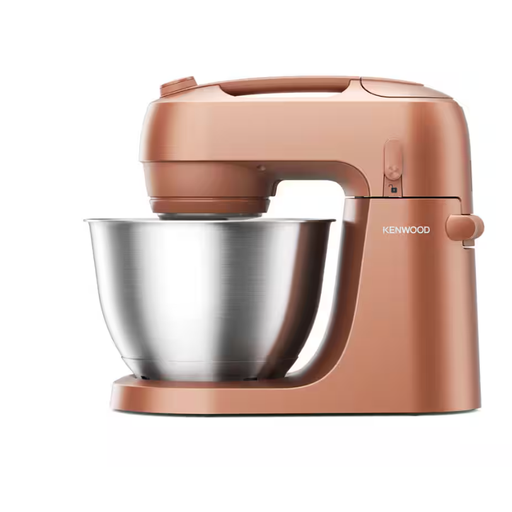
Kenwood positions its Go collection for compact living and storage in cupboards or corners.
The 3.3L Mini and 4.7L Artisan offer different capacity choices for smaller batches and broader baking plans.
These stand mixers offer choices for mousse filling alongside other baking. Compare each model’s actual whisk bundle, usable clearance and suitability for your usual batch before choosing a place for it in a small kitchen.
 No image available
Consider this Go model if storage space is your main constraint and you also want a mixer for other baking tasks.
Confirm the included whisk, clearance during use and suitability for your usual mousse batch. Check the UK plug and applicable safety information before ordering.
 No image available
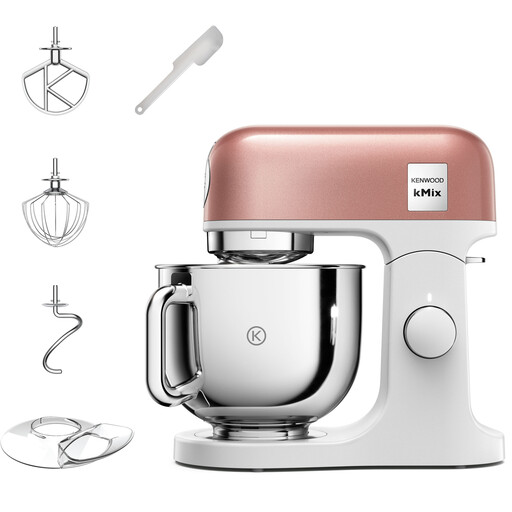
Consider this model if you want one mixer for mousse and occasional baking, provided it fits the space where you will use it.
Check the exact whisk bundle, head clearance and smallest batch you expect to whisk. Confirm the UK plug and applicable safety information.
 No image available
Consider this 4.3L model if you make mousse and also want a mixer for other baking tasks.
Its product name specifies 1000W and three bowl tools; check which tools are included, whether the whisk handles your usual batch and how much clearance it needs. Confirm the UK plug and applicable safety information.
 No image available
Consider the Chef Baker if mousse is one of several baking tasks for which you would keep a stand mixer.
Measure its storage and operating space, and confirm the supplied whisk and minimum useful batch for your recipes. Check the UK plug and applicable safety information.
 No image available
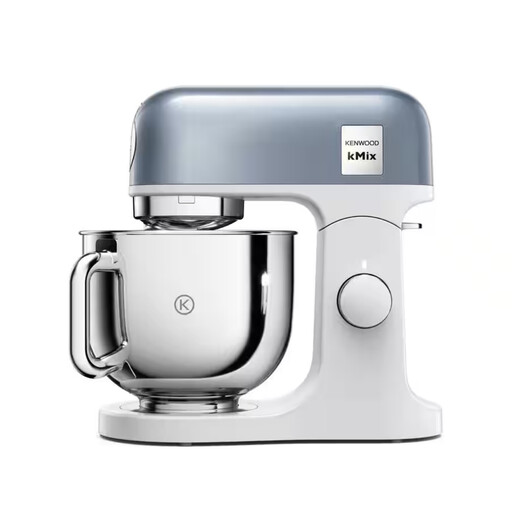
Consider this model if you regularly prepare larger batches or want a stand mixer for baking beyond mousse.
Confirm its bowl capacity and included whisk for the exact Blue variant, then measure storage space and clearance with the head raised. Check the UK plug and applicable safety information.
A 3.3–4L bowl is a practical starting range for ordinary household batches when storage matters. Consider more capacity if you regularly make double or triple batches, but check whether the mixer fits where you will use it and whether it suits your smaller recipes too.
No: start with the exact model’s included whisk, speed settings and suitability for your usual cream or egg-white quantity. A wattage figure alone does not establish how well a mixer will handle your recipe.
Allow room to operate the head or bowl, add ingredients and remove the whisk, not just enough space for the appliance body. Measure the intended worktop and storage locations against the exact model’s dimensions and configuration.
No: whisking does not change the food-safety considerations of uncooked eggs. The Food Standards Agency’s June 2023 risk profile discussed raw or runny UK-produced eggs from recognised assurance schemes in relation to vulnerable groups; check current FSA advice and choose a recipe appropriate for the people you are serving.