Occasional picnic cake bakers
If you normally make one apple cake at a time, a mixer that is straightforward to set up, put away and clean may matter more than room for several batches.


For one occasional apple cake, start with a compact mixer; for regular baking, consider a mid-sized bowl, and reserve a large-bowl machine for frequent sharing batches. Compare the stated cake-mixture capacity and included beater before choosing, then check that the mixer and its moving head or bowl fit your kitchen space.
If you normally make one apple cake at a time, a mixer that is straightforward to set up, put away and clean may matter more than room for several batches.
If cakes are a regular part of your baking, compare bowl access, stated cake-mixture capacity and the tools supplied with the exact model before moving to a larger format.
If a picnic often calls for several cakes or dense mixtures, look at the manufacturer’s stated capacity for the relevant recipe and allow enough room to operate and store a larger machine.
Decide how much cake batter you normally prepare, then check the mixing tools and the space the machine will need. A bowl’s volume alone does not tell you its stated cake-mixture limit.
| Concern | What to check | Who this matters to |
|---|---|---|
| Even batter mixing | Check for an included flat beater or stirrer and look at independent evidence on bowl coverage and scraping. | If batter stays on the bowl wall, I would rather stop to scrape it less often. Around 40% of consumers put consistent mixing first. |
| Picnic batch capacity | Compare the exact model’s stated cake-mixture capacity, not just its bowl volume or dough limit. | When I make several cakes to share, splitting the batter into repeated mixes is my main concern. Roughly 30% of consumers prioritise batch capacity. |
| Storage and clean-up | Measure storage and operating clearance; check the machine’s weight and which parts the manufacturer says are dishwasher-safe. | If I bake only occasionally, I need to be able to move, store and clean the mixer comfortably. Approximately 30% of consumers place those practical demands first. |
A wattage figure cannot tell you whether the beater reaches batter at the sides of the bowl. Which? considers mixing time, scraping and ease of use when assessing stand mixers.
Compare the exact model’s cake-mixture capacity and supplied beater, and consult independent mixing tests where available.
A large mixer needs more than a place to sit: you must also be able to reach the bowl and operate its head or lift mechanism. Kenwood lists the Chef XL KVL4100W at 7.84kg, which matters if you plan to put it away after baking.
Measure the worktop, cupboard and overhead space with the mixer’s operating mechanism in mind.
Manufacturers can give separate figures for bowl volume, cake mixture and dough. One cannot be substituted for another when planning a larger apple cake recipe.
Find the cake-mixture figure for the exact model and check its manual before scaling up a batch.
Kenwood’s Chef XL KVL4100W is a large-bowl reference point if you regularly prepare several cakes rather than one occasional batch.
KitchenAid offers smaller tilt-head formats as well as larger bowl-lift models; the format choice depends on batch size and available operating space.
Bosch’s Series 2, 4 and 6 provide different stated bowl and cake-mixture capacities, making the range useful for comparing an occasional bake with larger batches.
These stand mixers offer different bowl formats and supplied mixing tools to consider for picnic cake preparation. Match the exact model’s cake-mixture limit and storage needs to the batches you intend to make.
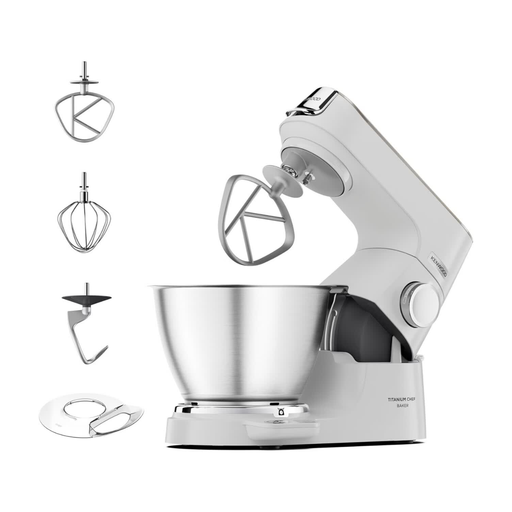 No image available
Consider this model for regular cake batches if its stated cake-mixture capacity suits your recipes. Check its weight and dimensions against where you intend to use and store it, and confirm the applicable electrical information before buying.
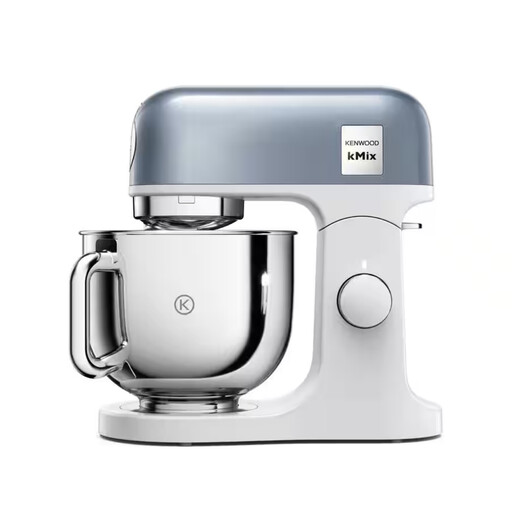 No image available
For sharing batches, compare the listed cake-mixture limit with the amount you usually prepare. Allow for the machine’s weight when choosing a worktop or storage spot, and confirm the applicable electrical information.
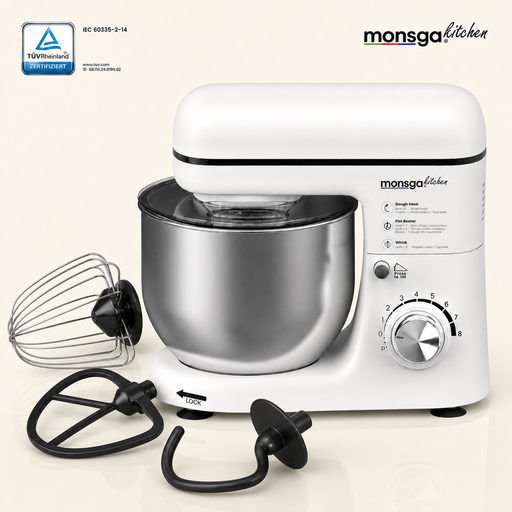 No image available
The included beater makes this a model to assess for cake mixing, but confirm its cake-batter limit before planning a large batch. Its title specifies a 5.0L stainless-steel bowl, eight speed settings and 1000W peak power; peak power is not a measure of cake-mixing results. Check the applicable electrical information before purchase.
 No image available
Consider the 4.3L bowl and supplied mixing tools for an occasional cake, while checking the model’s cake-batter limit if you plan to make more than one. The title specifies three bowl tools and 1000W; confirm bowl coverage and the applicable electrical information before buying.
 No image available
Its larger stated bowl size is relevant if you prepare cakes to share, but check the cake-batter limit before choosing it for a particular batch. The title lists a beater, whisk and dough hook; also measure tilt-head clearance and confirm the applicable electrical information.
Choose by the amount of batter you intend to mix, using the exact model’s cake-mixture limit where available. Bosch states capacities of up to 2.4kg for its 3.8L Series 2 and up to 2.7kg for its 3.9L Series 4, while Kenwood lists 5kg for the 6.7L Chef XL KVL4100W; these are manufacturer figures, not a rule for every recipe.
No: wattage alone cannot establish how thoroughly a mixer reaches batter around its bowl. Check the supplied beater, stated cake capacity and independent evidence on mixing and scraping for the exact model.
Consider a bowl-lift model if you routinely prepare large or dense batches, but check its stated recipe capacity rather than relying on the mechanism alone. KitchenAid positions its bowl-lift format for bigger quantities; whichever format you choose, measure the clearance needed to use it.
Check that the exact version and seller information are appropriate for supply in Great Britain; do not assume another market’s version is equivalent. The Office for Product Safety and Standards explains that the Electrical Equipment (Safety) Regulations 2016 require manufacturers to show how equipment meets the safety objectives before it is placed on the Great Britain market. For delivery to Northern Ireland, confirm the applicable market information with the seller.
Look for an appropriate electrical reuse or recycling route rather than putting the mixer in ordinary household waste. UK government guidance on waste electrical and electronic equipment describes recovery, reuse and recycling as aims of the applicable regulations.