For a small apple-cake batter, choose by how well the beater reaches your recipe quantity, then consider space and capacity for other bakes. Which? identifies bowl coverage and the need to stop and scrape as practical differences between stand mixers; a compact or medium tilt-head model is worth considering for occasional cakes, while a larger machine makes more sense if you regularly prepare bigger or heavier mixes. A published maximum cake capacity does not establish how a mixer handles your smallest batch, so check guidance or a relevant batter test for the exact model.
Who is this for?
Small-batch cake bakers
You usually make one apple cake and want the beater to combine ingredients at the sides and base without frequent interruptions to scrape the bowl. Which? identifies beater reach as a useful difference to examine between mixers.
Bakers with limited kitchen space
You want hands-free mixing but need room to store the machine and open it while adding ingredients. Kenwood describes its Go model as 30 cm high, while KitchenAid highlights access to the bowl on its tilt-head models; check dimensions and opening clearance for the particular model you choose.
Occasional bakers planning larger bakes
You mainly make small cakes now but may later prepare larger cakes or dough. Maximum capacities and available attachments can help you assess those plans, provided you separately check whether the mixer works for your usual smaller recipe.
What matters when choosing?
Start with the batter quantity you actually mix, check where the machine will sit and open, then decide how much capacity you need for other recipes.
| Concern |
What to check |
Who this matters to |
| Small-batter coverage |
Check the supplied cake beater and look for exact-model minimum-quantity guidance or a cake-batter test reporting bowl reach and scraping. |
If my usual batter gathers at the sides or base, I want a beater that reaches it without constant stopping; roughly 50% of consumers put small-batter coverage first. |
| Space and access |
Measure storage space and the clearance needed to raise the head; check whether you can remove the bowl comfortably. |
When worktop space is tight, I need the mixer to fit and still open easily for adding apple or scraping the bowl; around 30% of consumers prioritise space and access. |
| Future capacity |
Compare stated maximum capacities for planned recipes, then confirm which tools are included and which optional attachments fit the exact model. |
If larger cakes or dough are likely to become regular projects, I want room to take them on without overlooking today's small batch; roughly 20% of consumers put future capacity first. |
Buying pitfalls
-
Reading maximum capacity as a small-batch guarantee
A maximum cake quantity tells you about an upper limit, not whether a beater reaches a much smaller batter. Which? identifies bowl reach and scrape-down interruptions as differences worth checking.
Use maximum capacity to assess future recipes; for your apple cake, seek minimum-quantity guidance or a cake-batter test for the exact model.
-
Choosing a larger mixer without checking access
KitchenAid positions bowl-lift machines for medium-to-large capacities and heavier use, while its tilt-head design allows the head to be raised for bowl access. Extra capacity may not address the main difficulty of mixing one small cake.
Measure the space available for storage and use, and check how you would remove the bowl and beater. Choose the larger format if its capacity suits recipes you make regularly.
-
Using wattage as the deciding cake-mixing measure
Wattage alone does not describe how a tool reaches batter at the base or sides. Which? reports differences in mixing time, ease of use and attachment reach.
Compare the supplied beater, relevant bowl-coverage tests, access for scraping and the exact model's care instructions before deciding.
-
Expecting the mixer to correct the ingredient sequence
Which? advises combining dry ingredients for cake mixes and batters before adding them to the mix, helping distribute ingredients such as raising agents.
Follow your recipe and the mixer manual for ingredient order, attachment and speed; stop to scrape the bowl when the mixture needs it.
Brands to consider
Kenwood
Kenwood's Go range is relevant if space is tight but you still want a stand mixer with a bowl and mixing tools.
- Kenwood GB specifies a 4 L bowl, 30 cm height and 1.8 kg maximum cake capacity for the Go KZM35.000RD.
- That maximum does not show how the model mixes your smallest batter; check exact-model guidance and whether its beater reaches your recipe quantity.
KitchenAid
KitchenAid offers tilt-head formats for bowl access alongside bowl-lift formats positioned for larger or heavier mixes.
- KitchenAid UK lists 3.3 L, 4.3 L and 4.7 L tilt-head sizes and states a 1.8 kg maximum cake quantity for its 3.3 L model.
- Maximum-capacity figures are not minimum-batch guidance; consider the space and access needed for the exact format before choosing for one small cake.
Smeg
Smeg's 4.8 L range is relevant if you are weighing a larger bowl and other uses against your usual small cake.
- Smeg UK describes a 4.8 L bowl and ten speed settings in its stand-mixer range.
- Bowl volume alone does not establish small-batter coverage; check the exact model and supplied tools against your recipe.
Joybuy stand mixers
These models cover compact and medium tilt-head choices, plus a larger-bowl tilt-head option for consumers considering other mixing tasks. For each one, check small-batter guidance separately from the bowl size or features stated in its name.
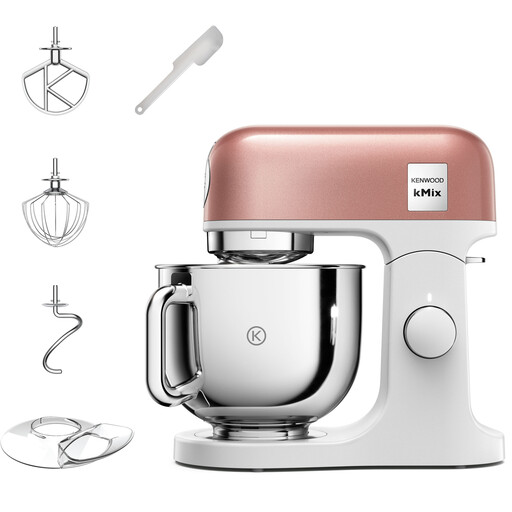 Image unavailable
Kenwood kMix Editions KMX760API, Apricot Pink
Consider this for cake mixing if access to the bowl and beater adjustment matter to you. Check the space needed to raise the head and seek guidance on how the K-beater handles your smallest batter.
View on Joybuy
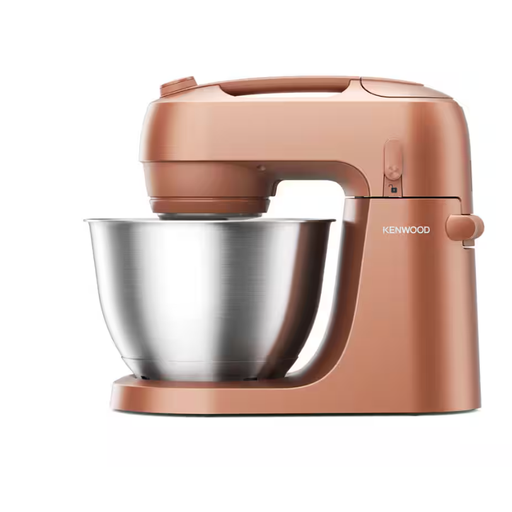 Image unavailable
Kenwood Go Stand Mixer, Red Clay
Consider this compact route when cupboard space matters alongside cake mixing. Check the room needed to open the head and whether the supplied K-beater reaches your intended batter quantity.
View on Joybuy
 Image unavailable
Kenwood Prospero+ KHC29.A0SI, Silver, 4.3 L
Consider this if you want a cake-mixing beater and room for occasional larger recipes. The product name states 1000 W, a 4.3 L bowl and three bowl tools; check how its beater handles your smallest cake batter rather than judging by those figures alone.
View on Joybuy
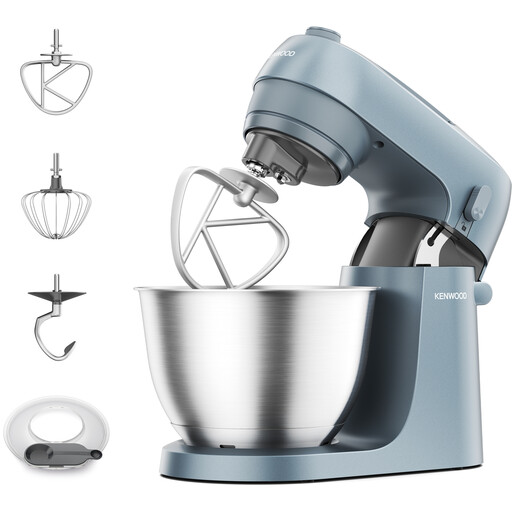 Image unavailable
Kenwood Go KZM35.000GY, Blue
Consider this for a restricted worktop if its opening clearance fits your kitchen. Check the beater instructions and small-batter coverage; confirm the colour before ordering if it matters, as the product title and description differ.
View on Joybuy
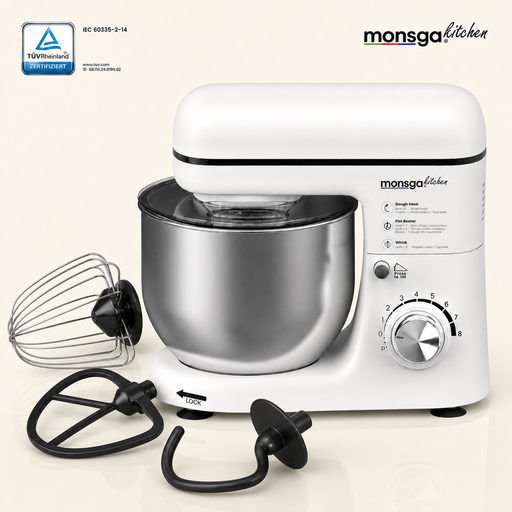 Image unavailable
MONSGA SM100, Cream White, 5.0 L
Consider this larger-bowl option if you expect mixing tasks beyond one small cake. Its name specifies 1000 W peak power, eight speeds, a beater, whisk, dough hook and splash guard; check its dimensions and how the beater reaches your usual batter before deciding.
View on Joybuy
Common questions
Is the smallest bowl always the right choice for a small apple cake?
No. Bowl size and maximum cake capacity do not tell you whether the beater reaches your particular small batter. Which? identifies bowl reach and scrape-down interruptions as practical differences, so check exact-model guidance or a relevant cake-batter test.
Which attachment should I use for ordinary apple cake batter?
Use a flat beater or paddle when your recipe calls for creaming and combining cake ingredients, rather than assuming the whisk or dough hook serves the same purpose. Follow the recipe and the exact mixer manual for attachment and speed instructions.
Does a mixer warranty replace my rights if it is faulty?
No. Citizens Advice explains that warranties and guarantees add to legal rights rather than replace them. Keep the warranty details as a separate claim route, and contact the seller if the mixer is faulty, damaged or not as described.
What electrical-safety checks matter when buying in the UK?
Check that the mixer is supplied for your intended market, and retain the seller and model details. GOV.UK states that the Electrical Equipment (Safety) Regulations 2016 set requirements for equipment placed on the Great Britain market; do not assume guidance specific to Great Britain applies unchanged in Northern Ireland.


