Small-batch fairy cake bakers
If you usually make a modest batch, the question is whether the beater reaches and combines your ingredients—not how much batter the bowl can hold at most.


For small batches of fairy cake batter, check whether a stand mixer’s supplied beater can work with your usual recipe quantity before choosing by bowl size or motor wattage. If storage is tight, compare dimensions and operating clearance; if you also want to make other recipes, weigh the included tools and compatible accessories against the space they require.
If you usually make a modest batch, the question is whether the beater reaches and combines your ingredients—not how much batter the bowl can hold at most.
If the mixer must go into a cupboard between uses, measure both its storage spot and the room needed to use it. Kenwood GB lists compact dimensions for the Go KZM35.000GR, while Bosch GB positions Series 2 as a space-saving range.
If fairy cakes are only the starting point, compare the supplied whisk, beater and dough tools with the tasks you expect to try. Check optional accessories against the exact mixer model.
Start with your usual recipe quantity, then check whether the mixer fits your kitchen and has tools you will use beyond fairy cakes.
| Concern | What to check | Who this matters to |
|---|---|---|
| Small-batch mixing | Ask whether the supplied beater can cream and combine the quantities in your usual recipe. A published maximum batter capacity does not establish a workable minimum. | If I make only a few fairy cakes, I need the beater to work the ingredients rather than leave them at the sides of the bowl. For around 36% of consumers, that small-quantity fit is the primary concern. |
| Storage and clearance | Compare the exact model’s dimensions with your worktop or cupboard, allowing room to add ingredients and remove the bowl. | When cupboard and worktop room are limited, I need a mixer I can store and set up without difficulty. Space is the main concern for around 29% of consumers. |
| Uses beyond cakes | Check which beater, whisk and dough tools come with the model, and confirm compatibility before choosing optional accessories. | If I expect to make dough or whipped mixtures later, I want the supplied tools to cover those plans. Around 21% of consumers put future uses first. |
| Control and cleaning | Check the speed controls and the cleaning instructions for each supplied bowl and tool; do not assume every part is dishwasher-safe. | For occasional baking, I want straightforward controls and parts I can clean as instructed after a quick batch. Ease of use is the priority for around 14% of consumers. |
Kenwood GB, Bosch GB and KitchenAid UK publish capacity information for relevant mixers, but a maximum does not tell you whether a beater will work your smallest fairy cake mix.
Ask the manufacturer or seller about the supplied beater and the actual quantities of butter, sugar and batter in your recipe.
Kenwood GB lists the Go KZM35.000GR at 33.5 × 18 × 30 cm; Bosch GB lists the MUMS2VM40G at 266 × 266 × 277 mm. Those dimensions alone do not account for the space needed to operate either mixer.
Measure your intended storage and worktop positions, including access to the bowl and any clearance the exact model requires.
KitchenAid UK specifies compatibility for its 3 L accessory bowl by mixer type; a shared brand name is not enough to establish a fit.
Check the bowl’s compatibility list against the complete model number before ordering.
The smaller bowl is a separate accessory, rather than the bowl supplied with the 5KSM125 mixer.
Electrical Safety First advises against using an appliance unless both it and its cable are in good condition.
Inspect the mixer and lead before use, follow its instructions and stop using it if either is damaged.
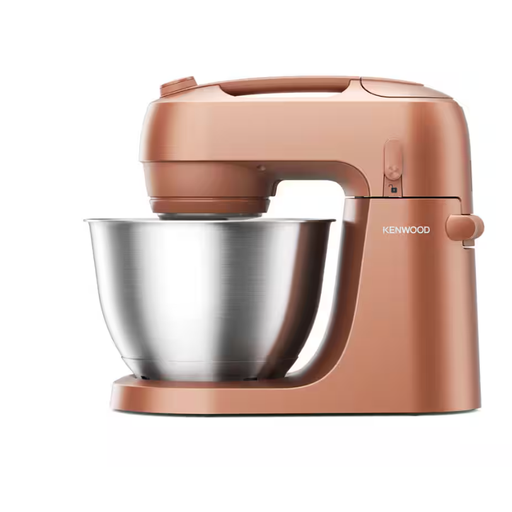
The Kenwood Go KZM35.000GR is a compact-space option for bakers considering a stand mixer for cake batter.
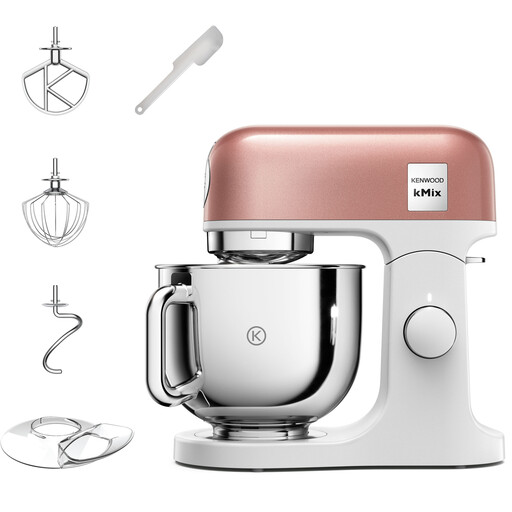
The MUMS2VM40G offers a compact Series 2 route for bakers interested in several preparation tasks.
The 4.7 L Artisan 5KSM125 is an attachment-oriented tilt-head option for broader baking plans.
Smeg describes a full-size stand-mixer range with a 4.8 L bowl and optional accessories.
These stand mixers offer different approaches to cake mixing, storage and wider baking plans. For each one, check the supplied beater against your usual small batch before treating bowl capacity as a suitability test.
 No image available
Consider this model if storing a stand mixer between small baking sessions is important. Check whether its supplied beater works with your usual fairy cake quantity, and confirm the exact model’s plug and documentation before ordering.
 No image available
This is a cake-mixing option for bakers who also need to plan where a stand mixer will sit while in use. Confirm that its supplied beater works with your small recipe and that you have room to access the bowl.
 No image available
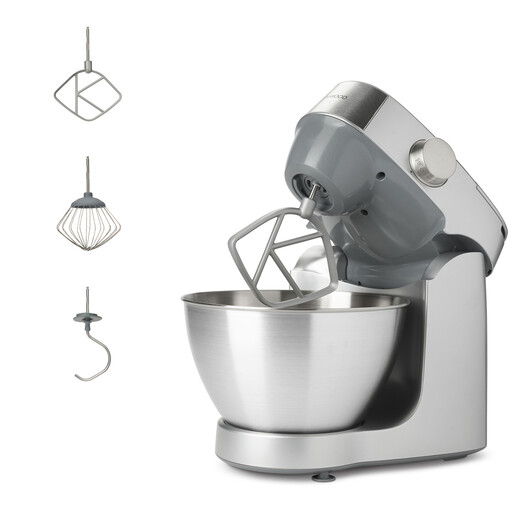
Consider this model if you want a stand mixer for cakes and need to check its fit in a smaller kitchen. Its product name specifies 1000 W, a 4.3 L bowl and three bowl tools; none of those figures establishes a minimum workable fairy cake batch.
 No image available
This model is worth considering if your baking plans extend beyond fairy cakes. Check whether its supplied beater suits your usual small batch, and whether the mixer’s space and handling requirements work in your kitchen.
 No image available
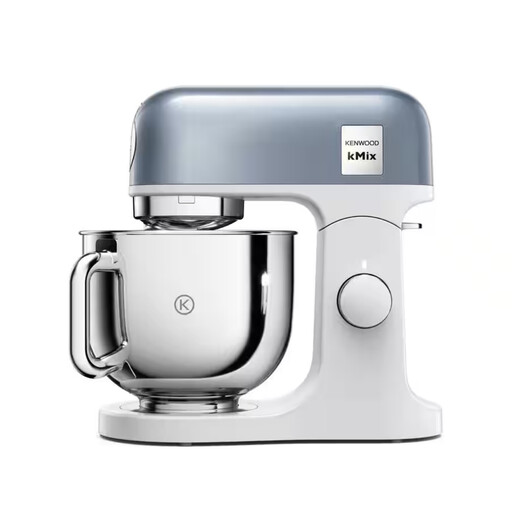
Consider this mixer if you expect to make other baked goods as well as fairy cakes. Check that its beater handles your smallest recipe, and measure the space available for using and storing it.
No: a smaller bowl does not, by itself, show that the beater will reach your ingredients. KitchenAid UK describes its separate 3 L bowl as suitable for small quantities and specifies compatible tilt-head mixers, but you should still check the exact mixer, beater and recipe quantity.
Not for small fairy cake batches alone. A power rating does not measure whether the supplied beater picks up your amount of butter and sugar; check the bowl-and-beater arrangement and ask about your usual recipe size instead.
Follow the cleaning instructions for each part of the exact model. Bosch GB describes its accessories as generally dishwasher-safe, while KitchenAid UK identifies its separate 3 L stainless-steel bowl as dishwasher-safe; neither statement covers every mixer bowl or tool.
Inspect the mixer and cable and follow the model’s instructions before use. Electrical Safety First advises against using an appliance if it or its cable is not in good condition; when buying, also confirm the exact model, plug and documentation for the intended market.