
24/7 Customer Support

Free returns

Same-day & Next-day Delivery

Quality Guaranteed

Unlock Your Welcome Offers: FREE Delivery | Up to 80% OFF | Free 30-day JoyPlus trial
Download the APP
Choosing between stand mixers and food blenders can be difficult when product pages highlight wattage, attachment counts and claims such as “all-in-one”. The right appliance depends on what you prepare most often: bread dough, cakes, smoothies, soups, chopped vegetables or quick family meals.
This guide from the Joybuy Product Recommendation Officer separates useful specifications from marketing noise, helping UK households compare an electric stand mixer, kitchen mixer, blender and food processor before buying.
A 1000W stand mixer may appear automatically stronger than a model with a lower rated output, but wattage alone does not explain how efficiently the motor transfers power to the bowl. Check the difference between peak power and rated power, particularly with budget food mixers.
For dough mixing, also look for:
A high headline figure cannot compensate for an undersized bowl, poor stability or unclear capacity limits.
A bowl labelled 5L, 6L or 6.5QT is not necessarily suitable for filling to the rim. Ingredients need room to circulate, especially when kneading or whisking. The Monsga SM100, for example, lists a 6L maximum bowl volume but recommends a 5L usable capacity.
Before purchasing, check the manufacturer’s limits for flour, dough, egg whites and cake mixture. This is more practical than comparing capacity figures alone.
A stand mixer with optional pasta, slicing or meat grinder attachments can be useful, but confirm whether these accessories are included or sold separately. Likewise, an all-in-one blender may include several jars that require considerable storage space.
Consider the tasks you perform weekly. A hand blender may be more convenient for soup and sauces, while a food chopper is more suitable for small quantities of onions, herbs or meat.
For occasional cakes and whisking, straightforward speed control may be sufficient. Bread makers and frequent bakers should look for a dough mixer with multiple speeds and a low-speed setting. A fold function can help incorporate delicate ingredients more gently.
The Kenwood kMix KMX754BK provides a 1000W motor, six speeds and a fold function, alongside planetary mixing action. The Kenwood Chef Baker KVC65.001WH provides a 1200W digitally controlled motor, variable speed, pulse and fold functions. These specifications indicate control options, but results will still depend on recipe quantities and the manufacturer’s usage limits.
Measure the space beneath cupboards before buying a stand mixer. Tilt-head models need additional clearance when the head is raised. Weight and non-slip feet also matter when kneading firm dough.
For blenders, compare jug and cup sizes with your household routine:
“Dishwasher-safe kitchen appliances” usually means selected detachable parts, not the motor base. Check whether the bowl, blades, lids and attachments can go on the dishwasher’s top rack, and always wipe the motor housing rather than immersing it.
For UK use, confirm the appliance is suitable for 220–240V, 50Hz mains electricity and includes appropriate instructions and warranty information. Look for lid locks, safety interlocks and overload protection. Unplug before changing attachments, and handle blades carefully.

Why This Fits Their Persona: Its compact size and one-speed operation suit students, first-time buyers and small UK kitchens needing simple blending for sauces, smoothies and desserts.
It does not rely on an inflated attachment list. The stated specification is clear: 450W, one speed, a 600ml beaker and a removable dishwasher-safe shaft.
Lightweight design, stainless-steel blades and a compact 600ml beaker.

Why This Fits Their Persona: Regular bakers may value integrated weighing, a metal body and a 4.6L stainless-steel bowl for cakes, pastry and family-sized preparation.
The listed cake and dough capacities provide more useful guidance than bowl volume alone. Its built-in scales also reduce the need for a separate weighing step.
1200W motor, EasyWeigh scales and compatibility with over 25 optional attachments.
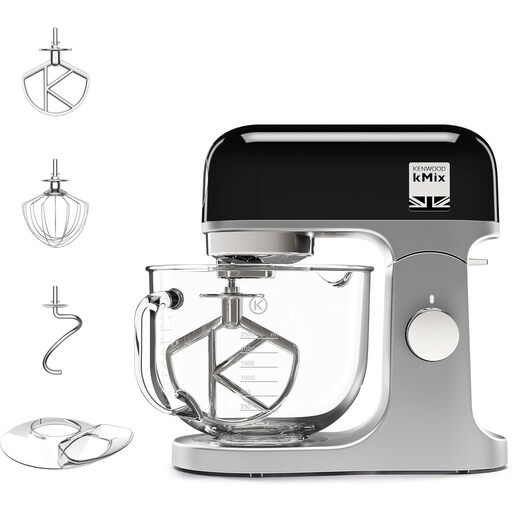
Why This Fits Their Persona: Home bakers making bread, brioche, meringue and cakes can use the dedicated dough hook, whisk and K-beater without holding a hand blender throughout preparation.
The three included tools cover the core mixing jobs, while the stated 5L bowl capacity and fold function give clearer everyday scope.
Six speeds, planetary action and a slow-speed outlet for optional attachments such as a meat grinder.
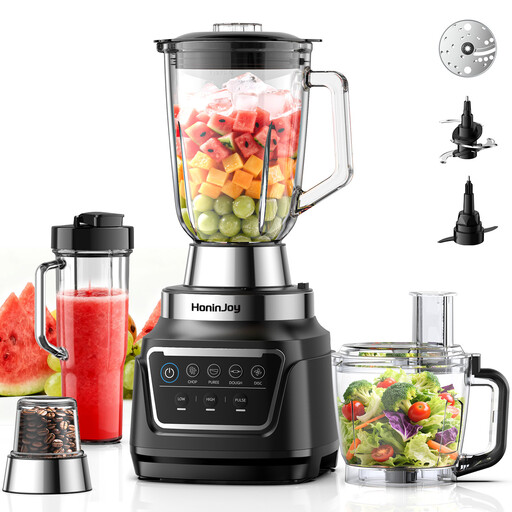
Why This Fits Their Persona: Busy families can use one appliance for smoothies, chopping, puréeing, grinding, slicing and shredding rather than storing several separate machines.
Its accessory list states the capacity of each container: 1.5L blender pitcher, 2L food processor bowl, 80g grinder jar and 24oz sport bottle.
1300W maximum power, one-touch presets and detachable parts listed as top-rack dishwasher safe.
We have compiled a complete, real-time list of products that fully satisfy these strict selection criteria and UK safety regulations.
They serve different jobs. A stand mixer is designed for whisking, beating and kneading while leaving your hands free. A blender and food processor is more suitable for smoothies, soups, chopping, slicing and puréeing. Households that bake and meal-prep regularly may benefit from owning both, while a hand blender is a space-saving starting point.
Follow the instruction manual rather than relying on a general time estimate. Several hand blender instructions specify short cycles of no more than one minute, while food choppers may specify pulse periods such as 30 seconds. Stop if the motor becomes hot, and allow the appliance to cool before continuing.
They can, but only when the detachable components are explicitly marked dishwasher-safe. Blades, bowls, lids and attachments may have different instructions. Remove food promptly, place suitable parts on the top rack where advised, and wipe the motor base with a damp cloth.