Start with workstation fit: the Health and Safety Executive advises placing the keyboard just below elbow height, with the screen and keyboard central, so a different keyboard cannot make up for a poorly adjusted standing desk. If wrist and forearm position is your main concern, consider a split layout; for shared or audio-sensitive work, prioritise switch noise; and for repeated cue notation, check UK key placement and shortcut options. Each choice still has to fit your desk and the keys you use.
Who this advice is for
Standing-desk writers concerned about wrist and forearm position
If you write for long stretches while standing, keyboard height, reach and layout need to work with the whole workstation. The Health and Safety Executive advises keeping the keyboard just below elbow height and avoiding a twisted position.
Cue writers in shared or audio-sensitive spaces
If colleagues or microphones are nearby, switch choice matters alongside clear, repeatable text entry. RTINGS notes that clicky mechanical switches can be particularly loud, while silent mechanical switches use internal dampening.
Shortcut-heavy writers who use UK key positions
If cue notation involves frequent symbols or repeated commands, check the physical layout and the keys available for shortcuts. Keychron lists UK-ISO models and describes key and macro customisation for its K5 QMK ISO version.
What to check before choosing
Set the standing desk and keyboard position first. Then decide which remaining requirement would most affect your cue-writing workflow.
| Concern |
What to check |
Who this matters to |
| Posture and reach |
Check keyboard height below your elbows and whether its width and angle let you work with the screen and keyboard centred. |
When I write standing for long periods, I need a key position that does not make me raise my shoulders or reach awkwardly. Around 36% of consumers may put workstation fit first. |
| Cue-entry layout |
Confirm the physical UK-ISO variant, the keys you use for punctuation, and whether any required remapping works with your operating system. |
If I enter the same cue labels and symbols repeatedly, familiar key positions and accessible shortcuts matter more to me than a smaller board. Roughly 29% of consumers may make cue-entry layout their primary concern. |
| Typing noise |
Check the selected switch variant and seek independent noise information where available, particularly before choosing clicky switches. |
With other people or a microphone nearby, I want to limit distracting keystrokes without giving up the feel I need for writing. Around 21% of consumers may prioritise typing noise. |
| Space and devices |
Measure the available keyboard width, decide whether you need a numpad, and check connections for each device you use. |
When scripts, audio controls and a mouse share my desk, I need enough room to work; switching devices may matter too. Approximately 14% of consumers may put space or device flexibility first. |
Buying mistakes to avoid
-
Choosing an ergonomic board before adjusting the desk
A split or low-profile keyboard will not correct a keyboard position that makes you raise your shoulders or twist towards the screen. The Health and Safety Executive advises placing the keyboard just below elbow height and keeping the screen and keyboard central.
Adjust the standing workstation first, then check whether the keyboard’s height, angle and footprint fit it.
-
Assuming all mechanical keyboards sound alike
Switch choice changes the noise decision: RTINGS notes that clicky switches can be among the loudest options, while silent mechanical switches use internal dampening.
For shared or recorded work, check the exact switch variant and look for independent noise information where available.
-
Assuming a UK listing has UK symbol positions
Regional variants can differ in physical key placement, which matters if you enter symbols by touch. Keychron, for example, identifies UK-ISO keyboards as a distinct layout selection.
Confirm the selected variant’s physical layout before buying rather than relying on the delivery destination.
-
Choosing a compact layout before checking your shortcuts
A smaller board can move keys you use for cue writing onto function layers or leave out a numpad you rely on.
List the keys used in a typical cue-writing session, then compare that list with the selected layout.
Relevant brands for reference
Logitech
Its keyboard range includes low-profile productivity, selectable-switch mechanical and split-layout options relevant to different cue-writing priorities.
- Logitech lists multi-device switching for MX Keys S and MX Mechanical, switch choices including Tactile Quiet for MX Mechanical, and 0°, -4° and -7° palm-lift positions for ERGO K860.
- Those model features do not establish personal comfort or the noise of every variant. Check the selected layout and whether its size suits your desk.
Keychron
Its UK-ISO range is relevant when familiar symbol positions and configurable keys matter to cue entry.
- Keychron describes Bluetooth and wired use, plus key and macro customisation through Keychron Launcher, for the K5 QMK ISO version.
- Sound and feel depend on the selected switch and board. Confirm the exact layout, variant and availability before choosing.
Microsoft
The Microsoft Ergonomic Keyboard offers a wired split-layout alternative for a workstation where USB connection suits the setup.
- Microsoft Support describes a split, arched USB keyboard with a cushioned palm rest.
- Its Office and Emoji keys require Windows 10 or Windows 11. A wired connection also calls for suitable cable routing at an adjustable desk.
Joybuy keyboard choices
These keyboards offer different ways to handle cue entry, desk space and connection needs. Check each selected layout and switch against your standing-desk setup; the product list does not replace that workstation decision.
 No image available
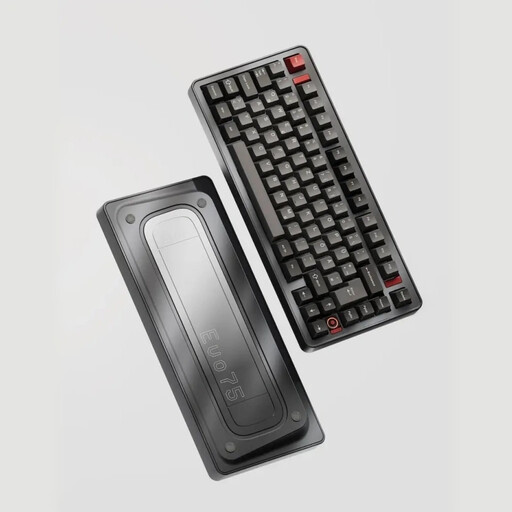
Ticktype EVO75, US Layout, Creamy Rye Switches, Anodized Basalt Grey
Consider this model if you want a smaller keyboard for cue writing and its US key positions suit your notation.
The product name specifies tri-mode wireless use, hot-swappable switches, VIA compatibility and an 8000mAh battery. Check typing noise if you work near people or microphones.
View on Joybuy
 No image available
ASUS ROG Falchion Ace HFX 65, UK Layout
Consider this compact keyboard if desk space matters and you can work with its available keys when entering cues.
The product name identifies a UK-layout analog gaming keyboard. Check whether frequently used cue keys require function layers, and assess typing noise for shared or recorded work.
View on Joybuy
 No image available
HyperX Alloy Rise 75 Wireless Keyboard UK
Consider this model if you want a smaller wireless keyboard, provided its selected physical key layout fits your cue-writing habits.
The name identifies the UK version, but confirm the precise key positions before buying. Check switch noise as well if you write near a microphone.
View on Joybuy
 No image available
Ticktype DP104, 108 Keys, US Layout, Silent Tactile Switches, Gecha Gray
Consider this full-size model if retained keys matter more than saving desk width, and a US layout works for your cue notation.
The product name specifies tri-mode wireless use, hot-swappable switches and Silent Tactile switches. The switch name alone does not establish how it will sound in your workspace.
View on Joybuy
 No image available
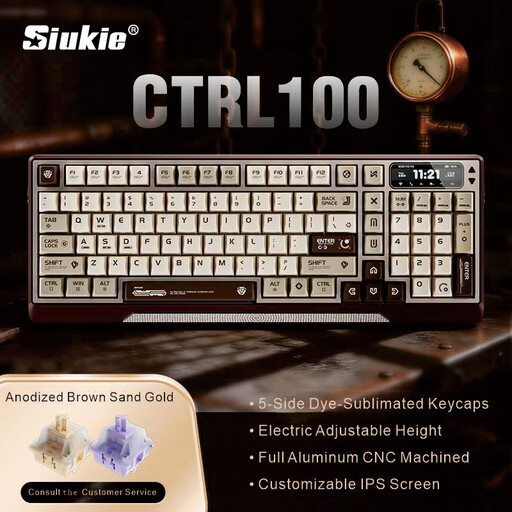
Siukie CTRL100, Motorised Lift, 96% US QWERTY Layout, Brown
Consider this keyboard if adjustable typing angle interests you, but check the resulting keyboard height against your standing position.
The product name identifies a motorised lift, tri-mode wireless use and a 96% US QWERTY layout. Confirm the lift range, required symbol positions and typing noise for your setup.
View on Joybuy
Common questions
How high should my keyboard be when I write while standing?
Place the keyboard just below elbow height. The Health and Safety Executive also advises keeping the screen and keyboard central; adjust the standing desk and monitor together rather than relying on a keyboard design to correct their position.
Is a split keyboard always the right choice for a standing desk?
No: a split layout is worth considering when hand and forearm position is your main concern, but it still has to fit you and the workstation. Logitech describes seated and standing palm-lift positions on ERGO K860; the Health and Safety Executive’s keyboard-height and central-placement advice still applies.
What should I choose if typing noise could affect a recording?
Check the exact switch and keyboard rather than judging noise by the mechanical label alone. RTINGS notes that clicky switches can be particularly loud and that silent mechanical switches use internal dampening; seek independent noise information for the variant you intend to use where available.
Do I need a UK-ISO layout for sound-effect cues?
Choose UK-ISO if you rely on its physical punctuation and symbol positions when entering cues. Check the selected variant’s keys rather than assuming every version of a keyboard family has the same layout.
When does an employer need to assess a display-screen workstation?
In the UK, the Health and Safety Executive says employers must assess workstations for workers who use display screen equipment daily as part of normal work for continuous periods of an hour or more. The assessment concerns the workstation and working conditions, not a requirement to buy a particular keyboard model.


