Choose a vertical mouse if a more upright grip is your priority, but check hand size and handedness before choosing a model. A thumb-operated trackball keeps the mouse body stationary on a crowded desk; a sculpted mouse with fast scrolling may suit long reading lists if its grip works for you. Whichever you choose, keep the mouse within easy reach and in line with your elbow, as the Health and Safety Executive advises.
Who might use each approach?
Standing-desk users considering an upright grip
If repeated clicking makes grip and reach your main concerns, compare vertical models by hand size and handedness. The Health and Safety Executive advises keeping a mouse close enough to use with a straight wrist.
Readers navigating long lists
If you regularly scroll through entries and return from links, look closely at wheel behaviour and the position of navigation buttons. Logitech and Trust describe different scrolling controls on their respective mice; the control style matters more here than the label on the grip.
Workers with little clear desk space or several devices
A stationary thumb-operated trackball may be worth considering when there is little room to move a mouse. If you switch devices, check the connection methods and pairing options of the exact model; Logitech describes thumb control on the ERGO M575S, while Trust describes multi-device switching on the Vyran.
What matters when choosing?
Decide whether grip, navigating the list or usable desk space will drive your choice, then check that the mouse can sit within easy reach at your standing desk.
Vertical mouse
Consider it: When you want a more upright grip for repeated pointer use.
Trade-off: Shape alone does not establish fit; hand size and handedness still matter.
Thumb-operated trackball
Consider it: When a stationary mouse body would leave more usable room on the desk.
Trade-off: Pointing with your thumb is a different control technique from moving a mouse.
Sculpted mouse with fast scrolling
Consider it: When moving through long pages matters more than an upright grip.
Trade-off: It retains a more conventional grip, and fast scrolling needs enough control for individual entries.
| Concern |
What to check |
Who this matters to |
| Grip and reach |
Check hand-size and handedness guidance, then whether the mouse can sit near your elbow. |
If I use the pointer for sustained editing, I want a grip and desk position that do not make me reach or bend my wrist awkwardly. Around 40% of consumers put grip and reach first. |
| Scrolling and navigation |
Compare controlled and fast wheel behaviour, plus the reach of back and forward controls. |
When I move between entries and linked pages, I need navigation that lets me return to a particular item without losing my place. Navigation comes first for around 30% of consumers. |
| Space and connections |
Compare a stationary trackball with a moving mouse; confirm connection methods and device compatibility. |
If my standing desk has little free surface, or I switch computers, I need a pointing device that fits the space and connects to my setup. Roughly 30% of consumers prioritise space and connections. |
Buying pitfalls
-
Choosing a vertical mouse by angle alone
An inclined grip does not establish whether a mouse fits your hand. Logitech specifies the Lift for small to medium hands and offers a left-handed version; Kensington describes separate vertical and left-handed models.
Check the hand-size and handedness guidance for the exact model before comparing its other controls.
-
Using a new mouse to compensate for poor reach
The Health and Safety Executive advises placing the mouse within easy reach and in line with the elbow. A different shape does not remove the need to position it properly.
Arrange the desk so you can use the mouse without stretching your arm, then decide whether a different grip or pointing method would help your workflow.
-
Prioritising speed over scroll control
Fast scrolling helps with moving through long pages, but editing an individual reading-list entry may call for more controlled movement.
Check how the wheel changes between fast and controlled scrolling, and whether you can reach navigation buttons without shifting your grip.
Relevant brands to consider
Logitech
Logitech documents several distinct approaches: the Lift vertical mouse, the ERGO M575S thumb-operated trackball and the MX Master 3S with MagSpeed scrolling.
- The Lift has stated small-to-medium hand fit and a left-handed option; the ERGO M575S uses thumb control without moving the mouse body.
- These models use different grips and controls. Choose by fit and task rather than treating a higher-featured mouse as a universal choice for standing use.
Kensington
Kensington offers a Pro Fit Ergo Vertical Wireless Mouse and a separate Pro Fit Left-Handed Ergo Wireless Mouse.
- Kensington states a 46.7-degree slope for the vertical model and a 41-degree inclined grip for the left-handed model.
- Check the exact model's fit and connection requirements. Kensington notes that its cited left-handed model does not currently support Windows ARM-based computers.
Trust
Trust describes the Vyran as an inclined wireless mouse with a hyperscroll and tilt wheel, rather than a stationary trackball.
- Trust states that the Vyran has a 50-degree angle, silent buttons and switching among up to three devices.
- Confirm the exact connection and wheel controls against the devices and editing tasks you use.
Joybuy product choices
These mice offer different ways to approach the same reading-list task, from an explicitly vertical grip to other mouse controls. Compare each model's stated features with your hand fit, desk position and devices.
 No image available
V7 MW500BT Bluetooth Vertical Ergonomic Mouse
Consider its upright grip if that is your priority for repeated reading-list edits. The product name states Bluetooth and 2.4GHz dual-mode connectivity, six buttons and an adjustable 1600 DPI sensor. Check hand fit and wheel behaviour for your setup.
View on Joybuy
 No image available
Logitech MX Master 3S Mouse, Black
Consider this sculpted mouse if scrolling through long reading lists takes priority over a vertical grip. Logitech describes MagSpeed scrolling for the MX Master 3S model. Confirm the wheel controls, physical fit and receiver contents for this variant before buying.
View on Joybuy
 No image available
HP 920 Ergonomic Wireless Mouse, Black, with Detachable Wrist Rest
Consider this model if a detachable wrist rest is relevant to how you arrange your mouse at the desk. Check that the rest's placement, the mouse's grip and your available surface space work together.
View on Joybuy
 No image available
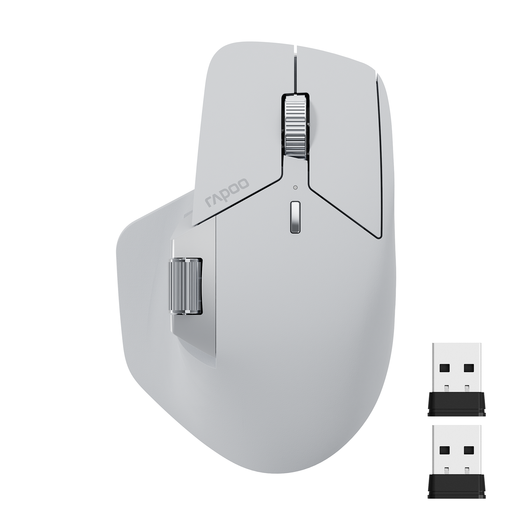
RAPOO MT760L-LG Mouse
If you are comparing controls for navigating a reading list, check this model's wheel layout and button functions against the way you edit entries. Confirm its grip design and operating-system compatibility for your setup.
View on Joybuy
 No image available
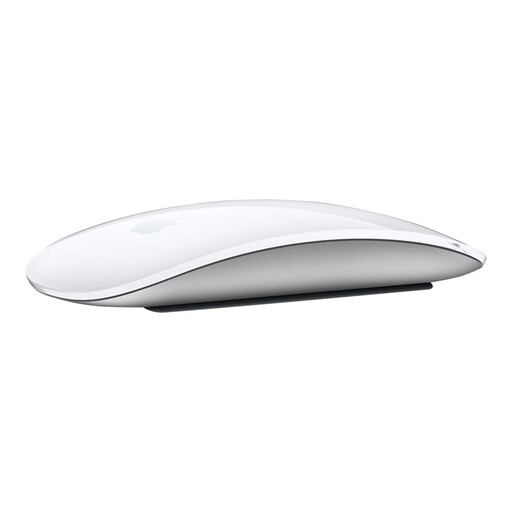
Apple Magic Mouse, White, with Multi-Touch Surface
Consider its Multi-Touch surface if gesture-based navigation suits the way you browse reading-list pages. Check device compatibility and whether gestures give you the control you want when editing individual entries.
View on Joybuy
Common questions
Do I need a particular mouse shape at a standing desk?
No particular mouse shape is prescribed in the Health and Safety Executive guidance cited here. Choose one you can position within easy reach and use with a straight wrist, then check its fit and controls for your work.
Where should the mouse sit when I am standing?
Place the mouse in line with your elbow and within easy reach, as the Health and Safety Executive advises. Arrange the desk so you do not have to stretch your mouse arm to use it.
What if using my mouse causes discomfort?
Check the whole workstation rather than assuming that a different mouse alone will resolve the problem. The Health and Safety Executive's guidance addresses mouse reach and wrist position alongside the wider desk setup; for work use, raise the discomfort so the workstation can be assessed.
Is a new mouse enough to make a standing workstation suitable?
No. The Health and Safety Executive treats mouse placement as one part of workstation setup. Screen and keyboard positions, furniture and the work you do also affect how the setup should be arranged.


