One-off party bread bakers
If you want to make the dough in one load, compare your recipe with the exact mixer’s bread-dough or flour limit. Bowl litres alone will not tell you whether the batch fits.


Choose a stand mixer by comparing your party recipe with the exact model’s stated dough or flour limit, not its bowl volume alone. A larger bowl-lift mixer may suit a substantial batch or frequent bread making, a machine with integrated scales suits bakers who will use that feature, and a smaller mixer makes more sense when the batch is modest and storage space matters. Check the supplied tools, kneading instructions and dimensions before deciding.
If you want to make the dough in one load, compare your recipe with the exact mixer’s bread-dough or flour limit. Bowl litres alone will not tell you whether the batch fits.
Repeated dough making makes the supplied dough hook, approved load and manufacturer’s kneading instructions particularly important. Check them for the model you plan to use.
A smaller mixer may be easier to store between bakes, provided it can handle your intended recipe. A batch above its stated limit will need splitting.
Consider it when: You need an approved load large enough for a substantial party batch or make bread regularly. KitchenAid rates its named 5.6 L Artisan bowl-lift model for up to 3.7 kg of bread dough.
Trade-off: KitchenAid describes bowl-lift mixers as taller and bigger, so check operating and storage clearance. That dough rating does not apply to every bowl-lift mixer.
Consider it when: Weighing ingredients at the machine is useful beyond this party. Bosch lists integrated scales and a 3.5 kg dough-bowl content for its MUMS6ZM00G.
Trade-off: Scales do not increase a model’s permitted dough load; check the exact machine’s tools, instructions and dimensions.
Consider it when: Your recipe is modest and the mixer needs to fit into limited storage space.
Trade-off: You may need separate loads for a larger recipe. KitchenAid lists a 1 kg flour maximum for specified 4.8 L Artisan tilt-head models; check the limit for the model you choose.
| Concern | What to check | Who this matters to |
|---|---|---|
| One-batch capacity | Compare the recipe with the exact model’s stated dough or flour maximum; keep the two measures distinct. | I want to make enough bread for the party without exceeding the mixer’s approved load. Around 50% of consumers put one-batch capacity first. |
| Repeated kneading | Confirm the dough hook and follow the model’s load and kneading-speed instructions. | If I make yeast dough regularly, I need a mixer I can use within its bread-making guidance. Roughly 30% of consumers prioritise repeated kneading. |
| Kitchen fit | Measure counter and storage clearance, then decide whether features such as integrated scales will be useful again. | I need somewhere practical to keep the mixer after the celebration, without choosing extra features just for one bake. About 20% of consumers put kitchen fit and longer-term use first. |
A bowl’s volume is not its approved bread-dough load. KitchenAid publishes different dough or flour limits for the particular models in its range.
Compare your recipe with the exact model’s stated limit, including any guidance for the flour you use, and divide an oversized recipe into batches.
Kneading guidance is model-specific. KitchenAid advises a dough hook and speed 2 for yeast breads in its mixers, rather than using a higher speed as a shortcut.
Follow the instructions for your own mixer and dough recipe.
KitchenAid describes its bowl-lift format as taller and bigger than its tilt-head format, which can affect where a mixer can be used and stored.
Measure your counter and cupboard space, including the clearance needed to handle the bowl.
The arrangements attached to an order matter alongside the mixer itself; a manufacturer’s warranty does not explain a seller’s change-of-mind process.
Read the seller’s delivery and cancellation information before ordering, and keep a copy of the listing and order details.
Its stand-mixer range includes tilt-head and larger bowl-lift formats. Published limits for named models can help you compare a recipe with an approved load.
A kitchen-machine range worth considering if weighing ingredients at the machine matters to you as well as kneading.
Its range spans compact mixers for smaller quantities and larger kitchen machines with additional features.
These mixers cover a machine with weighing features and smaller stand-mixer options for party bread making. Check each model’s permitted dough or flour load against your recipe before deciding which can make the batch you need.
 No image available
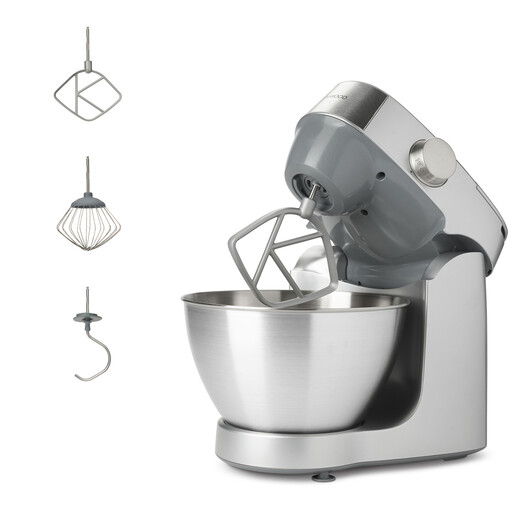
Consider this model if weighing ingredients at the mixer would be useful for your baking. Compare your party recipe with its permitted dough load, and check the supplied tools and kneading instructions before ordering.
 No image available
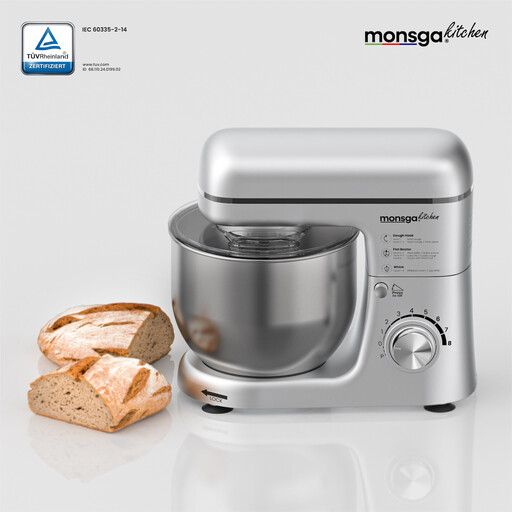
Consider this model if kitchen storage matters and your recipe fits its approved flour load. Its title specifies 1000 W, a 4.3 L bowl and three bowl tools; bowl volume alone does not establish how much bread dough it can knead.
 No image available
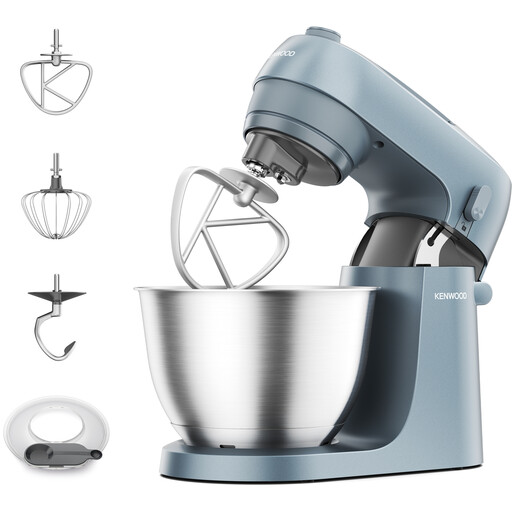
Consider this model if a supplied dough hook is important, but confirm its permitted dough or flour load before planning a single party batch. The title specifies a 5.0 L bowl, eight speed settings, 1000 W peak power, a whisk and a splash guard; the bowl figure is not a dough limit.
 No image available
Consider this model if storage space is a priority for an occasional bake. Check its dimensions and approved dough or flour load against your kitchen and party recipe, then follow its own kneading instructions.
Compare the recipe with the exact model’s stated bread-dough limit, or its flour limit if that is how the manufacturer specifies capacity. KitchenAid advises lower quantities for speciality flours in its guidance; do not treat bowl litres as a dough-weight rating.
Follow the instructions for your exact mixer. KitchenAid’s guidance for its mixers calls for a dough hook and speed 2 when making yeast bread; that setting should not be assumed to apply to another brand.
Read the seller’s cancellation information before you order. GOV.UK’s distance-selling guidance says customers must be told they can cancel up to 14 days after delivery; check the terms applicable to your order rather than assuming a manufacturer’s warranty explains the seller’s process. Change-of-mind cancellation and a remedy for faulty goods are different matters.
Look for a suitable electrical-equipment collection or recycling route rather than putting it in ordinary household waste. GOV.UK’s waste electrical and electronic equipment guidance describes rules intended to encourage recovery, reuse and recycling and reduce disposal in landfill.