Large-batch buffet baker
If you want to make several trays’ worth in one mixing session, compare the exact model’s documented working limit with your recipe before deciding whether to split it.


Choose a stand mixer by the exact model’s stated working capacity for dough or cookies, rather than bowl litres or wattage alone. If you regularly need one very large batch, compare documented large-batch models; if you can divide the recipe, a smaller mixer with suitable mixing tools may be more practical to store. Direct-to-bowl weighing is worth considering when you repeat the same recipe across several batches.
If you want to make several trays’ worth in one mixing session, compare the exact model’s documented working limit with your recipe before deciding whether to split it.
If your method starts by creaming butter and sugar before adding flour and spices, check which beater and dough tool come with the mixer, as well as its stated dough capacity.
If you make the same spiced mixture several times for a buffet, direct-to-bowl weighing may make it easier to measure each batch without using a separate weighing bowl.
Start with a working limit that applies to the exact mixer and recipe type. Then consider whether you would rather divide the dough into manageable batches, streamline repeated weighing or leave room for future uses.
| Concern | What to check | Who this matters to |
|---|---|---|
| Working capacity | Compare the exact model’s stated dough or cookie limit with your intended batch. Check what recipe or ingredient measure that limit describes. | If I want to mix enough dense dough for several trays at once, the working limit matters more to me than the bowl’s nominal volume; around 36% of consumers would put capacity first. |
| Repeatable weighing | Check whether the exact variant offers direct-to-bowl weighing and whether it works with the bowl you intend to use. | When I repeat a spiced recipe, I want each batch measured consistently without extra transfers; roughly 22% of consumers would make weighing workflow their main priority. |
| Manageable batches | Check the stated dough limit and supplied beater and dough tool; plan to divide a recipe that exceeds the applicable limit. | If I can prepare the buffet dough in several smaller mixes, a manageable machine matters more to me than making everything at once; around 21% of consumers would prioritise that practicality. |
| Longer-term use | Check the exact model’s warranty terms and the compatibility of any attachments you expect to use later. | Once my cookie batches are covered, I want to know whether the mixer will suit other recipes and accessories I may use; roughly 21% of consumers would put longer-term ownership first. |
Two 5L mixers can have different working capacities. Kenwood GB states a 1.35kg dough capacity for the kMix KMX754ABK and 2.18kg for the Chef Baker KVC65.001WH; those figures apply to the named models, not every 5L mixer.
Use the applicable limit for the exact model and divide your recipe if its load would exceed it.
Kenwood GB identifies a kMix KMX754ABK, while the Joybuy listing identifies KMX754BK. Do not transfer the former model’s stated capacity to the latter on the strength of the shared kMix name.
Match the complete model number and check the supplied bowl, tools, voltage and warranty terms before ordering.
Kenwood UK’s attachment compatibility guide distinguishes between mixer connections and notes that some attachments require an adapter.
Check your exact model and any required connector before choosing an attachment for later use.
The Joybuy kMix listing cautions against using the machine without the bowl and attachment correctly installed or putting hands or utensils into the bowl while it is running.
Switch off and unplug before changing tools, keep clear of moving parts and follow the manual for your exact model.
Kenwood’s named kMix and Chef Baker models offer different documented dough limits, so the model matters more than the shared brand or bowl size.
KitchenAid UK provides model-specific cookie-quantity references that can help when deciding whether a larger bowl-lift mixer fits a high-volume plan.
The Smeg SMF05WHUK is a 4.8L mixer with a supplied dough hook, relevant to buyers considering a mixer for ordinary home baking as well as buffet preparation.
These stand mixers offer a range of bowl sizes for preparing buffet cookies in batches. Before settling on one, check the exact model’s working limit against the dough you plan to mix; bowl size alone does not establish that limit.
 No image available
Consider this option if you are willing to divide the cookie recipe into batches. Its listed 4.3L bowl and 1000W rating do not establish a finished spiced-dough limit; check the exact model’s instructions before setting a batch size.
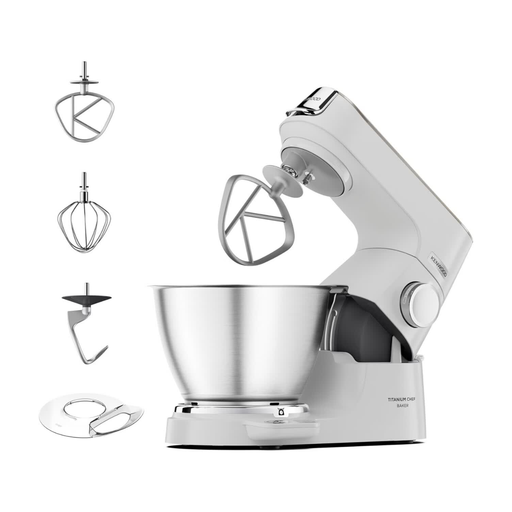 No image available
Consider this model if weighing ingredients across repeated batches is a priority, and confirm the supplied variant’s direct-to-bowl weighing and tools. Check its bowl and working-capacity specifications with the seller before planning a dense-dough batch.
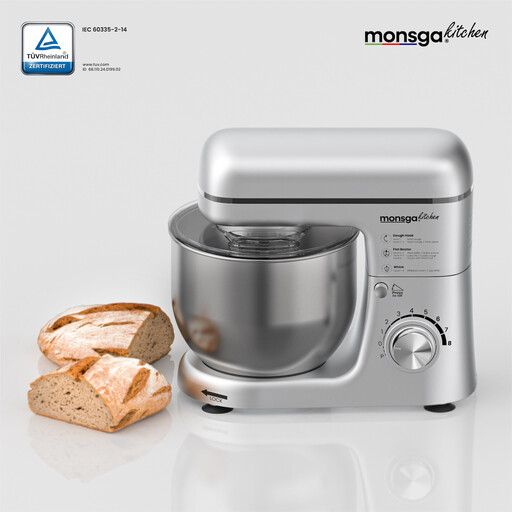 No image available
This is a bowl-and-tool option to consider for mixing the recipe in batches. Its listed 5.0L bowl, eight speed settings, whisk and splash guard do not establish how much dense cookie dough it can handle; check the model’s working limit before choosing a batch size.
 No image available
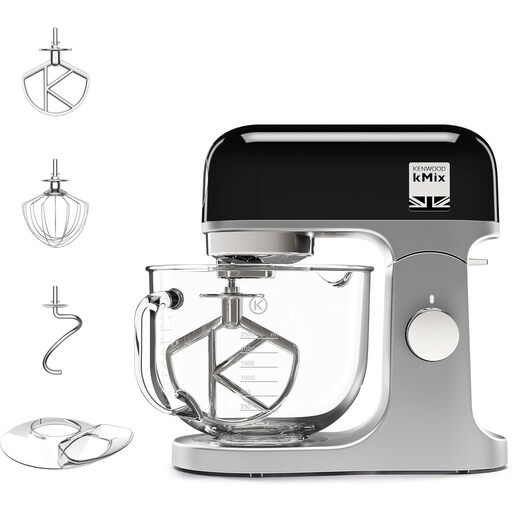
Consider this 5L model if its supplied K-Beater and dough hook suit your mixing method. Check the KMX754BK’s own dough limit before planning a batch: the published limit for KMX754ABK should not be assumed to apply to this variant.
 No image available
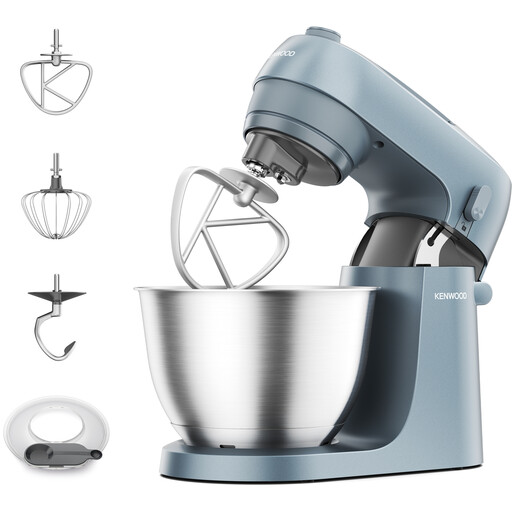
Consider this option if you prefer to prepare the buffet recipe in smaller batches. The listed 3.5L bowl does not tell you its dense-dough working limit, so check the exact model’s guidance before deciding how much to mix at once.
Choose by a working limit that applies to the exact mixer and recipe, then divide the dough if your planned load exceeds it. KitchenAid UK’s maximum-quantity chart lists up to 108 standard cookies for specified 4.8L Artisan models and 168 for listed 6.9L bowl-lift models; those manufacturer figures should not be transferred to a different mixer or cookie recipe.
No: wattage by itself is not a comparable dough-capacity limit. Check the exact model’s documented working capacity and the recipe basis for that figure rather than using motor rating or bowl volume as a substitute.
Follow your recipe and the mixer’s manual for the appropriate tool at each stage. A supplied beater may suit creaming and general mixing, while a dough hook or dough tool is intended for dough work; switch off and unplug before fitting or removing either tool.
Check that the listing clearly identifies the model and provides suitable voltage and safety information, and keep the seller’s documentation. The Office for Product Safety & Standards explains that the Electrical Equipment (Safety) Regulations 2016 set requirements for businesses placing electrical equipment on the Great Britain market; that guidance does not establish the rules for Northern Ireland.