Small-kitchen cookie bakers
You make cookie dough often enough to want hands-free mixing, but cupboard clearance and usable worktop space limit where a mixer can go.


Choose a stand mixer that fits the worktop and storage space you can spare, then check its stated flour, dough or cookie capacity against your usual recipe. The compact Kenwood Go and Bosch MUM Series 2 offer different space and capacity considerations, while the KitchenAid Artisan 5KSM125 is worth considering for larger cookie batches if you have room for it. Their published capacity figures use different measures, so none is a direct like-for-like cookie-dough test.
You make cookie dough often enough to want hands-free mixing, but cupboard clearance and usable worktop space limit where a mixer can go.
You make repeated or larger cookie batches and need to check the mixer’s stated flour, dough or cookie limit before increasing your usual recipe.
You need a mixer for cookie dough but also want to use its supplied tools for tasks such as whisking and kneading.
Start with the space available for both storage and use, then compare your recipe with the exact mixer’s stated capacity. Finally, consider whether its supplied tools and cleaning routine suit the other baking you do.
| Concern | What to check | Who this matters to |
|---|---|---|
| Space and access | Measure worktop width and depth, cupboard clearance and room to lift the head or remove the bowl. Compare the exact model’s dimensions. | If my mixer stays within reach, I need it to leave enough worktop free for preparing cookies. Around 42% of consumers put space and access first. |
| Cookie-dough quantity | Note the flour quantity in your usual recipe and check the exact model’s stated flour, dough or cookie limit; those measures are not interchangeable. | For repeated batches, I need to know whether my recipe fits before I increase it. Roughly 33% of consumers prioritise batch capacity. |
| Everyday use and cleaning | Check the supplied beaters, whisk and dough tool, then read the care instructions for each tool and the bowl. | If one appliance takes up my limited space, I want to use it for other baking without an awkward clean-up afterwards. About 25% of consumers put everyday use and cleaning first. |
A bowl-volume label does not establish a cookie-dough limit. Kenwood GB states a pastry-flour quantity for the Go KZM35.000GR, Bosch GB states maximum dough content for the MUMS2VM40G, and KitchenAid UK gives a standard-cookie count for an Artisan model category. These are different measures.
Start with the flour weight in your usual recipe and check the exact model’s applicable capacity guidance. Make a smaller batch if your recipe exceeds its stated limit.
A mixer may fit beneath a cupboard but still occupy preparation space or lack room to open its head and remove the bowl.
Measure width, depth and height where the mixer will be used, allowing access around the bowl and moving head before ordering.
Care instructions can differ between a mixer’s bowl and its tools. Kenwood GB recommends hand-washing the Go’s K-Beater, whisk and dough tool; KitchenAid UK says its standard wire whisk with an aluminium head is not dishwasher-safe.
Switch off and unplug the mixer before cleaning, and follow the instructions for each supplied attachment rather than relying on the bowl’s care label.
The Kenwood Go line is relevant when cupboard height and a narrow worktop area shape the choice. Kenwood GB lists the KZM35.000GR at 33.5 × 18 × 30 cm, with a 4 L bowl, K-Beater, whisk and dough tool.
Bosch positions its MUM Series 2 as a space-saving range. For the MUMS2VM40G, Bosch GB states a 3.8 L usable bowl volume and a maximum dough content of 2.0 kg.
The Artisan 5KSM125 is an option for households that have room for a tilt-head mixer and want the supplied paddle, dough hook and wire whisk for everyday baking.
These mixers offer options for mixing and other baking tasks. Compare each model’s fit in your kitchen and check the appropriate batch guidance for your recipe; a bowl size alone does not establish a cookie-dough limit.
 No image available
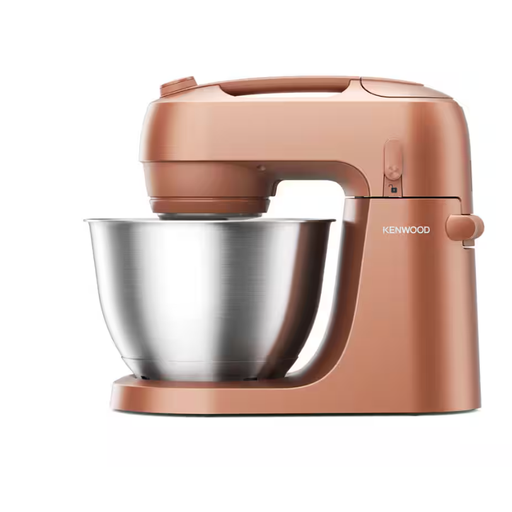
Consider this model if you want a stand mixer for cookie mixing and other baking tasks, provided it fits your available worktop space.
The product name specifies 1000 W, a 4.3 L bowl and three bowl tools. Check the appropriate batch limit for your recipe rather than using bowl volume as a cookie-dough capacity figure.
 No image available
This option is relevant if cupboard storage is a priority; check the space needed to use and put away the mixer, not just the space it occupies when closed.
Confirm the exact variant’s capacity guidance against your usual cookie recipe before increasing the batch.
 No image available
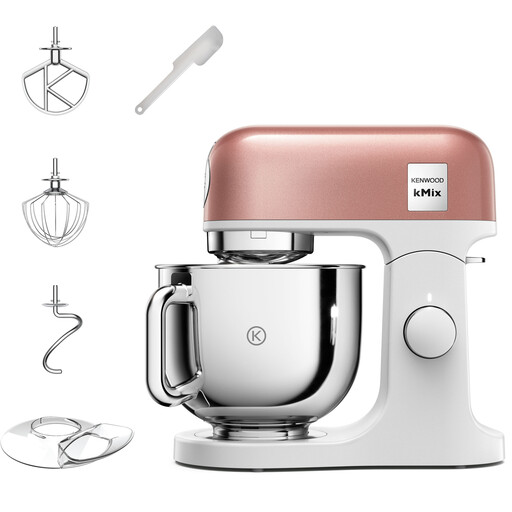
Consider the KMX760API if you want a stand mixer for biscuit-style mixing and can accommodate it where the bowl and head remain accessible.
Check the exact model’s cookie-dough quantity guidance for your recipe; its bowl size alone is not a batch limit.
 No image available
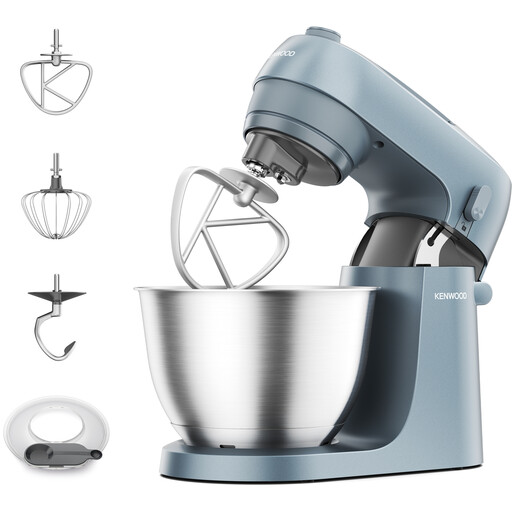
Consider this Kenwood Go variant if a compact mixer suits your space, but measure the worktop and the clearance needed to access its bowl.
Check the KZM35.000GY’s batch guidance for your recipe. Confirm the supplied colour and variant before ordering, as the listing title says blue while its description identifies the colour as grey.
 No image available
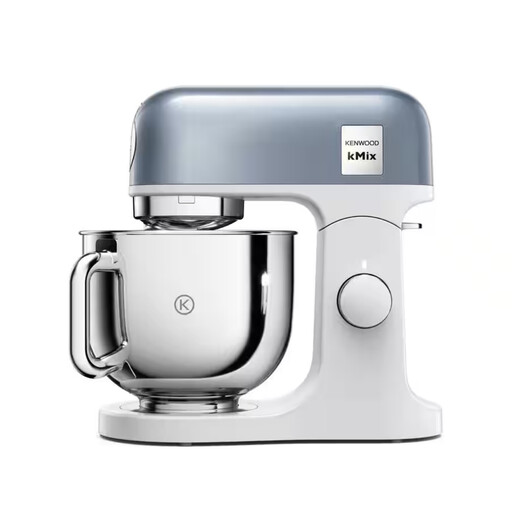
Consider this mixer if it fits your available worktop space and you want a machine for cookie mixing and other baking tasks.
Check the suitable batch quantity for your recipe and allow room to use the tilt head. Confirm care instructions for each supplied tool before putting any attachment in a dishwasher.
Start with the flour weight in your usual recipe and check the exact mixer’s applicable capacity guidance. Kenwood GB lists 0.5 kg flour for pastry for the Go KZM35.000GR, Bosch GB lists 2.0 kg maximum dough content for the MUMS2VM40G, and KitchenAid UK lists up to 108 standard 5.1 cm cookies for its 4.8 L Artisan category including the 5KSM125. Those figures describe different quantities, not results from a shared cookie-dough test.
Clean the bowl and used tools according to their individual care instructions, after switching off and unplugging the mixer. Kenwood GB says the Go bowl is dishwasher-safe but recommends hand-washing its K-Beater, whisk and dough tool. KitchenAid UK says its standard wire whisk with an aluminium head is not dishwasher-safe.
Check the guarantee terms for the exact model and seller rather than assuming they apply across a brand. KitchenAid UK states a five-year guarantee on its listed 5KSM125 product page; the terms for other models or listings may differ.
Check that the appliance is supplied for the GB market and keep its model details and documentation. The Office for Product Safety and Standards explains that the Electrical Equipment (Safety) Regulations 2016 set requirements before electrical equipment is placed on the Great Britain market; that guidance addresses market-placement requirements, not a consumer registration step.