Weekend pasta makers with little storage
If the mixer travels with you or goes into a cupboard after each stay, its lifting weight, dimensions and supplied dough tool matter alongside its bowl size.


Choose a compact mixer with a supplied dough tool if you need to carry it to the cottage or put it away after use. A larger machine makes more sense when you expect frequent or bigger batches and have a stable worktop, but published pastry, yeast-dough and general dough capacities are not interchangeable with a pasta-dough limit. Check the exact manual for your recipe quantity and operating instructions before buying.
If the mixer travels with you or goes into a cupboard after each stay, its lifting weight, dimensions and supplied dough tool matter alongside its bowl size.
If you prepare dough for several people or knead it repeatedly during a stay, look closely at the maker’s stated dough capacity and whether the cottage has a stable place to leave the machine.
If pasta is only one of several uses, consider the included whisking and mixing tools as well as the dough tool. Check that the mixer and its accessories will fit where you plan to store them.
For cottage use, settle where the mixer will live and how often you will move it before comparing batch quantities. Then check the exact model’s dough tool and pasta-dough instructions; bowl volume or wattage alone cannot establish a suitable batch size.
| Concern | What to check | Who this matters to |
|---|---|---|
| Carrying and storage | Measure the assembled mixer and head-opening clearance; check its weight against how often you will lift it. | If I have to pack the mixer for each trip or put it away after dinner, I need one I can lift and store comfortably. Around 42% of consumers put carrying and storage first. |
| Dough quantity and worktop | Check for a supplied dough tool, a stable working position and manual instructions for your intended pasta batch; keep published limits tied to their stated dough type. | When I make pasta for a group, my planned batch and the space to run the mixer matter more than easy packing. Dough quantity and a stable setup come first for around 42% of consumers. |
| Versatility and setup | Confirm the included tools, storage for accessories, appliance condition and permission to use your own mixer at the property. | If I make pasta only occasionally, I want the same machine to handle other mixing jobs without making cottage setup awkward. For around 16% of consumers, versatility and straightforward setup are the primary concern. |
Bosch’s published 1.9 kg limit for the MUM58W20GB concerns yeast dough, while Kenwood’s 0.5 kg flour figure for the Go KZM35.000RD concerns pastry. Neither is a pasta-dough maximum.
Use each capacity only for its stated recipe category. Check the exact manual for pasta-dough quantities, speeds and operating time before planning a firm or large batch.
Kenwood lists the Go KZM35.000RD at 6.3 kg and 30 cm high, compared with 11.5 kg and 40 cm for its Titanium Chef Baker XL KVL85.004SI. The larger machine calls for more planning if it must be lifted and packed for each visit.
Measure the cupboard, car space and worktop, including clearance needed to reach the bowl. Decide whether the machine can stay in place while you cook.
The Health and Safety Executive says visual examination is an essential part of checking portable electrical equipment: a label does not tell you whether damage has occurred since it was applied.
Before use, look at the plug, cable and casing, place the mixer on a dry, stable surface and check that its tools fit securely. Do not use it if it appears damaged; ask the property owner about appliance restrictions or uncertain equipment condition.
Kenwood’s Go KZM35.000RD and Titanium Chef Baker XL KVL85.004SI illustrate different choices within its range: a carry-and-store format and a larger machine for a more settled worktop.
The Bosch MUM58W20GB is a mid-size option to examine if the cottage has room for a mixer to remain on a stable worktop.
KitchenAid is relevant if you also want an all-round mixer and value access to the bowl. Its UK guidance distinguishes shorter tilt-head designs from bowl-lift models generally preferred for frequent heavy use.
These stand mixers offer different ways to approach cottage pasta making, from models to consider when carrying and storage matter to machines worth examining for a more permanent worktop. For each one, match its size and supplied tools to your kitchen, then check the manual before settling on a pasta-dough batch.
 No image available
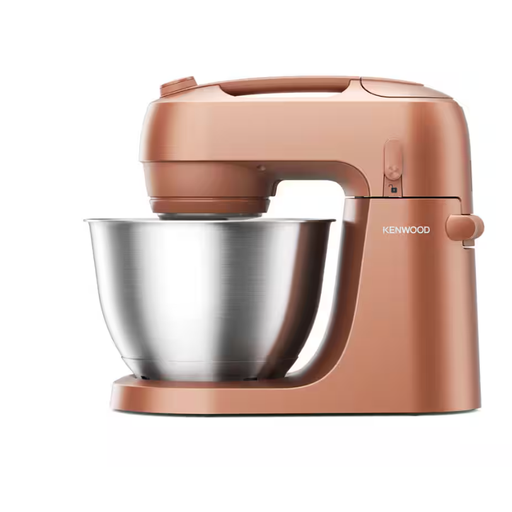
Consider this model if you need to carry the mixer or put it away between cottage visits. Kenwood lists a 4 L bowl, supplied dough tool, 6.3 kg weight and 30 cm height for the KZM35.000RD. Check the manual for your pasta-dough quantity and operating instructions rather than treating bowl volume as a batch limit.
 No image available
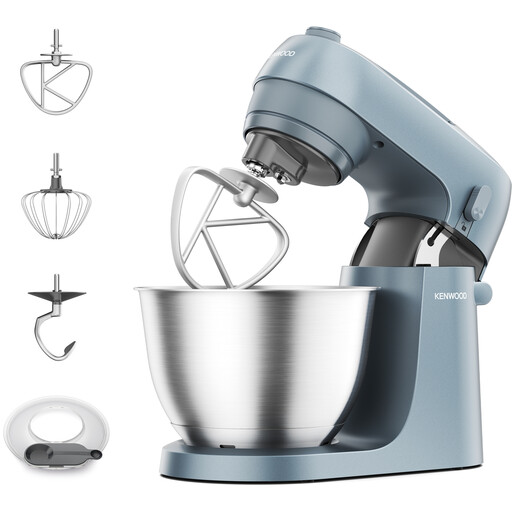
Consider this blue Kenwood Go variant if carrying and storage are central to your choice. Compare its dimensions with the space available at the cottage, and confirm the supplied tools and pasta-dough instructions for the KZM35.000GY before buying.
 No image available
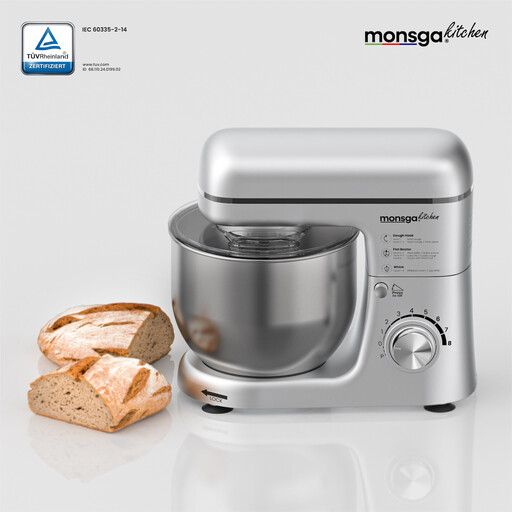
Consider the SM100 if you want a dough hook alongside tools for other mixing jobs. Its product title specifies a 5.0 L bowl, eight speed settings, whisk and splash guard, with 1,000 W described as peak power. Check the appliance’s dimensions for your storage space and consult its manual for pasta-dough quantities and operating instructions.
 No image available
This Chef Baker is worth considering for a cottage where the mixer can stay on a worktop rather than being packed after each use. Check the space it will occupy, the tools supplied with this exact model and the manual’s instructions for your intended pasta-dough batch.
 No image available
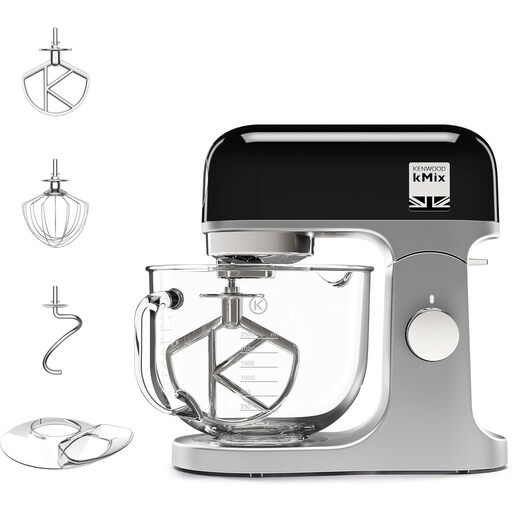
Consider this model if you want a mixer for dough and general baking. Its product title lists a 5 L bowl, 1,000 W, K-beater, whisk and dough hook. Check its dimensions and weight for cottage storage, confirm the exact bowl specification, and consult the manual for pasta-dough instructions; optional pasta-making attachments should not be assumed to come with it.
Start with the mixer’s weight, dimensions, available storage and supplied dough tool, then check the exact model’s instructions for the batch you intend to make. Neither wattage nor bowl volume on its own establishes a pasta-dough limit.
No: a published yeast-dough maximum applies to the named dough type, not automatically to pasta dough. Check the exact mixer manual for recipe quantity, speed and running-time instructions before making a large or firm batch.
It can, if its height and the clearance needed to raise the head both fit the kitchen. KitchenAid describes its tilt-head models as shorter than its bowl-lift models and easier to access at the bowl; measure the available space before choosing either format.
No: check the appliance’s visible condition before use, including its plug, cable and casing. The Health and Safety Executive says visual examination is essential and that the Electricity at Work Regulations 1989 do not impose a blanket annual inspection or testing requirement. Ask the property owner about appliance-use restrictions, and do not use equipment that appears damaged.
It can be if you will also use the other supplied tools and have room to store them. KitchenAid’s 4.3 L Classic, for example, includes a whisk, paddle and dough hook; check the exact model’s dimensions and pasta-dough instructions before choosing it for a cottage.