
24/7 全天候客户支持

免费退货

当日/次日达

品质保障

开启新人专享福利: 全场免邮 | 低至 2 折 | 免费试用 30 天 JoyPlus 会员
下载 Joybuy
Choosing stationery and art supplies can look straightforward until a pencil breaks repeatedly, a marker bleeds through paper or a child receives a product with unsuitable small parts. Marketing often focuses on colour, packaging and large set sizes, while the details that affect everyday use are easier to miss.
This guide from the Joybuy Product Recommendation Officer highlights common purchasing traps, useful specifications and suitable options for different users, from schoolchildren and office workers to artists and adult colouring enthusiasts.
A 72-colour pencil set may look economical, but it can be unnecessary for basic homework or occasional sketching. Some shades may rarely be used, while storage becomes difficult. For beginners, a smaller watercolour paint set, colouring pencil pack or coloured pen set can be easier to organise and learn with.
Compare the cost per usable item, storage format and intended activity rather than choosing solely by the number printed on the packaging.
Not every marker works on every surface. Wet-erase chalk markers are generally intended for non-porous materials such as glass, windows, whiteboards and chalkboards. Using them on porous paper, unfinished wood or walls may result in staining or difficult removal.
Similarly, water-based colouring pens can still show through thin notebook pages. If you are buying drawing supplies for journalling or adult colouring books, check whether the ink is designed to minimise paper damage and consider using a spare sheet underneath.
A pencil that feels uncomfortable after ten minutes can discourage children from writing or make longer drawing sessions tiring. Look for practical features such as triangular ergonomic barrels, suitable lead thicknesses and secure caps.
Maintenance matters too. Pencil sharpeners with shavings containers help keep pencil cases and desks clean, while marker caps need to be replaced firmly to reduce drying. Paint palettes should be allowed to dry before storage to help prevent mould.
Graphite pencils are graded from harder options such as H to softer grades such as B. HB is a useful general writing grade, while softer grades create darker marks for shading and drawing. A set ranging from HB to 14B, such as the Faber-Castell Pitt Matt Graphite Pencils, is more suited to tonal artwork than everyday school notes.
Mechanical pencils use replaceable leads and do not need sharpening in the same way as wooden pencils. A 0.5 mm lead is a practical choice for neat writing, diagrams and detailed sketching. Check that compatible refills are easy to find before purchasing.
Highlighters with a chisel tip can create both broad strokes and narrow underlining. Several listed options offer line widths from approximately 4.8 mm to 1.0 mm, which is useful for colour coding notes or marking documents.
Dual-tip colouring pens provide more flexibility. A fine tip can outline or write, while a brush tip supports broad colouring, lettering and blending. This is particularly useful for craft hobbyists, bullet journals and adult colouring.
For products intended for children, read the stated age guidance and warnings carefully. Flashcards and paint sets may contain small components, and some products recommend direct adult supervision. Do not assume that a product is suitable for very young children simply because it is colourful.
Where applicable, check the packaging for relevant UK information, manufacturer details, importer or UK Responsible Person information, and safety markings. A safety mark should not replace checking the actual instructions, age range and intended use.
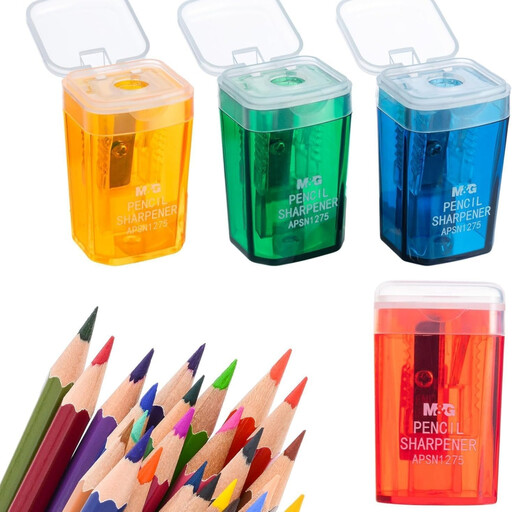
Why This Fits Their Persona: A practical choice for families, pupils and office users who need compact pencil sharpeners in more than one pencil case or workspace.
The built-in shavings container avoids loose debris in bags and on desks, while two holes accommodate different pencil shapes.
Compact portable design; integrated storage container; suitable for standard and coloured pencils.
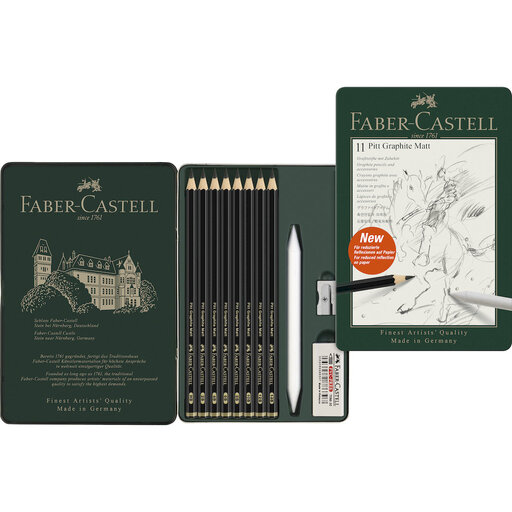
Why This Fits Their Persona: Suitable for artists and committed sketchers who need a range of graphite grades for line work, shading and tonal studies.
The range of grades makes the set more purposeful than a large collection of near-identical pencils, and the tin protects items during storage.
Grades from HB to 14B; includes an eraser, wiper and sharpener; supplied in a storage tin.
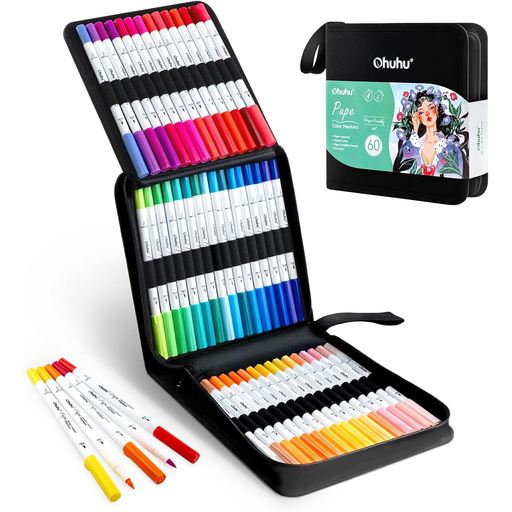
Why This Fits Their Persona: Designed for adult colouring, calligraphy, journalling and illustration where multiple colours and varied line widths are useful.
The set specifies both a 0.4 mm fineliner and a 1–5 mm brush tip, rather than offering colour quantity without functional variety.
59 colours plus one colourless blender; water-based ink; protective storage case.
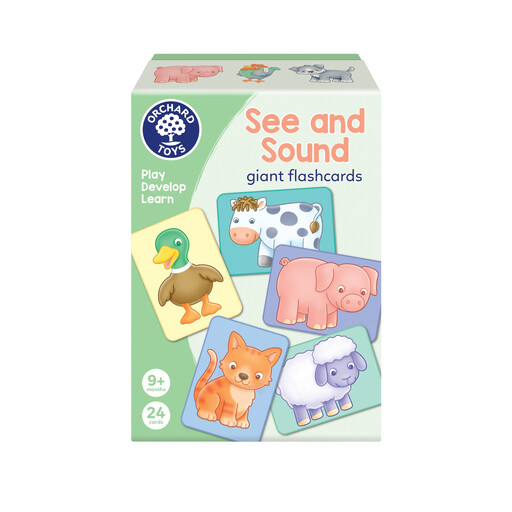
Why This Fits Their Persona: A hands-on option for caregivers introducing early vocabulary, object recognition and sensory play at home.
The cards are described as thick and suitable for little hands, with an age indication of 9 months and adult supervision recommended.
Large format for young children; combines colourful images with simple sounds; no batteries required.
We have compiled a complete, real-time list of products that fully satisfy these strict selection criteria and UK safety regulations.
A practical starter kit includes notebooks, HB graphite pencils or a 0.5 mm mechanical pencil, an eraser, pencil sharpener, ruler, coloured pens and highlighters. Add drawing supplies or a watercolour paint set if the course includes art, design or presentation work.
Replace caps immediately after use and store products as directed. Some pocket highlighters specify several hours of uncapped use, but this does not mean they can be left open routinely. Keep brush pens and markers away from direct sunlight and extreme temperatures.
Suitability depends on the individual product. Check the stated age range, choking warnings, materials and supervision instructions. Products with small parts should be kept away from younger children, and paint or flashcards should be used with an adult where the packaging recommends it.