
24/7 Customer Support

Free returns

Same-day & Next-day Delivery

Quality Guaranteed

Unlock Your Welcome Offers: FREE Delivery | Up to 80% OFF | Free 30-day JoyPlus trial
Download the APP
Buying stationery and art supplies can quickly become expensive when attractive packaging hides unsuitable nibs, weak mechanisms or ink that behaves poorly on everyday paper. Whether you are preparing for university, organising a bullet journal, stocking a classroom or building an illustration kit, the right choice depends on how and where you will use each product.
Several common buying traps are worth checking before you place an order:
Tip size affects both precision and coverage. 0.4 mm fineliners are suitable for small writing, rulers, templates, technical outlines and detailed drawing. 0.5 mm gel pens provide a fine, readable line for everyday notes and journaling, while 0.7 mm gel pens generally produce a more noticeable line for forms and office writing.
For mechanical pencils, 0.5 mm lead is a practical middle ground for schoolwork, drafting, note-taking and sketching. Thinner leads can support finer detail but may be more vulnerable to snapping if used with heavy pressure.
Broad and flexible tips suit colouring and lettering. Brush pens can create varied line widths, while felt tip pens provide consistent, expressive strokes. Check whether the product has a brush tip, bullet tip, chisel tip or dual-tip design before relying on a listing image alone.
Water-based ink is common in fineliners, brush pens and highlighters. It can offer bright colour and blending potential, but performance may change on thin notebook paper. Pigment ink is often selected for defined lines and may be water- or fade-resistant where the product specification states this.
For acrylic paint pens, look for the intended surfaces, opacity and drying instructions. The Ohuhu paint markers listed below are specified for materials including wood, rocks, ceramic, glass, plastic, paper and canvas. Even so, test first on a spare area, particularly on fabric or glossy surfaces.
If neat pages matter, consider smudge-resistant or rapid-drying ink, but allow sufficient drying time before closing a notebook. Left-handed writers should be especially cautious with wet ink and glossy paper.
A triangular or soft-grip barrel can make extended writing more comfortable, while a metal-cased fineliner tip is useful when working with rulers and stencils. Mechanical pencils should have a reliable push-button mechanism and a clean lead sleeve. Store pens with caps secured or tips retracted, and follow any recommendation to store markers horizontally.
For households with children, read the age guidance carefully. Pen caps and replacement nibs can present choking hazards. Products containing ink should be kept away from eyes, skin, clothing and surfaces that may stain. Follow the packaging instructions rather than assuming that “non-toxic” means suitable for every age or use.
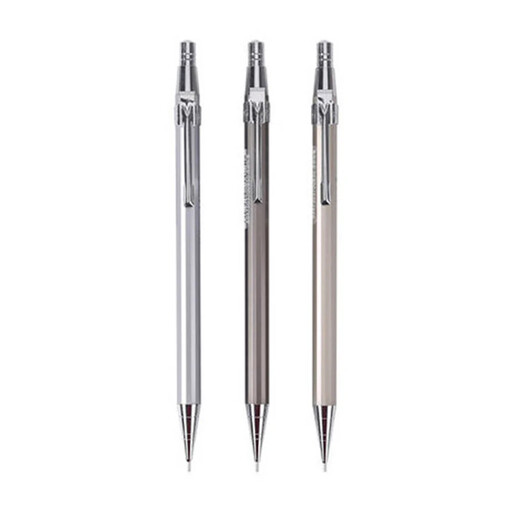
Why This Fits Their Persona: A three-piece set gives students, home workers and shared households a practical starting point for writing, drawing and sketching.
The specified 0.5 mm lead and push-button advance make the writing format clear, while the metal body is more substantial than an unspecified lightweight barrel.
Three pencils, black lead, solid metal barrels and black, white and gold finishes.
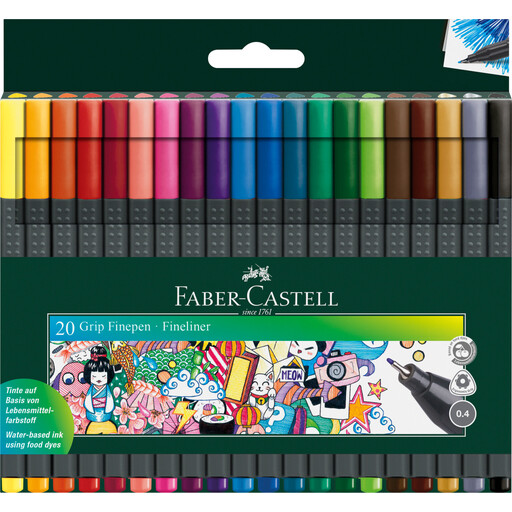
Why This Fits Their Persona: Illustrators, teachers and organised note-takers can use the broad colour selection for diagrams, templates, lettering and detailed shading.
The listing specifies a 0.4 mm line width, long metal-framed tip and triangular grip, rather than relying only on general precision language.
Twenty assorted finepens, food-dye-based ink and at least 56% recycled plastic in the plastic parts.
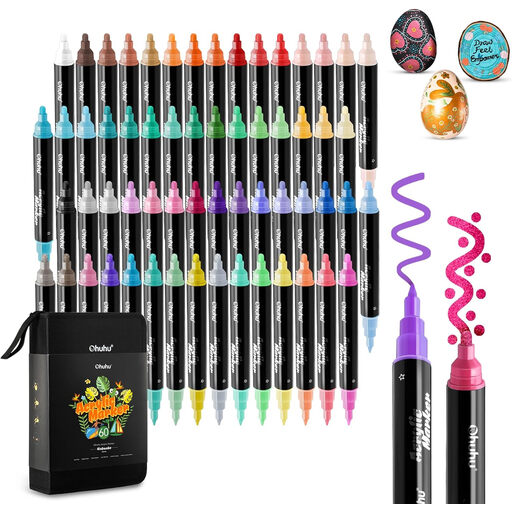
Why This Fits Their Persona: Crafters and mixed-media artists working across wood, rocks, ceramics, glass, fabric, paper or canvas may value a larger surface-focused palette.
The specifications identify both tip ranges, ink type and supported surfaces, helping buyers compare it with general-purpose art marker sets.
Sixty colours, fine and round tips, eight replacement nibs and a portable case.
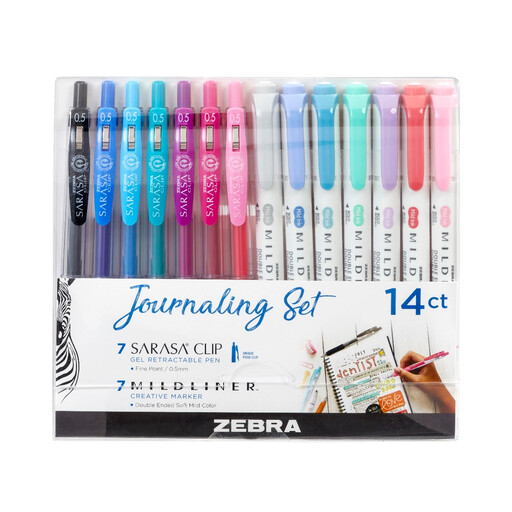
Why This Fits Their Persona: Students, planners and office workers get coordinated highlighters and gel pens for colour-coding, revision notes and weekly layouts.
The set clearly states its contents and tip sizes: seven dual-tip highlighters with 1.4 mm and 4.0 mm tips, plus seven 0.5 mm gel pens.
Seven pastel highlighter shades, rapid-drying gel ink and retractable clip pens.
We have compiled a complete, real-time list of products that fully satisfy these strict selection criteria and UK safety regulations.
Start with supplies that cover several tasks: a 0.5 mm mechanical pencil, black or blue gel pens, a small set of highlighters and a few fineliners. Add coloured pencils, brush pens or acrylic paint pens when a course or project requires them. This avoids paying for a large art marker set before you know which formats you use regularly.
Replace caps immediately after use and retract gel pens where applicable. Keep brush pens and acrylic paint pens in their supplied case, following the stated storage direction. Shake paint markers only as instructed, prime the nib carefully and avoid leaving them tip-down unless the packaging recommends it.
Not necessarily. Compare the number of items, refill or replacement options, tip durability, ink capacity and how often you will use them. A larger set may reduce the cost per item, but a smaller pack can be more economical if unused colours dry out. For UK shoppers, also check delivery terms, age warnings and the product information supplied before purchase.