
24/7 Customer Support

Free returns

Same-day & Next-day Delivery

Quality Guaranteed

Unlock Your Welcome Offers: FREE Delivery | Up to 80% OFF | Free 30-day JoyPlus trial
Download the APP
Whether you're preparing for a new school term, organising a home office or stocking up on creative materials, choosing the right stationery and office supplies can feel overwhelming. The market is flooded with options, and it's easy to end up with products that disappoint. As a Joybuy Product Recommendation Officer, my role is to help you navigate the choices and identify the key features that deliver real value, so you can avoid common purchasing mistakes.
Many of us have experienced the frustration of a new notebook whose pages can't handle a simple gel pen, or a binder that falls apart after a few weeks. These issues often stem from a few common pitfalls:
By understanding a few core parameters, you can easily sidestep these issues and select supplies that are fit for purpose.
To make informed choices, focus on the functional specifications rather than just the marketing claims. For most stationery and office supplies, three factors are crucial: paper weight, construction materials and the mechanics of the writing tool.
The single most important factor for notebooks and pads or sketchbooks for artists is the paper's weight, measured in Grams per Square Metre (GSM).
For pens and pencils, the tip and ink type determine performance.
When it comes to office stationery like binders and project books, the cover material is paramount. A polypropylene (polyprop) cover is far more durable than standard cardboard. It resists scuffs, is often wipe-clean and protects the contents from spills and wear-and-tear, making it a superior choice for both students and professionals.
Based on these practical criteria, here are a few recommendations matched to different user needs.
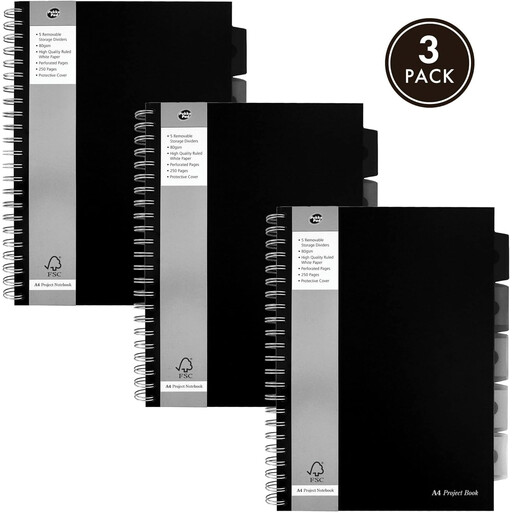
Why This Fits Their Persona: Ideal for managing multiple university modules or office projects. The A4 size, repositionable dividers and perforated pages provide the structure needed for serious organisation.
Directly counters the "Flimsy Organiser" flaw with its robust, wipe-clean polypropylene cover. The 80 gsm paper also provides a good baseline against bleed-through from everyday pens.
Five colour-coded dividers with storage pockets allow for excellent project separation. Pages are micro-perforated for clean removal and filing.
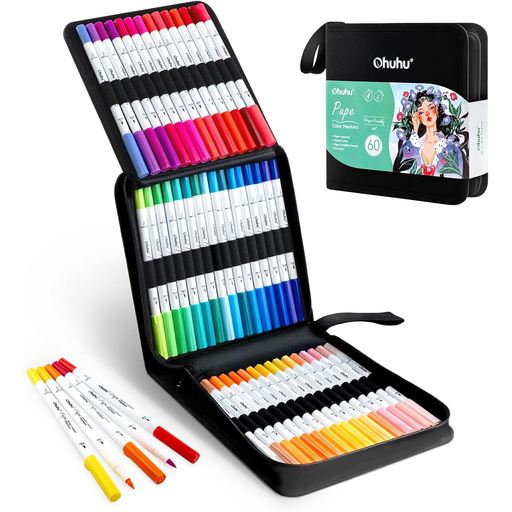
Why This Fits Their Persona: Perfect for those into adult colouring, calligraphy or bullet journaling. The dual-tip design offers the flexibility to switch between fine lines and broad strokes without changing pens.
The upgraded water-based ink is formulated to be "paper-friendly," minimising the paper damage and fluffing that often leads to the "Bleed-Through Nightmare" with standard markers.
Features a 0.4mm fineliner and a flexible 1-5mm brush tip on each pen. The set includes 59 vibrant colours plus a colourless blender for creating gradients.
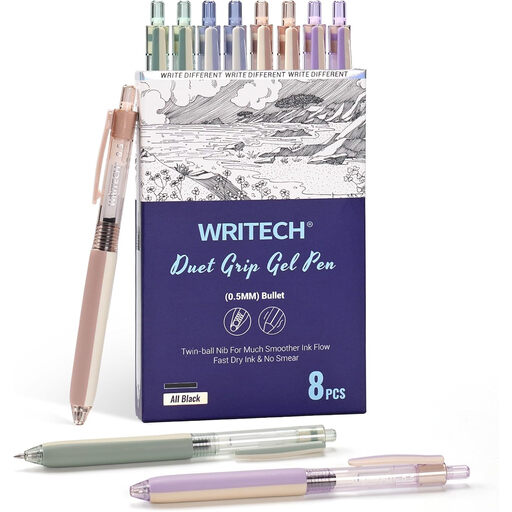
Why This Fits Their Persona: A reliable workhorse for anyone who writes extensively. The ergonomic design and smooth ink flow are ideal for long meetings, lectures or journaling sessions.
This pen avoids the "One-Use Wonder" trap with its special quick-dry ink that prevents smudging and a comfortable triangular barrel that reduces hand strain during prolonged use.
Features a patented silent clicker for quiet environments and a unique clip that automatically retracts the tip to prevent ink stains on clothing or bags.
We have compiled a complete, real-time list of products that fully satisfy these strict selection criteria and UK safety regulations.
What does GSM mean for paper and why is it important? GSM stands for 'Grams per Square Metre' and it measures the density and weight of paper. A higher GSM number indicates thicker, heavier paper. It's important because it determines how well the paper will handle different types of ink. For general notes with a ballpoint, 80 GSM is fine. For fountain pens, markers or any form of art supplies, you should look for 100 GSM or higher to prevent ink from bleeding through to the other side.
How can I stop my colouring pens from bleeding through the page? The primary solution is to use paper with a higher GSM (120 GSM or more). If you are using a notebook you already own, you can place a spare sheet of thick card behind the page you are working on to absorb any bleed-through. Additionally, using pens with alcohol-based ink can sometimes cause more bleed-through than water-based inks, so checking the ink type can also help.
Are expensive pens really worth it for everyday use? Not always. Price doesn't guarantee performance. Instead of focusing on brand names, look for features that suit your needs. A pen with a comfortable ergonomic grip, quick-drying ink to prevent smudging and a reliable retractable mechanism can provide a far better experience than a costly but impractical alternative. A multi-pack of well-designed gel pens often provides better value and performance for daily tasks.