
24/7 全天候客户支持

免费退货

当日/次日达

品质保障

开启新人专享福利: 全场免邮 | 低至 2 折 | 免费试用 30 天 JoyPlus 会员
下载 Joybuy
Buying stationery pens and highlighters can seem straightforward until ink skips, colours bleed through paper or a supposedly practical pen becomes uncomfortable after a few pages. The right choice depends less on attractive packaging and more on the tip, ink formulation, body design and intended surface.
This guide explains the main buying pitfalls and compares suitable options for studying, office writing, journalling, drawing, lettering and display work.
Large assorted sets can appear good value, but a broad colour range is not helpful if the ink is faint, the tips fray or most shades are unsuitable for your paper. For school stationery and office writing supplies, check the number of usable colours, not just the total number of pens.
Muted highlighters may be easier to read in planners and work documents, while neon highlighters are more noticeable on revision notes. Creative users may need brush pens or colouring pens with blendable ink rather than standard felt-tip pens.
A broad chisel tip is useful for marking lines of text but may feel clumsy for small annotations. Conversely, a fine 0.5 mm tip can produce neat notes but is slow for filling large areas.
Brush pens, calligraphy pens and journalling pens also require different levels of pressure control. A flexible felt brush tip can create varied line widths, but it may not be the right choice for fast form-filling or dense office notes.
Water-based ink can work well on ordinary paper, but heavily saturated ink may show through thin notebook pages. Rollerball and gel pens can feel smooth yet take longer to dry, particularly on coated paper or under a left-handed writing style.
Chalk markers present a different issue: wet-erase formulas are intended for non-porous surfaces such as glass, mirrors, slate or certain whiteboards. Using them on porous cardboard or unsealed wood may make removal difficult.
Match the nib to the job:
A mechanical pencil with 0.5 mm lead can provide consistent lines for drafting, drawing and written work, provided suitable replacement leads are available.
Look for the ink description rather than relying on promotional wording. Water-based ink is common in felt-tip pens and highlighters and is generally suited to paper-based tasks. Gel ink can provide strong colour and smooth writing, while rollerball ink often offers a fluid feel for longer notes.
Check whether the product specifies quick-drying, water-resistant or smudge-resistant properties. These are useful indicators, but paper type still matters. Test a pen on the exact notebook, revision card or printer paper you plan to use if bleed-through is a concern.
A rubberised or silicone grip can make a noticeable difference during long study or office sessions. Retractable ballpoint pens help protect the tip and reduce the risk of marks inside a pencil case. Capped pens should be closed securely after use, while some products specify horizontal storage to help maintain ink flow.
For children, check warnings about small parts and choking hazards. Keep all pens, caps and markers away from children under three where the product information states this restriction. Follow the manufacturer’s surface, storage and ventilation instructions.
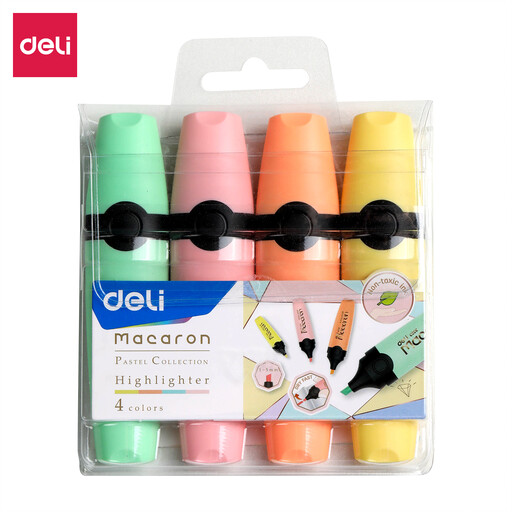
Why This Fits Their Persona: A practical starting point for pupils, students, parents and home users who need everyday highlighters without buying several separate tip styles.
The chisel design is specified for adjustable 1–5 mm line widths, making the set more adaptable than a single-width marker.
PP/ABS barrel, fibre tip and water-based ink; the broad line range supports underlining and conventional highlighting.
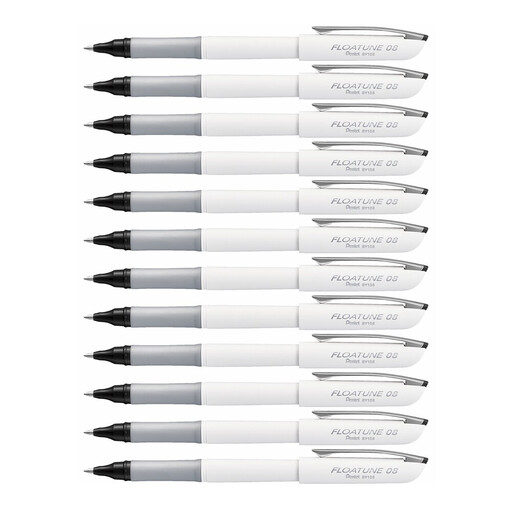
Why This Fits Their Persona: A suitable option for office workers, university students and anyone who writes lengthy notes and prefers a fluid rollerball feel.
The listed dual-ball tip and lubricated water-based ink address friction and inconsistent flow, while secure recapping helps prevent drying.
0.8 mm nib with an approximately 0.4 mm line width; supplied as a 12-pack of black pens.
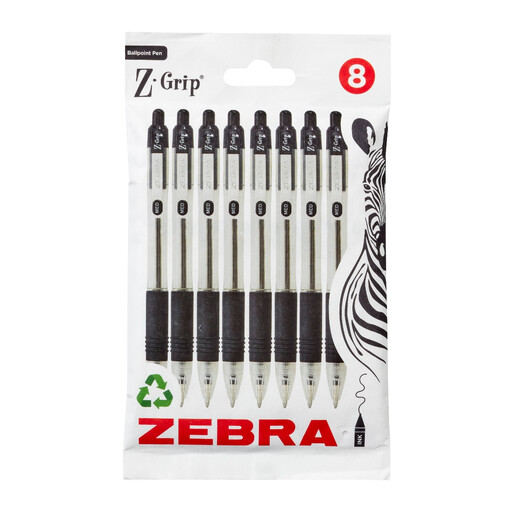
Why This Fits Their Persona: Designed around repeat writing, this pack suits shared offices, classrooms, reception desks and busy home-study spaces.
The retractable mechanism removes the need for a loose cap, while the rubberised grip and stainless steel clip support regular portable use.
Eight black pens with 1.0 mm medium points, low-viscosity ballpoint ink and a latex-free rubberised grip.
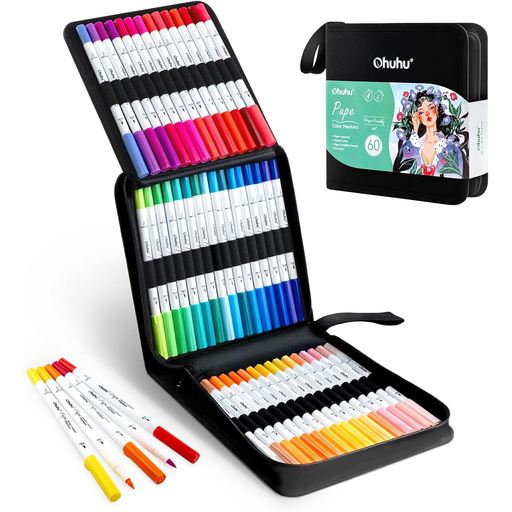
Why This Fits Their Persona: A substantial set for adult colouring, planners, lettering, sketching and craft projects where colour range matters.
The dual-tip format gives users both a 0.4 mm fineliner and a 1–5 mm flexible brush tip instead of relying on one general-purpose nib.
The set contains 59 colours and one colourless blender, with water-based ink and a storage case.
We have compiled a complete, real-time list of products that fully satisfy these strict selection criteria and UK safety regulations.
For a balanced pencil case or desk drawer, combine products by task rather than buying duplicates:
Replace caps immediately, retract ballpoint tips after use and store pens away from direct sunlight or excessive heat. These simple habits can reduce drying and leaking, helping your stationery last longer.
Quick-drying ballpoint pens and some fast-drying gel or rollerball pens can reduce smearing. However, drying time depends on paper, writing speed and ink volume. A fine or medium point may also reduce the amount of wet ink deposited on the page.
There is no universal lifespan. Frequency of use, cap storage, paper absorbency and tip pressure all affect performance. A highlighter left uncapped may dry sooner, although some products specify a limited dry-out period. Keep caps secure and store markers as directed by the manufacturer.
Generally, wet-erase chalk markers are intended for non-porous surfaces such as glass, mirrors, slate and suitable boards. They may not remove cleanly from porous walls, untreated wood or paper. Always check the product instructions and test an inconspicuous area before creating a permanent display.