
24/7 全天候客户支持

免费退货

当日/次日达

品质保障

开启新人专享福利: 全场免邮 | 低至 2 折 | 免费试用 30 天 JoyPlus 会员
下载 Joybuy
Buying stationery supplies can seem simple until a notebook bends in a school bag, printer paper jams repeatedly or a project book lacks enough room for loose documents. Marketing often focuses on colourful covers, page counts or vague claims about “premium” quality, while the practical details are easy to miss.
Whether you are preparing for university, organising office stationery or replenishing school stationery at home, check the specifications before adding products to your basket. These are the common traps to avoid.
A notebook may advertise a large number of pages, but page size, ruling and binding affect how much space you can actually use. A compact A5 notebook is convenient for commuting, but an A4 notebook gives more room for diagrams, meeting notes and coursework. Project books with dividers can offer more practical organisation than a plain notebook with a higher page count.
Wirebound notebooks and spiral notebooks are convenient because they can open flat or fold back on themselves. However, the wire should be protected from excessive bending, particularly when the notebook is carried daily. If you need to archive notes, look for perforated pages or punched margins. Without these features, removing a page may leave an uneven edge or reduce the sheet below a standard filing size.
Paper weight is usually shown in gsm, meaning grams per square metre. Standard 80gsm writing paper, printer paper and copy paper can suit everyday use, but ink-heavy pens or felt tips may show through more readily. Heavier 100gsm paper generally feels more substantial, although suitability still depends on the pen and writing pressure. For printing, check the paper size, pack quantity and printer compatibility rather than relying on finish-related wording alone.
Choose the size around your routine. An A5 notebook is convenient on public transport, while A4 notebooks are more suitable for a fixed desk, classroom or office environment.
Lined notebooks with 8mm ruling support tidy notes and structured writing. Plain pages may be more suitable for artists, sketching or visual planning, while squared paper can help with technical work. For regular handwriting, 80gsm is a common everyday specification. A 100g offset paper notebook may offer a smoother, more substantial writing surface, but check the product description for the actual paper weight rather than assuming it is suitable for every ink type.
For environmentally conscious purchasing, look for clearly stated material information such as recycled paper or FSC-certified paper. These descriptions identify the stated paper source or certification; they do not automatically indicate that every component of the product is recycled.
A wiro or spiral binding can allow a notebook to open flat, which is useful when writing on a small desk. Project books with repositionable dividers and storage pockets are more appropriate when notes must be separated by module, client or task.
For office stationery, consider whether pages need to be removed and filed. A four-hole punched margin, as found on some wirebound formats, can make filing more straightforward. For a geometry compass set, check the adjustment mechanism, lead compatibility and whether a protective storage case is included.
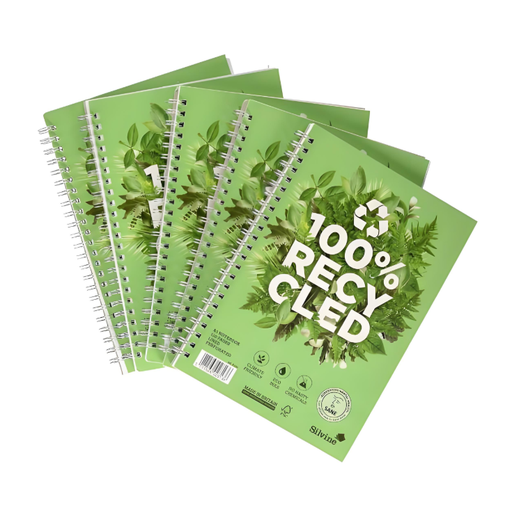
Why This Fits Their Persona: A five-pack gives students, home users and new office starters several notebooks for separate subjects or tasks without buying each one individually.
The listing states the quantity, 80gsm recycled paper and 120 lined pages per notebook, making the pack contents clear.
A5 format, perforated pages, four punched holes and 360° wirebound opening.
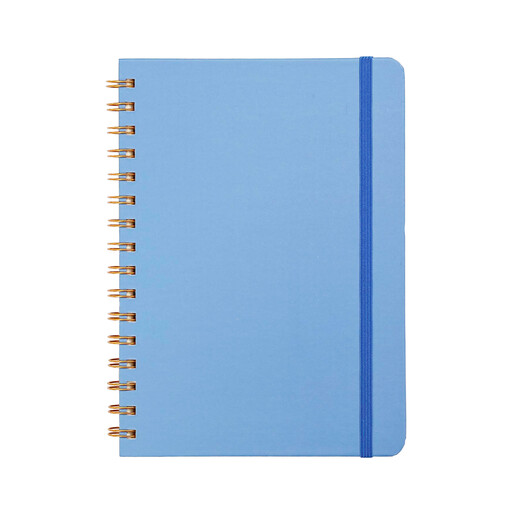
Why This Fits Their Persona: Suitable for journal writers, professionals and gift shoppers who prefer a more structured A5 notebook with a protective cover.
The specification identifies 100g cream ruled paper, a twin-wire spiral and a hardcover rather than leaving paper quality and construction unclear.
96 sheets of cream offset paper and an elastic closure band for carrying.
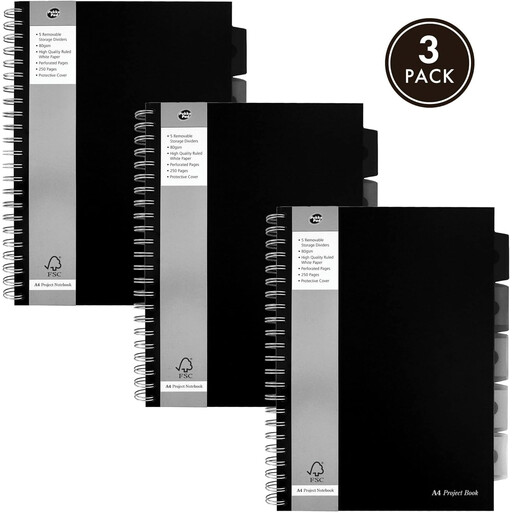
Why This Fits Their Persona: A practical choice for teachers, office workers, researchers and students handling multiple modules, meetings or long-running projects.
Its stated 250 pages, five repositionable dividers, storage pockets and perforated sheets provide more organisational detail than a basic lined notebook.
A4 format, wipe-clean polypropylene cover and FSC-certified 80gsm paper.
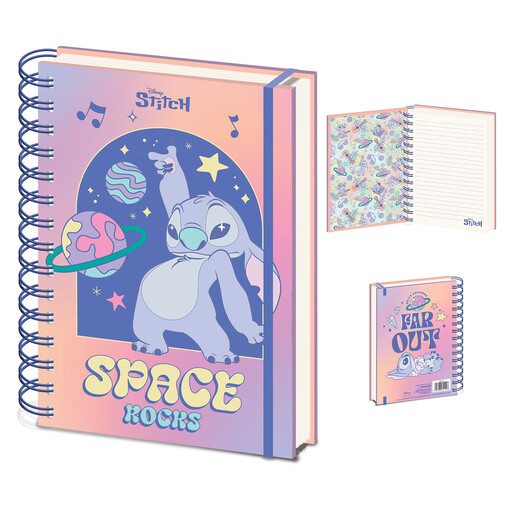
Why This Fits Their Persona: A portable option for fans who want school stationery, office notes or journalling supplies with a colourful character design.
The product details specify the A5 dimensions, lined layout, durable card cover and metal wiro binding, not just the artwork.
The wiro design can open flat or fold back, while the compact format is easy to carry.
A complete stationery order may need more than notebooks. Before buying, consider:
We have compiled a complete, real-time list of products that fully satisfy these strict selection criteria and UK safety regulations.
A5 notebooks are convenient for lectures and commuting, while A4 notebooks provide more space for diagrams, handouts and detailed coursework. B5 sits between the two and can suit students who need extra writing room without carrying a full A4 book.
Yes, 80gsm is commonly used for general notes, office documents and printing. However, some inks may show through depending on the pen. If you use gel pens, markers or fountain pens, consider a notebook with heavier paper, such as 100g paper, and check user guidance before purchasing.
Keep paper products dry, avoid overloading wirebound spines and store notebooks flat or upright without heavy pressure. Use the correct printer settings for copy paper and keep a geometry compass in its case to protect the hinge and points. A clear specification check before purchase can also reduce the need to replace unsuitable stationery.