What matters when buying?
Start with the course software list, then decide how much local capacity and desk space your study setup needs. A computer that fits the desk still has to run the required applications.
| Concern |
What to check |
Who this matters to |
| Course and operating-system compatibility |
Confirm the required applications, versions, add-ons, licence access, operating system and processor architecture. If Windows 11 is needed, check the exact computer against Microsoft’s requirements. |
If my course requires particular tools, I need to know they will run before I choose a desktop for its size or processor. Around 40% of consumers put course compatibility first. |
| Capacity for growing coursework |
Compare installed memory and storage with your expected local files; check available upgrade options on the exact configuration if expansion matters. |
As my local datasets and project files grow, I want enough capacity without assuming every model can be upgraded. For around 30% of consumers, room for growing coursework is the primary concern. |
| Desk space and displays |
Measure the intended location and check display outputs, supported monitor arrangements and whether peripherals are included. |
I need space for study materials and a display arrangement that works with my desk, not just a small computer case. Workspace setup comes first for around 30% of consumers. |
Joybuy desktop choices
These compact desktops offer macOS, Windows 11 and a Linux-based technical-computing option. Check your course’s software and architecture requirements before deciding which route fits your studies.
 No image available
Apple Mac mini (2026) M6, 24GB, 512GB, Silver
Consider this macOS desktop if your course confirms support for its applications and required packages.
The listed configuration has an M6 12-core CPU, 12-core GPU, 24GB RAM and a 512GB SSD. Check the display connections and whether you need to supply a monitor, keyboard and mouse.
View on Joybuy
 No image available
SOYO S4PLUS, Ryzen 7 H 255, 24GB, 512GB
This Windows 11 mini desktop is an option to assess if your course supports Windows and desk space is limited.
The title specifies a Ryzen 7 H 255 processor, 24GB LPDDR5 memory and a 512GB PCIe 3.0 SSD. Check its video outputs against the monitors and cables you intend to use.
View on Joybuy
 No image available
SOYO M5, Ryzen 4300U, 16GB, 512GB
This Windows 11 mini desktop offers another compact configuration to compare with your course requirements.
The title specifies an AMD Ryzen 4300U, 16GB LPDDR4 memory and a 512GB SSD, with HDMI 2.0, Type-C and DisplayPort 1.4 connections listed for its triple-display setup. Check your monitors and cables for compatibility.
View on Joybuy
 No image available
SOYO Y5Pro, Core i5 8250U/8350U, 8GB, 256GB
This compact Windows-listed option requires particular care when checking the supplied configuration against your course needs.
The title lists an Intel Core i5 8250U/8350U processor option, 8GB DDR4 memory and a 256GB SATA SSD. Confirm which processor is supplied and whether that exact computer meets Windows 11 requirements.
View on Joybuy
 No image available
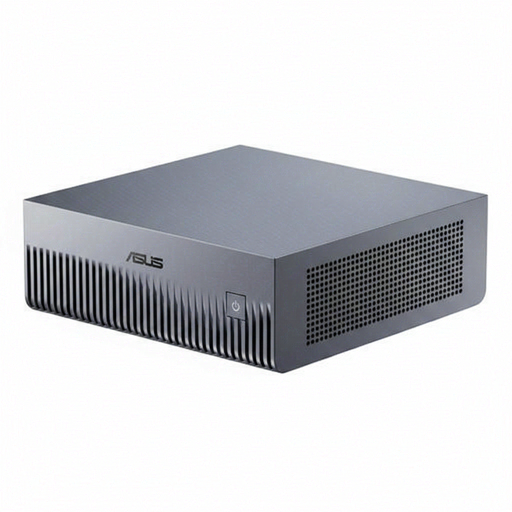
ASUS Ascent GX10, NVIDIA GB10, 128GB, 1TB
Consider this technical-computing desktop only if your course applications and packages support NVIDIA DGX OS and its Arm architecture; its stated focus is local AI development rather than general introductory coursework.
The title specifies NVIDIA GB10 Grace Blackwell, 128GB unified memory and a 1TB NVMe SSD. Check the exact storage-upgrade provisions and power requirements before choosing accessories.
View on Joybuy
Common questions
Should I choose Windows, macOS or Linux for learning statistical analysis?
Choose an operating system supported by your course’s required tools. Ask for the application and package list, then check versions and processor architecture: the Python Software Foundation offers several Windows installer types, but a Python installer does not establish support for every university workflow.
Will a mini desktop work with more than one monitor?
It may, depending on the exact desktop and display connections. Lenovo says its ThinkCentre M70q example supports up to three independent monitors, but check the model you intend to buy, your monitors and the necessary cables; Lenovo says the monitor, keyboard and mouse for that example are sold separately.
What should I check on a desktop sold with Windows 11?
Check that the exact machine meets Microsoft’s Windows 11 requirements, including a compatible 64-bit processor, at least 4GB of memory, at least 64GB of storage, UEFI Secure Boot capability and TPM 2.0. These are installation requirements, not a target configuration for your statistical-analysis coursework.
Do the same electrical-equipment rules apply across the UK?
Do not assume Great Britain guidance answers every Northern Ireland question. Government guidance on the Electrical Equipment (Safety) Regulations 2016 addresses Great Britain and notes differences under the Windsor Framework; ask the seller for compliance information applicable to where the computer will be supplied.
What should I do with an old desktop?
Erase your personal and course data, then use an appropriate electrical-equipment collection or retailer take-back route. UK government guidance places electrical and electronic equipment within the scope of the WEEE Regulations 2013.


