
24/7 Customer Support

Free returns

Same-day & Next-day Delivery

Quality Guaranteed

Unlock Your Welcome Offers: FREE Delivery | Up to 80% OFF | Free 30-day JoyPlus trial
Download the APP
A perfectly cooked steak deserves to be enjoyed without a struggle. Yet, many of us have experienced the frustration of a dull, flimsy knife that tears rather than slices. Choosing a new steak knife set can feel overwhelming, with countless options all claiming to be the sharpest and most durable. The reality is that many fall short, leaving you with rusty blades and wobbly handles after just a few uses.
As the Joybuy Product Recommendation Officer, my role is to help you navigate the market and identify the features that genuinely matter. Before you spend your hard-earned money, let's look at the common pitfalls that catch out UK shoppers and how to avoid them.
To ensure you get a set that lasts, focus on these core specifications. They are the true indicators of quality and will have the biggest impact on your dining experience.
The most practical and popular choice for a reason, stainless steel steak knives offer a great balance of sharpness, durability and ease of maintenance. The key is to look for food-grade stainless steel, which is specifically formulated to resist rust and corrosion from food acids and detergents. This material ensures the blades remain hygienic and presentable, even with regular use and cleaning. A well-made stainless steel blade is robust enough for daily meals and won't impart any metallic taste to your food.
While professional chefs might prefer a straight-edge blade for its clean, smooth cut, it requires frequent and skilled sharpening to maintain its performance. For the average home, serrated steak knives are a more practical solution.
The saw-like edge excels at cutting through meats with a tough exterior and a tender inside, like a well-seared steak or grilled chicken. The points of the serrations do most of the initial work, protecting the recessed edges from dulling. This means they stay effective for much longer without needing any specialist sharpening, making them a low-maintenance choice for busy households.
A knife's handle is crucial for both comfort and safety. Look for an ergonomic design that fits comfortably in your hand, providing a secure grip. Many find that classic black handle steak knives offer a timeless look that complements most dinnerware.
More importantly, check the construction. A knife with a visible "full tang"—where the steel from the blade runs the full length of the handle—offers superior balance and durability. This solid construction prevents the handle from loosening over time, a common failure point in cheaper knives. A comfortable, well-balanced knife gives you better control for clean, effortless slicing.
Based on these practical criteria, we've identified a product that aligns with the needs of a specific type of user. Instead of a one-size-fits-all approach, this recommendation is matched to a distinct household profile.
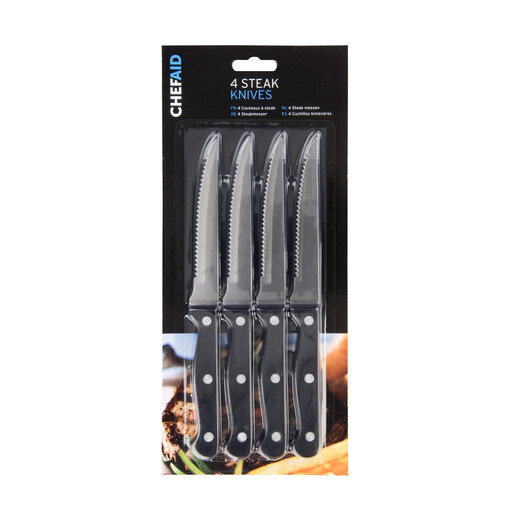
Why This Fits Their Persona: This user hosts family Sunday roasts or casual dinner parties. They need a reliable steak knives set of 4 that performs well and looks smart on the table, but they don't want to invest in a high-end, specialist set. This Chef Aid set delivers on practicality and affordability.
It is made from quality stainless steel designed to resist rust and corrosion, avoiding the pitfall of quick deterioration. The traditional, full-tang-style construction provides a solid feel and prevents the handle from becoming loose with use.
The serrated edge stays sharp without maintenance and is versatile enough for other foods like crusty bread or tomatoes. The ergonomic handle ensures a comfortable and secure grip for safe, easy slicing.
We have compiled a complete, real-time list of products that fully satisfy these strict selection criteria and UK safety regulations.
1. Are serrated steak knives better than straight-edge ones? For most households, serrated knives are a more practical choice. They do not require regular sharpening to stay effective and are excellent for cutting through foods with a firm crust or skin. While a perfectly sharpened straight-edge knife can provide a cleaner cut, it demands significant upkeep. For reliable, everyday performance, a serrated edge is hard to beat.
2. How do you properly care for stainless steel steak knives? To prolong the life of your knives, it's good practice to hand-wash and dry them promptly after use, even if they are described as dishwasher safe. This prevents prolonged exposure to harsh detergents and moisture, which can eventually lead to spotting or corrosion on any steel. Avoid using abrasive scouring pads, which can scratch the surface.
3. Can you sharpen serrated steak knives at home? Sharpening serrated knives is a complex process that requires a special tool (a ceramic or diamond-coated sharpening rod) to hone each serration individually. It is generally not recommended for home users without the right equipment and experience. A key benefit of a quality serrated knife is that it holds its edge for years, making sharpening a rare necessity.