
24/7 Customer Support

Free returns

Same-day & Next-day Delivery

Quality Guaranteed

Unlock Your Welcome Offers: FREE Delivery | Up to 80% OFF | Free 30-day JoyPlus trial
Download the APP
A steam carpet cleaner can help refresh carpets, rugs, sofas and other fabric surfaces, but choosing the wrong machine may leave you with damp flooring, frequent tank refills or accessories that rarely leave the cupboard. UK homes also face practical challenges such as muddy entrances, pet stains, narrow staircases and limited drying time.
Before buying, look beyond phrases such as “deep clean” or “professional power”. The useful question is whether the machine’s specifications match your rooms, surfaces and cleaning routine.
A high wattage figure indicates how much electrical power the motor or heating system uses. It does not automatically confirm stronger extraction. For carpet cleaning, check whether the product provides a stated suction figure, brush agitation system and a clear explanation of how water and dirt are collected.
A machine with a 1,300W motor and 18,000Pa suction, for example, provides more useful information than wattage alone. Suction helps lift moisture and loosened debris, while rotating or beating brushes work dirt out of the carpet pile.
Steam is not suitable for all flooring, rugs or upholstery. Delicate fibres, some natural fabrics, unsealed surfaces and certain carpet backings may be damaged by heat or moisture. Always check the manufacturer’s care instructions and test an inconspicuous area first.
A carpet steam cleaner should also be distinguished from a handheld steam cleaner designed mainly for tiles, glass or hard surfaces. The latter may not have the brush width, dirty-water recovery or extraction power needed for large carpets.
A machine can remove stains effectively yet still be inconvenient if it leaves carpets wet for hours. Check the stated drying time, clean-water capacity and dirty-water tank size. You should also consider whether tanks, brushes and filters are easy to remove and rinse.
Pet owners and families should be particularly cautious about machines that collect dirty water but offer no straightforward emptying process. Residual moisture and debris can create unpleasant odours if the appliance is not cleaned after use.
For embedded dirt, a combination of suction, brush movement and controlled steam is generally more practical than any single feature. The Dreame CU20 Pro Steam lists 18,000Pa suction, dual counter-rotating brushes operating at 1,000 RPM, and steam at a stated boiler outlet temperature of 100°C.
Its steam preparation time is listed as 18 seconds, which may be useful when dealing with a fresh spill or moving between rooms. However, steam temperature at the boiler outlet does not mean every part of the carpet reaches the same temperature. Treat any antibacterial figures as product specifications rather than a substitute for normal hygiene, ventilation or professional cleaning where appropriate.
A larger clean-water tank means fewer interruptions, although it can increase the machine’s filled weight. The CU20 Pro Steam has a 4-litre clean-water tank and a 1.5-litre dirty-water tank. Its listed operating time is up to 60 minutes, while its 8-metre power cord is specified for coverage of up to 150m² per session.
For a small flat, a compact tank may be adequate. For larger UK homes, multiple rooms or regular pet-related cleaning, a larger tank can reduce the need to stop and refill.
A versatile carpet cleaner with steam should offer more than a floor head if you want to clean sofas, stairs, car interiors or windows. Check the attachment list rather than assuming “multi-surface” means every tool is included.
The CU20 Pro Steam includes a 2.5-metre hose, carpet brush, sofa brush, flat brush, window brush and extension pole. It is listed for carpets, rugs, upholstery, sofas, stairs, car interiors, windows and shoes. Always follow the care instructions for each surface before applying heat or moisture.
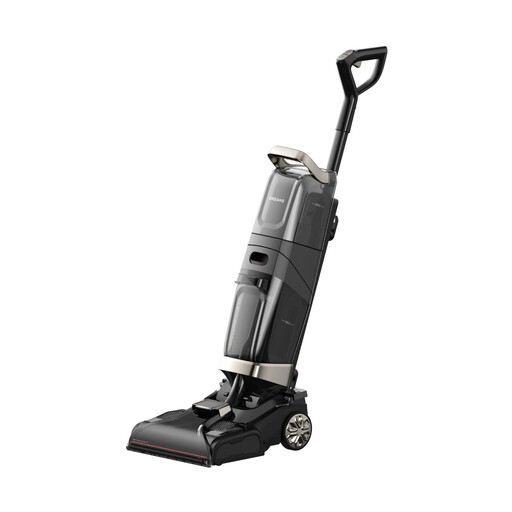
Why This Fits Their Persona: A suitable match for UK households wanting one upright machine for carpets, rugs, upholstery and occasional multi-surface tasks.
It provides stated suction, brush speed, tank capacities and drying information rather than relying only on a wattage claim.
18,000Pa suction, 100°C listed boiler outlet temperature, 4L clean-water tank, 8m cord and a stated 30–40 minute drying time.
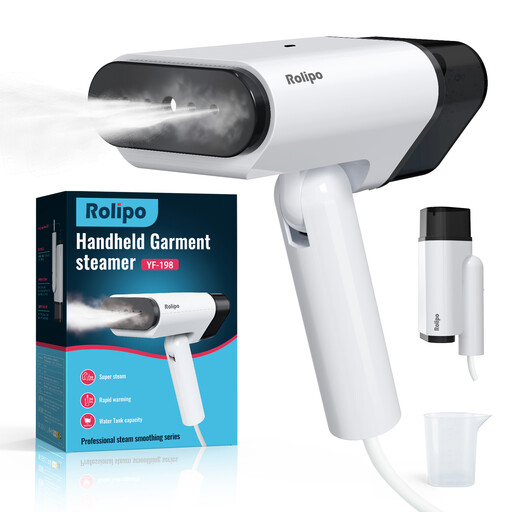
Why This Fits Their Persona: A compact option for shoppers primarily needing garment steaming, with occasional light steam tasks rather than full carpet cleaning.
Its stated purpose is clear: it is a handheld clothes steamer, not an upright carpet cleaner. This helps prevent buying a small appliance for a large-floor cleaning job.
Foldable design, one-button operation and an integrated anti-leak water tank for clothes at home, in the office or while travelling.
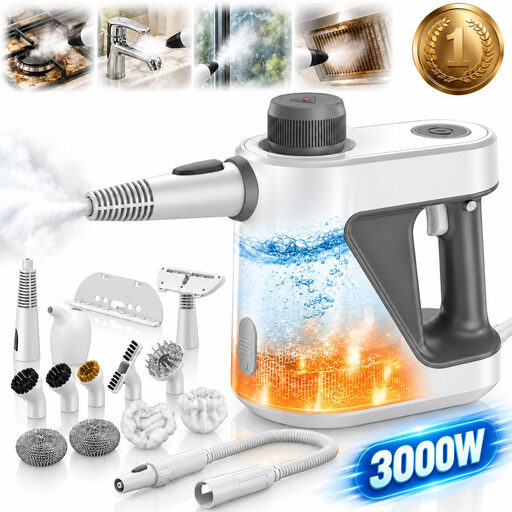
Why This Fits Their Persona: Designed for shoppers prioritising detailed cleaning around cars, kitchens, bathrooms, tiles and windows rather than large carpeted areas.
Its handheld format makes it easier to target crevices and hard surfaces, while avoiding the expectation that a compact tool will extract water from an entire carpet.
The listing describes a 15-in-1 format and 3,000W power rating for targeted steam-cleaning tasks across several hard surfaces.
We have compiled a complete, real-time list of products that fully satisfy these strict selection criteria and UK safety regulations.
Before the first use, vacuum loose dust, crumbs and pet hair. This reduces the load on the extraction system and helps the machine focus on embedded soil. Fill the clean-water tank according to the instructions, use only compatible cleaning solution where permitted, and avoid over-wetting one area.
Electricity cost depends on the appliance’s rated power, the time it runs and your tariff. A 1,300W machine uses approximately 1.3kWh per hour when operating continuously at its rated power; actual consumption may be lower because heating systems cycle on and off. Steam also uses water, so factor in refill time and drying requirements when comparing models.
It can help loosen and extract some surface and embedded marks, but results depend on the stain, carpet fibre and how long it has been present. Remove solid debris first and follow the carpet manufacturer’s instructions. For persistent odours or biological contamination, specialist cleaning may be more appropriate.
Drying varies with ventilation, room temperature, carpet thickness and the amount of water applied. The Dreame CU20 Pro Steam lists a 30–40 minute drying time, but treat this as a product specification rather than a guarantee for every room. Open windows where practical and avoid saturating the carpet.
Some models include attachments for multiple surfaces. However, each material has different heat and moisture tolerances. Use the correct attachment, check care labels and test a hidden section first, particularly on upholstery, painted surfaces and delicate rugs.