Turnover-day batch pressers
Hosts or housekeeping teams pressing several cotton skirts together who want to limit pauses for refilling and dealing with creases.


For several cotton skirts pressed in one session, start by comparing continuous steam output, tank capacity and the descaling routine rather than choosing by the steam-boost figure alone. Automatic fabric settings are worth considering if other ironable garments join the workload, but each skirt's care label still governs how it should be pressed. Balance a longer pressing session against the space the generator needs for use and storage.
Hosts or housekeeping teams pressing several cotton skirts together who want to limit pauses for refilling and dealing with creases.
People pressing cotton skirts alongside other ironable garments who would value fewer temperature-setting changes while following each garment's care label.
Hosts with limited room for a generator who can accommodate shorter pressing sessions or more frequent refills.
Start with the size of a typical pressing batch and the care labels on the garments. Then check whether the tank, maintenance routine and storage space fit the way the iron will be used.
| Concern | What to check | Who this matters to |
|---|---|---|
| Pressing a batch | Compare continuous steam in g/min and tank capacity; treat steam boost as a separate, short-burst figure. | When several skirts need pressing between lets, I want to keep the work moving without frequent pauses. Roughly 31% of consumers put batch pressing first. |
| Mixed-fabric handling | Check whether automatic settings cover ironable fabrics, then follow the label and construction of each skirt. | If other ironable garments join the skirts, I want fewer setting changes without overlooking a delicate finish. Around 31% of consumers prioritise mixed-fabric handling. |
| Limescale maintenance | Check the exact model's descaling method and the water and cleaning instructions in its manual. | For regular pressing, I need a cleaning routine that housekeeping can carry out consistently. Approximately 23% of consumers make manageable maintenance their primary concern. |
| Storage and setup | Measure the storage and ironing space, check the tank's refill design and plan equipment checks before staff use. | With little room between lets, I need to put the generator away safely and set it up without difficulty. About 15% of consumers place storage and setup first. |
A cotton skirt may also have a lining, print, coating, pleats or trim that changes how it should be pressed.
Read the skirt's ironing symbol and care instructions. Where a finish makes heat sensitivity uncertain, use a press cloth or test an inconspicuous area.
Boost describes a short burst, not the steam available throughout a batch of pressing.
Compare continuous output, tank capacity and refill design first; use the boost figure as a secondary check for stubborn creases.
Scale-management designs differ by model, so a familiar brand name does not tell you which cleaning task the appliance requires.
Check the exact model's manual and choose a procedure that can be incorporated into the housekeeping routine.
The Health and Safety Executive advises that electrical-equipment maintenance and checks should reflect the equipment and how it is used. Neither feature replaces attention to visible damage.
Check the plug, cable, connections and casing before use. Take damaged equipment out of use and arrange a competent assessment; establish a suitable maintenance routine if staff use the iron.
Tefal's SV9203G0 and SV8022G0 are reference points for comparing large removable tanks, automatic fabric settings and model-specific scale systems.
Philips offers different approaches across the PerfectCare Elite and HI5918/26R1 models; their features should not be treated as interchangeable.
Bosch's TDS3872GB provides a feature reference for a refillable steam station with storage and fabric-programme considerations.
These steam generators offer different starting points for holiday-let skirt pressing: a larger-tank model for batches, an automatic-setting option for mixed ironable laundry, and a compact-design option. Check garment care labels and the exact appliance's electrical documentation before use.
 No image available
Consider this model when pressing several skirts in one session and a larger tank suits the available space. Its listed variant has a 1.8 L tank and is rated at 2800 W; automatic settings do not replace each skirt's care label. Confirm the exact model's plug and electrical documentation before use.
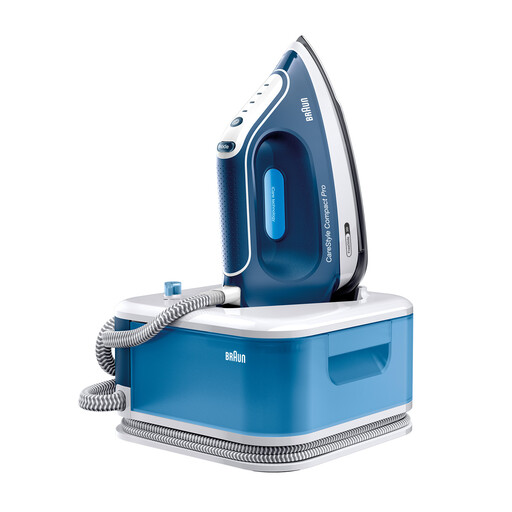 No image available
Consider this model if cotton skirts are pressed alongside other ironable garments and reducing setting changes matters. The listed variant has a 1.5 L tank and a stated pressure of 7.5 bar. Follow garment care labels, and check its descaling instructions, plug and electrical documentation before buying.
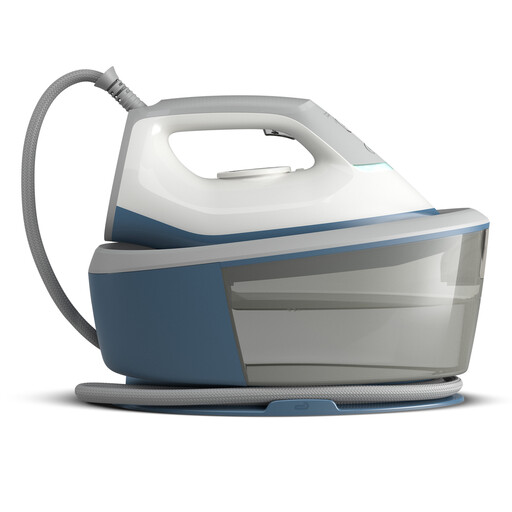 No image available
Consider this model where a compact-design generator suits shorter pressing sessions. This PSG2000/20 variant is rated at 2400 W. Its instructions call for selecting a temperature, so do not assume setting-free handling of mixed fabrics; check each skirt's care label and confirm the plug and electrical documentation before use.
Not without checking the skirt's care label. Blends, linings, prints, coatings and trims can affect the appropriate ironing method; an automatic-setting generator is intended for garments that are ironable.
Choose a tank that suits the usual batch and the available storage space. Tefal UK specifies a 1.8 L removable tank for SV9203G0, while Philips UK specifies a 1.1 L detachable tank for HI5918/26R1. Capacity alone does not establish pressing speed or fabric care.
Follow the instructions for the exact model rather than applying a generic cleaning schedule. Tefal describes different scale systems for SV9203G0 and SV8022G0, while Philips specifies a Smart Calc Clean reminder and container for HI5918/26R1.
Annual portable appliance testing is not a fixed legal requirement under the electrical-safety guidance described by the Health and Safety Executive. GOV.UK's guidance for self-catering holiday homes in England says operators must follow HSE electrical-safety guidance; HSE says equipment must be maintained to prevent danger and that appropriate checks depend on the equipment and its use. Take visibly damaged equipment out of use and arrange a competent assessment.