Family-batch cotton pressers
Consumers pressing waistcoats alongside a household laundry pile need to weigh sustained steam and tank capacity against the space taken by the separate base and board.


A steam generator iron is worth considering if you press cotton waistcoats alongside regular family laundry and want steam from a separate tank for longer sessions. Its base needs storage space and a steady, steam-permeable ironing board. For each waistcoat, let the care label, lining and trims guide how you use heat and steam rather than relying on an automatic-temperature claim alone.
Consumers pressing waistcoats alongside a household laundry pile need to weigh sustained steam and tank capacity against the space taken by the separate base and board.
Consumers handling waistcoats with linings, dark sections, buttons or mixed fibres need to check the whole garment’s care instructions and work carefully around details that should not be pressed directly.
Consumers with limited storage need to check the dimensions of the complete appliance and where its hose, cable and ironing board will go between uses.
Start with what the waistcoat’s care label permits. Then consider how often you press a full family load, whether the base and board will fit, and which maintenance routine you can follow.
| Concern | What to check | Who this matters to |
|---|---|---|
| Cotton creases | Compare continuous-steam specifications for the exact model, and check that your board is steady and allows steam through. | When pressing waistcoats with the family wash, I want to work through creased panels and seams without repeatedly stopping to refill; around 33% of consumers would put crease removal first. |
| Fabric care | Check the garment label and the model’s temperature controls or named automatic system; take particular care with linings, dark fabric and trims. | A lined waistcoat with dark sections makes me cautious about heat, shiny marks and pressing over buttons; for roughly 25% of consumers, protecting the garment would be the primary need. |
| Space and workflow | Check tank capacity, base dimensions and carrying arrangement against the space available for both the appliance and board. | I need the appliance to fit away safely after a family ironing session without making the setup awkward; storage and workflow would come first for around 25% of consumers. |
| Descaling | Read the exact model’s water instructions and check how its collector, cleaning cycle or reminder works. | If keeping up with descaling is difficult, I want a routine I can follow without risking stains or spitting from unsuitable water; approximately 17% of consumers would make maintenance their main concern. |
Manufacturer claims for automatic or no-setting systems apply to ironable fabrics, not every lining or trim. Tefal also advises care with dark fabric that may develop shiny marks and with details that could scratch the soleplate.
Read the whole garment’s care label, test an inconspicuous area where appropriate, and press around buttons and trims. Turn dark sections inside out where practical.
A steam generator has a separate tank and base that need suitable support and storage. Tefal advises using a steady, perforated board and a cover that lets steam pass through.
Measure the storage area and check the exact appliance dimensions and carrying arrangement before choosing a model.
An unsuitable board may need replacing, and the appliance needs a safe place to cool and be stored.
Collectors and cleaning methods differ by model. Tefal warns that unsuitable water in its SV8055 can cause spitting, brown staining or premature wear; those water instructions should not be assumed to apply to other models.
Check the manual for the exact iron you buy and choose a descaling routine you can keep up with.
Electrical Safety First advises checking for a UK three-pin plug and fuse, reading the instructions and registering the appliance for recall information. Product-safety requirements also need to be considered for the market where the appliance is supplied.
Before buying, confirm the seller, model number, plug, manual and support route. If delivery is to Northern Ireland, check the applicable market information rather than assuming Great Britain guidance covers it.
Relevant if reducing temperature-setting decisions across ironable household fabrics matters more than choosing a manual setting for each item.
Relevant when temperature-setting and anti-scale maintenance are central to the choice.
Relevant when comparing a compact-oriented setup with a larger-tank option for family laundry.
Relevant as another named option when comparing steam generators for household loads.
Relevant if you want to compare an independently listed alternative with the other named models.
These steam generators offer starting points for pressing cotton waistcoats alongside family laundry. Compare each model’s stated configuration with your garment-care requirements, available space, board and maintenance routine.
 No image available
Consider this model for sessions that include waistcoats and other ironable family laundry. Its name specifies a 1.8 L tank and 2800 W rating; check how its temperature system applies to each garment component rather than pressing over buttons or trims.
Check the SV8154G0 manual for permitted water and descaling instructions, and confirm that your board and storage space suit the complete appliance.
 No image available
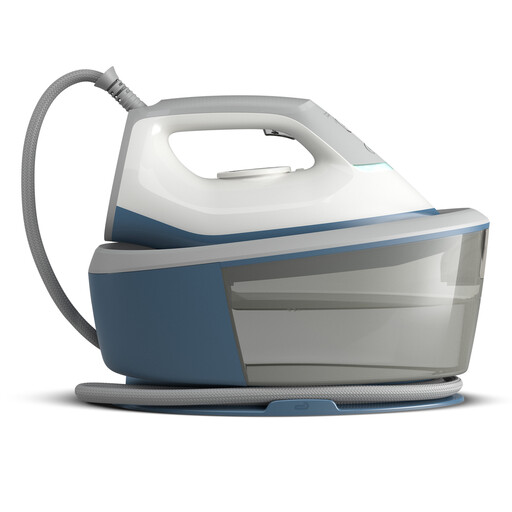
Consider this model if you are prepared to select a temperature for the fabric when pressing waistcoats. Its name specifies a 2400 W rating; check the base dimensions before relying on it to fit a particular storage space.
Follow the PSG2000/20 manual for water and cleaning, and check the waistcoat’s lining and trims separately from its cotton outer fabric.
 No image available
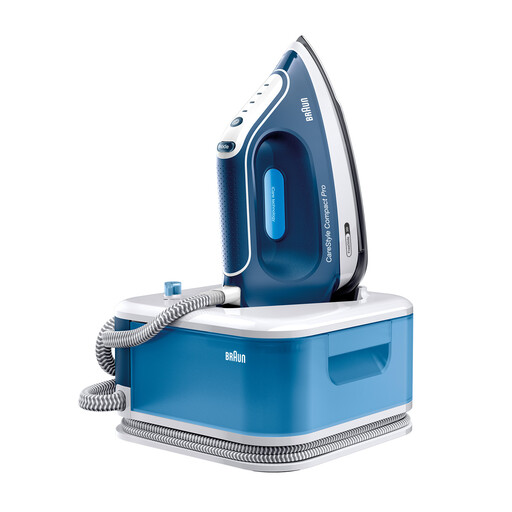
Consider this model if tank capacity and storage both matter in your family ironing routine. Its name specifies a 1.5 L tank, 7.5 bar pressure, FreeGlide 3D and iCare; check the base dimensions rather than assuming the compact name guarantees a fit.
iCare does not replace the waistcoat’s care instructions. Check the IS2565BL manual for water and descaling, and avoid pressing directly over buttons and unsuitable trims.
Yes, if the waistcoat’s care label permits ironing and steam. Check its lining and trims as well as the outer cotton; Tefal advises taking care with dark fabric that may develop shiny marks and avoiding direct contact between the soleplate and abrasive details such as buttons.
Choose a steady board that can support the appliance and let steam pass through the garment. Tefal advises a perforated board with a steam-permeable cover; check that your particular board can accommodate the generator base.
Follow the manual for your exact steam generator rather than a general rule for the category. For its SV8055, Tefal specifies untreated tap water and warns against several alternatives, including scented and softened water; another model may have different instructions.
Check the seller, model, UK three-pin plug and fuse, instructions and route for product registration, as Electrical Safety First advises. If the appliance is being supplied to Northern Ireland, confirm the applicable market information rather than applying Great Britain regulatory guidance to it without qualification.
A garment steamer can suit a quick refresh, but do not assume it will give a sharply pressed cotton waistcoat the same finish as an iron. Philips says its garment steamers do not give the same results as an iron on thick cotton or linen shirts; choose according to whether refreshing or firm pressing is your main task.