Occasional cotton-dress presser
If you press one or two dresses at a time, a compact base and a manageable refill and descaling routine may matter more to you than the output specified for a larger generator.


For a few cotton dresses at a time, start with a compact steam generator; for dresses pressed alongside other ironable fabrics, consider automatic temperature controls; and for frequent sessions with stubborn creases, compare models with higher continuous steam output. Whichever route suits you, check the whole dress’s care label, the space needed for the base and board, and the model’s scale-maintenance instructions.
If you press one or two dresses at a time, a compact base and a manageable refill and descaling routine may matter more to you than the output specified for a larger generator.
If cotton dresses share the ironing pile with delicate, dark or blended garments, automatic controls may reduce setting changes. You still need to follow each garment’s care label.
If you regularly press several garments or heavier cotton, compare continuous steam, tank handling and scale maintenance. You will also need a sturdy, perforated ironing board for sustained steam.
Start with how often you press cotton dresses and whether other fabrics share the session. Then compare the controls, continuous steam and practical setup of the exact model.
| Concern | What to check | Who this matters to |
|---|---|---|
| Continuous steam | Compare continuous output in g/min for the exact model; treat the boost figure as a separate specification for isolated creases. | When I press several cotton dresses or tackle persistent creases, I want steam suited to a sustained session, not just a brief boost. Around 40% of consumers put continuous output first. |
| Fabric controls | Check whether controls are automatic or manual and which ironable fabrics the manufacturer’s guidance covers. | If my cotton dress has a blend, lining or delicate trim, I want to avoid treating every part as plain cotton. Around 30% of consumers prioritise confidence in fabric settings. |
| Storage and upkeep | Check the base size, tank and refill arrangement, descaling instructions, and whether your board is sturdy and perforated. | With only an occasional dress to press and limited storage, I need a setup I can put away and maintain without difficulty. Around 30% of consumers make compactness and upkeep their primary concern. |
A boost is for occasional stubborn creases; continuous output is the more relevant stated figure when pressing dress panels throughout a session.
Compare continuous steam in g/min, pressure in bar and tank arrangements for the exact model before weighing its boost figure.
One-temperature systems are described for ironable fabrics, not for every lining, trim or decoration. Manufacturer guidance also warns about shiny marks, particularly on dark fabrics.
Read the full dress label. Where appropriate, turn dark fabric inside out; with manual controls, follow the guidance for the most delicate fibre in a blend.
Tefal advises using a perforated board so steam can pass through the fabric. Water and scale-control instructions differ by model.
Check that your board is sturdy and perforated, then follow the exact generator’s manual for water and descaling.
Scale maintenance takes ongoing attention, particularly if you iron frequently.
Electrical Safety First advises checking for a standard UK three-pin plug and fuse. The Office for Product Safety and Standards has also recalled specified Philips GC96 and PSG8 models and batches because of a boiler-seam failure risk; that notice does not identify every Philips generator.
Check the supplied plug and cable, and compare the full model and batch details with any applicable official recall notice before use.
Tefal’s steam-generator range includes compact, one-temperature and higher-output models relevant to different cotton-dress workloads.
Philips PerfectCare models may interest people who iron cotton dresses alongside other ironable fabrics and want automatic controls.
Bosch’s TDS4070GB illustrates an approach combining no-temperature-change controls with built-in decalcification.
These steam generators are choices to consider for cotton-dress pressing. Compare their stated features with your fabric mix, available space and maintenance needs.
 Image unavailable
Consider its one-temperature approach if you press cotton dresses alongside other ironable garments; the dress care label still takes priority.
Tefal UK lists 6.9-bar pressure and 130 g/min continuous steam for SV8154G0. This variant is labelled 2800 W with a 1.8 L tank.
Confirm the supplied plug and fuse and the model’s maintenance instructions before buying.
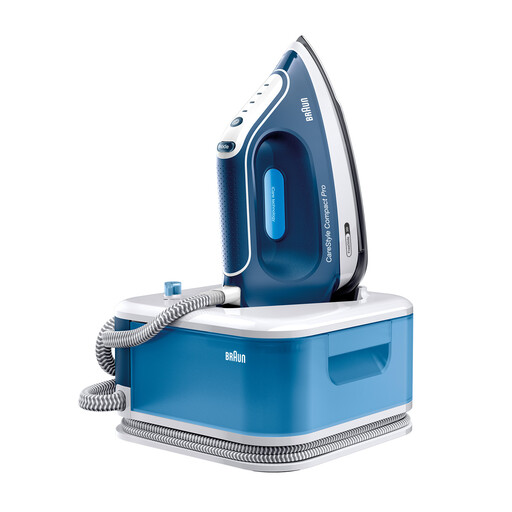 Image unavailable
If your cotton dresses share a session with other fabrics, check whether this model’s iCare controls suit each garment’s care label.
The IS2565BL variant is labelled with 7.5-bar pressure, a FreeGlide 3D soleplate and a 1.5 L tank.
Check its exact water and maintenance instructions, as well as the supplied plug and fuse.
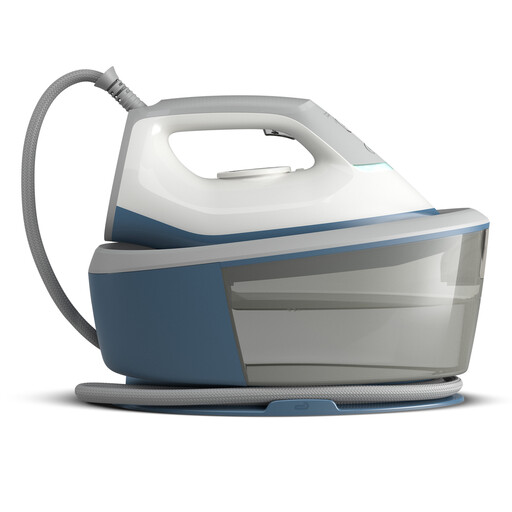 Image unavailable
For cotton dresses, check this model’s controls against the care labels of the garments you press.
The PSG2000/20 variant is labelled 2400 W. Confirm its scale-maintenance routine and the supplied plug and fuse before buying.
No. Check the entire dress’s care label, including its lining, blends, prints and trim. Tefal’s guidance identifies the three-dot setting with cotton and linen on manually controlled irons, but advises using the setting for the most delicate fibre in a blend; automatic controls do not override the label.
Use a stable, sturdy, perforated board suitable for sustained steam. Tefal advises a perforated board so steam can pass through the fabric rather than collecting beneath it.
No. Tefal’s steam-generator guidance says never to use vertical steam on clothing being worn. If your model supports vertical steaming, hang the dress away from the body and follow its manual.
Follow the manual for your exact model rather than applying one rule to every generator. For its Express Anti-calc GV7450G0 guidance, Tefal describes untreated tap water and gives separate instructions for very hard water; another model may require different care.
Check the supplied plug and fuse, the appliance’s condition and any recall notice for its full model and batch. Electrical Safety First advises a standard UK three-pin plug and fuse. The Office for Product Safety and Standards recall covers specified Philips models beginning GC96 or PSG8 and identified batches produced from May to October 2024, because a boiler seam could split and release hot steam; it does not identify the PSG7300/20 or every Philips generator as recalled.