Frequent pillowcase pressers
If you press several cotton pillowcases or other bedding items in one session, sustained steam and fewer refill stops are likely to matter more than they would for an occasional touch-up.


For regular batches of cotton pillowcases, compare sustained steam, tank access and scale maintenance rather than choosing by pressure alone. If you also iron other fabrics, automatic controls may matter more; if utility-room space is tight, check the station’s dimensions and where its base will sit before choosing a model.
If you press several cotton pillowcases or other bedding items in one session, sustained steam and fewer refill stops are likely to matter more than they would for an occasional touch-up.
If the iron will see regular use, look for a scale-management method you can follow as directed for the exact model, whether that involves a collector, draining system or boiler-care procedure.
If cotton pillowcases are only part of the laundry, controls for moving between ironable fabrics may influence your choice. Always follow each item’s care label.
Start with the length of your usual pillowcase session, then weigh refill convenience and scale care against the space available for the separate base.
| Concern | What to check | Who this matters to |
|---|---|---|
| Cotton creases | Compare continuous-steam and boost specifications for the exact models; check the available cotton setting or ironable-fabric mode. | When I press several pillowcases, I want steady steam for the broad panels and an extra burst for fold lines. Around 40% of consumers put crease-focused steam first. |
| Refill stops | Check tank capacity and whether the tank can be removed or refilled during use. | I would rather finish a bedding batch than pause to top up the tank. For around 30% of consumers, fewer refill interruptions are the primary concern. |
| Scale maintenance | Read the model’s water and cleaning instructions, including the scope of any boiler warranty. | If I use the station regularly, I need a scale-care routine I can keep up with. Around 20% of consumers place maintenance first. |
| Utility-room setup | Measure the storage area and the space supporting the base; confirm the supplied plug is suitable for UK use. | My board and storage space need to accommodate a separate hot-steam station safely. For around 10% of consumers, setup is the deciding need. |
Pressure does not tell you how convenient a full pillowcase session will be: continuous steam, boost output, tank access and scale care also differ between models.
Compare those features on the exact models you are considering, keeping your batch size and willingness to perform maintenance in mind.
Polti’s stated 10-year limescale warranty for the La Vaporella XT100C is limited to the boiler unit and its specified components and terms.
Check the covered parts, exclusions, maintenance requirements and claim procedure before relying on that warranty.
A steam-generator station needs a secure place for its separate base as well as room to store the appliance after it has cooled.
Measure your board and storage area, and follow the appliance’s instructions for cooling, unplugging and moving it.
A suitable board or storage arrangement may be needed if your present setup cannot securely accommodate the station.
Electrical Safety First advises checking for a standard UK three-pin plug and fuse when buying an iron for UK use. Product documentation also needs to suit the delivery destination.
Check the supplied plug, seller details and relevant product documentation before ordering, particularly if delivery is to Northern Ireland rather than Great Britain.
Tefal’s Express steam-generator models offer different combinations of steam output, tank design and scale care.
Philips’ PerfectCare range includes controls aimed at ironing different ironable fabrics without repeated manual temperature changes.
Polti’s La Vaporella XT100C is a boiler-based option for consumers interested in a named cotton preset and limescale-related boiler care.
These steam-generator irons offer different starting points for cotton pillowcase sessions: a Tefal model with a larger stated tank, a Braun model with a 1.5 L tank, and a Philips model to consider where storage and scale-care features matter. Check each model’s controls and maintenance instructions against your other ironing needs.
 No image available
Consider this model for repeated pillowcase sessions if tank capacity is a priority. Its product title specifies a 1.8 L tank and 2800 W; check its base dimensions against your board and storage space, and confirm the supplied plug and documentation for your destination.
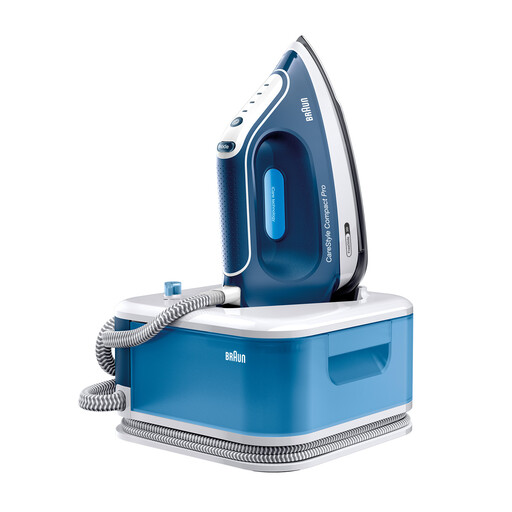 No image available
Consider this model if a 1.5 L tank meets your usual session length. Its product title also specifies 7.5-bar pressure; check the model’s scale-care instructions, exact dimensions and supplied plug before deciding whether it suits your utility room.
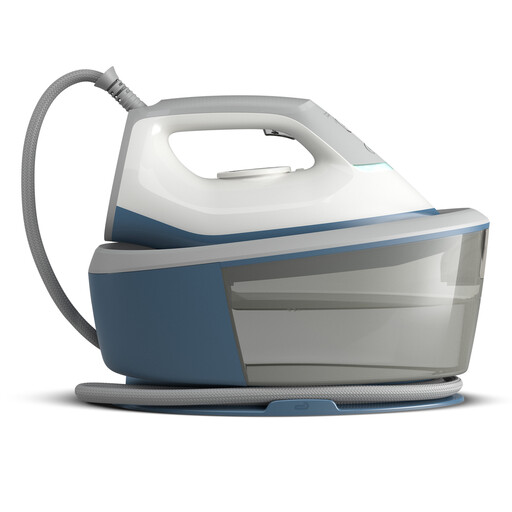 No image available
Consider this model if storage and a clear scale-care routine are priorities, but measure the available space rather than relying on a compact description. Its product title specifies 2400 W; check how its tank is refilled, follow the pillowcase care label when selecting a temperature, and confirm the supplied plug.
Follow the pillowcase care label. A model with a Cotton preset offers a named setting, while a no-setting system may cover ironable fabrics according to its manufacturer; neither is permission to iron an item labelled non-ironable.
A larger tank may mean fewer refill stops in a long session, but capacity alone does not establish crease-removal speed. Check continuous steam and controls as well as how the exact tank is refilled.
Use the cleaning method specified for your exact steam generator and follow its water instructions. Tefal and Polti describe different scale-care systems for the models discussed here, so a procedure for one model should not be applied to another.
Check the supplied plug and fuse: Electrical Safety First advises a standard UK three-pin plug and fuse for irons used in the UK. Confirm that the seller’s product documentation applies to your delivery destination; Great Britain guidance should not be assumed to cover Northern Ireland.
No. Electrical Safety First advises unplugging irons when they are not in use, not leaving them unattended, checking the cable and plug for damage, and keeping the appliance away from flammable materials while it cools.