What matters when buying?
Start with the amount of ironing in a typical turnaround: a separate-base generator is easier to justify for recurring batches than for a quick cuff touch-up. Then weigh the details that affect your particular shirts and storage space.
| Concern |
What to check |
Who this matters to |
| Batch ironing and refills |
Compare rated continuous steam and tank capacity; check whether and how the exact model can be refilled during use. |
If shirts and linen need pressing together between stays, I want fewer pauses at the water tank. Around 33% of consumers put uninterrupted batch work first. |
| Cuff and button access |
Inspect the soleplate tip and steam control for work around narrow edges and buttons. |
When cuff edges need careful placement, I care more about reaching the detail than a large burst of steam. Roughly 27% of consumers make cuff precision their primary concern. |
| Mixed shirt fabrics |
Check the exact model’s temperature and steam controls, and follow each garment’s care label. |
If I move between ironable shirt fabrics, I want to understand when settings need changing. About 20% of consumers prioritise simpler mixed-fabric handling. |
| Storage and upkeep |
Measure the storage space; check the unit’s dimensions, weight and scale-care instructions. |
When the iron must go back into a cupboard between stays, I need a manageable base and a cleaning routine I can follow. Storage and upkeep come first for around 20% of consumers. |
Brands to compare
These examples show features to check on named product lines, not features shared by every iron from each brand.
Tefal
Relevant if you want to compare high-pressure generators with a documented approach to scale care.
- Tefal specifies 7.6-bar pressure, 155 g/min continuous steam, a removable scale collector and a carry lock for the GV9710.
- Those specifications, including Tefal’s 15-year repairability statement for the named model, should not be applied to every Tefal generator. Check the storage dimensions and maintenance instructions for the one you choose.
Philips
Relevant when you want to assess automatic steam and fewer setting changes across garments that can be ironed.
- Philips specifies motion-sensor automatic steam, OptimalTEMP and a 1.5 L tank for its PerfectCare 7000 PSG7300/20.
- Check the precise model and each garment’s care label. Philips’ claims about avoiding burns concern ironable fabrics, not every material or garment detail.
Morphy Richards
Relevant if a precision-tip soleplate or an AutoClean-equipped model is on your shortlist.
- Morphy Richards lists a precision tip for collars and between buttons on the 332014 Power SteamElite, while its 332102 Speed SteamPro lists a 1.6 L tank and a secure lock.
- Those features belong to different named models. Compare their dimensions, weights and maintenance instructions rather than treating the product lines as interchangeable.
Steam generator irons on Joybuy
These steam generator irons are relevant to repeated shirt and cuff pressing. Compare each model’s stated variant and tank or control features, then check the soleplate and storage requirements that matter to your turnaround routine.
 No image available
Tefal Express Vision SV8154G0 Steam Generator Iron
For recurring shirt and cuff batches, consider whether its stated 1.8 L tank suits the amount you press between refills.
The listed variant is 2800 W, black and purple. Check the soleplate’s access around cuffs and buttons, as well as the complete unit’s storage dimensions, before choosing it.
View on Joybuy
 No image available
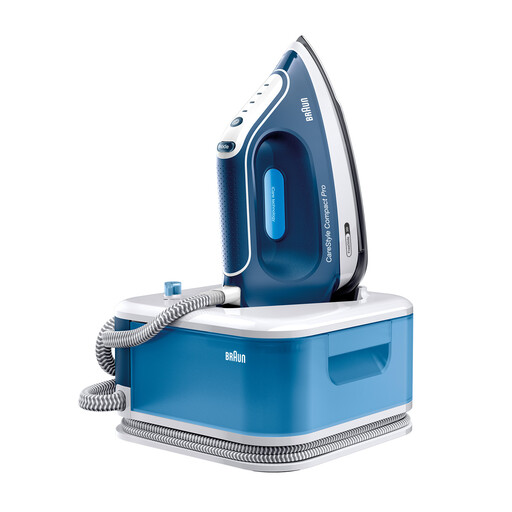
Braun Carestyle Compact Pro IS2565BL Steam Generator Iron
For mixed ironable shirts in a regular batch, assess whether this model’s iCare controls suit the fabrics and care labels you handle.
The listed variant has a 1.5 L tank, 7.5-bar pressure and a FreeGlide 3D soleplate. Check the soleplate’s shape around cuff buttons, the scale-care instructions and the space needed to store the complete unit.
View on Joybuy
 No image available
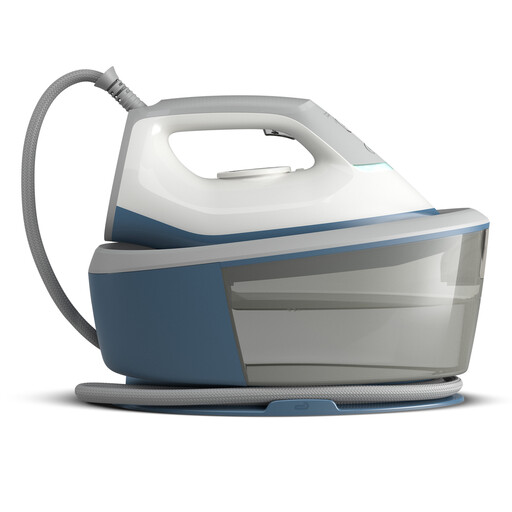
Philips 2000 Series PSG2000/20 Steam Generator
For repeated cuff and shirt pressing, check whether its refilling arrangement and soleplate give you the control your routine requires.
The listed model is 2400 W. Confirm its tank arrangement, scale-care instructions and complete storage dimensions against your intended use.
View on Joybuy
Frequently asked questions
Do I need a steam generator just to press shirt cuffs?
Not necessarily: its stronger case is when cuffs are part of regular batches of shirts or other laundry. Good Housekeeping UK notes that steam generators have larger tanks and higher steam outputs for bigger ironing piles; for isolated touch-ups, compare a conventional iron before taking on a separate base and its storage needs.
What should I look for when pressing around cuff buttons?
Look for a soleplate shape that reaches the narrow area and steam you can control there. Morphy Richards describes a precision tip for collars and between buttons on its 332014 model; inspect the feature on the exact iron you intend to buy rather than assuming it comes with every steam generator.
How should I deal with limescale?
Follow the water and cleaning instructions for the exact model. Tefal identifies scale care as a UK consideration and specifies a removable collector on its GV9710; Morphy Richards describes AutoClean on the cited models. Do not add scented water or a water mixture unless the manufacturer’s instructions for your iron permit it.
Does a steam generator iron need a PAT test every year?
The Health and Safety Executive does not prescribe a blanket annual portable-appliance test under its guidance. It says electrical equipment that could cause injury must be maintained safely, with inspection or testing arrangements informed by the equipment and its environment; check which duties apply to your holiday-let operation.
Which fire-safety guidance applies to an English holiday let?
For a self-catering holiday home in England, use the GOV.UK guidance for that setting and check which paying-guest-accommodation fire guidance fits the property’s size and complexity. This is England-specific guidance; if the property is in Wales, Scotland or Northern Ireland, confirm the applicable requirements with the relevant authority.


