Linen-scarf finish seekers
If the finish matters most, start with the scarf’s care label. ARKET advises pressing linen while slightly damp and inside out, where appropriate; prints, trims and blends may call for different handling.


For repeated batches of linen scarves, consider a steam generator with a removable tank that suits the length of your ironing sessions; if the utility room is cramped, check the base’s footprint and carrying weight before prioritising tank size. Whatever the model, follow each scarf’s care label, provide a stable, heat- and water-resistant place for the base, and allow for descaling and safe cable routing.
If the finish matters most, start with the scarf’s care label. ARKET advises pressing linen while slightly damp and inside out, where appropriate; prints, trims and blends may call for different handling.
If you press several scarves alongside other laundry, compare continuous steam and removable-tank capacity for the whole session. Tefal and Morphy Richards publish both measures for the models discussed below.
If storage and worktop space are tight, measure where the separate base, hose and cable will go. Tefal’s GV92 instructions require a flat, stable, heat- and water-resistant surface; a compact model still needs a suitable place to stand.
Check the scarf’s care label and where the generator can stand before comparing steam figures. For longer sessions, give continuous steam and tank capacity more attention than a brief steam boost.
| Concern | What to check | Who this matters to |
|---|---|---|
| Linen finish and fabric care | Check the scarf’s care label and the model’s steam and fabric settings. ARKET advises pressing suitable linen while slightly damp. | I want to smooth creases without ignoring the care instructions for a printed or trimmed scarf. Around 42% of consumers would put fabric finish and control first. |
| Batch pressing and refills | Compare continuous steam in g/min and tank capacity in litres; distinguish either figure from a short steam boost. | When several scarves need pressing together, I would rather not interrupt the session repeatedly to refill. For around 33% of consumers, uninterrupted batch pressing is the main concern. |
| Utility-room fit and handling | Check the base dimensions, weight and cord reach against a stable, heat- and water-resistant place to work. | I need room to set down and store the separate base without putting the hose or cable in the way. Space and handling would come first for around 17% of consumers. |
| Scale care and electrical setup | Read the exact model’s descaling instructions and plan a suitable socket and cable route away from water. | Marks from scale or an awkward electrical setup would make regular pressing harder for me. Around 8% of consumers would make maintenance and safe setup their primary concern. |
A boost is brief, whereas repeated scarf pressing calls for sustained steam. Tefal, Philips, Braun and Morphy Richards distinguish continuous output from boost in their model specifications.
Compare continuous steam, tank capacity and any stated pressure for the exact models you are considering.
ARKET advises pressing suitable linen while slightly damp, but a scarf’s print, trim, coating or blend may have different care limits.
Read the sewn-in label first and, where appropriate, try a discreet area before pressing the visible fabric.
Philips advises that harder water speeds scale build-up and links scale to brown water, staining and leaks.
Choose a maintenance procedure you can follow, and use the cleaning method specified for your exact model rather than an unapproved descaler.
Electrical Safety First warns that overloaded extensions and wound cable reels can overheat. A utility-room cable also needs a route clear of water.
Use a suitable wall socket where practical. If an extension is necessary, check its rating, fully unwind a cable reel and do not daisy-chain extension devices.
For repeated sessions, Tefal’s Pro Express Protect GV9220 is a useful large-tank reference: Tefal lists a removable 1.8 L tank and 135 g/min continuous steam for this model.
The PerfectCare PSG7300/20 is a reference for buyers considering automatic steam while switching between ironable fabrics. Philips lists a 1.5 L tank and up to 170 g/min steam for this model.
The Speed Steam 333202 provides another larger-tank reference. Morphy Richards lists a removable 1.7 L tank, 140 g/min continuous steam and 5.5-bar pressure.
Braun positions its CareStyle Compact Pro IS2565 as a compact generator. For this model, Braun lists a removable 1.5 L tank and 125 g/min steam rate.
These steam generators offer different starting points for linen-scarf pressing: consider tank size for longer sessions, fabric controls for individual care labels and the space available for a separate base. Check each listing’s exact model before comparing specifications.
 No image available
Consider its stated 1.8 L tank if you press several scarves in one session, while checking that the base fits your work surface.
The product title specifies 2800 W. Follow the scarf’s care label regardless of the iron’s fabric-setting claims.
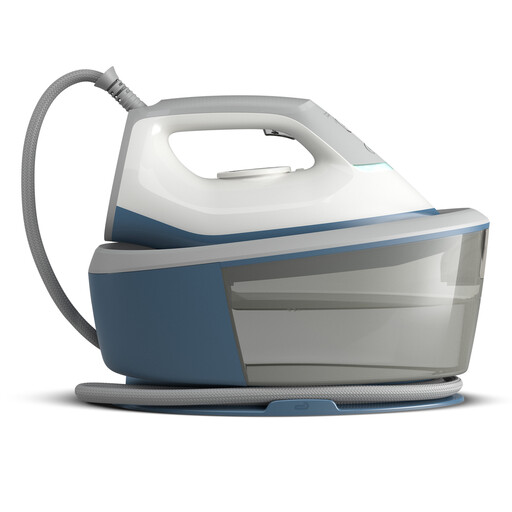 No image available
If you want a generator for regular scarf pressing, check this model’s fabric controls against the care labels of the scarves you own.
The product title specifies 2400 W. Confirm the base dimensions and maintenance instructions if space or descaling will affect your choice.
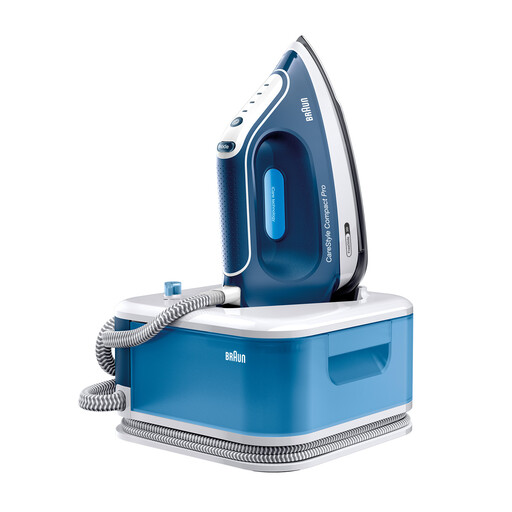 No image available
Consider this compact-positioned model when storage matters, but check its dimensions and weight against the place where you will use and keep it.
The product title specifies 7.5-bar pressure and a 1.5 L tank; Braun lists 125 g/min steam for the IS2565 model. Confirm any steam-shot figure for the precise variant before relying on it, and follow each scarf’s care label.
Check the scarf’s care label before setting the iron. For linen that permits ironing, ARKET advises pressing while slightly damp, using medium-to-hot heat or steam and working inside out; a print, trim or coating may need different treatment.
Place it on a flat, stable, heat- and water-resistant surface that securely supports the separate base. Tefal’s GV92 instructions also say to let the appliance cool before storage, so allow room to leave it safely in place after pressing.
Yes: Philips advises that scale develops faster with harder water and can contribute to brown water, stains and leaks. Follow the descaling and water instructions for your exact model rather than adding an unapproved cleaning chemical.
A suitable wall socket is preferable where practical. If an extension is needed, Electrical Safety First advises against overloading it and says cable reels should be fully unwound; keep the cable away from water and do not daisy-chain extensions.