Regular shirt-batch pressers
If you press several cotton shirts in one session, compare continuous steam and tank capacity before peak boost figures. Check that the iron can reach collars, cuffs and areas around buttons.


For regular batches of cotton shirts, choose a steam generator by its continuous steam rating, tank capacity and fit in the shared ironing area—not its peak steam boost alone. If shirts are usually pressed one at a time, a standard iron may be easier to store; whichever route you take, plan for safe cooling, socket use and model-specific scale care.
If you press several cotton shirts in one session, compare continuous steam and tank capacity before peak boost figures. Check that the iron can reach collars, cuffs and areas around buttons.
If several people use or move the appliance, look at its shut-off function, how the iron is secured for carrying, and where the hot base, hose and cable will cool and be stored. Electrical Safety First also advises against connecting one extension lead to another.
If responsibility for upkeep is shared, a clear scale-cleaning routine matters. Check the exact model’s water instructions and whether its scale collector or cleaning programme is straightforward for everyone to use.
Start with the number of shirts pressed in a typical session, then check whether the appliance can be used, cooled and maintained in the space everyone shares.
| Concern | What to check | Who this matters to |
|---|---|---|
| Shirt batches | Compare the exact model’s continuous steam rating in g/min and tank capacity in litres; check access around collars and buttons. | When I have several cotton shirts to press, I want to work through them without frequent refills while still reaching the details. Around 30% of consumers put batch pressing first. |
| Shared-space use | Check the base footprint, shut-off function and secure storage. If using an extension device, check its marked rating and do not daisy-chain leads. | I need somewhere stable to use the generator and somewhere safe for it to cool before another housemate needs the space; around 40% of consumers make shared-space use their primary concern. |
| Scale and water care | Read the exact model’s permitted-water and cleaning instructions, and check how its scale system is maintained. | If several people refill the tank, I want a care routine we can all follow without guessing which water or cleaning products to use. For around 30% of consumers, that upkeep comes first. |
A boost is intermittent, so its headline figure does not tell you how steam is sustained across a batch of shirts. Which? also considers ironing ability and ease of use when assessing irons.
Compare continuous steam, tank capacity and refill design for the exact models you are considering.
Shut-off can help when use is interrupted, but the iron and base still need a safe place to cool. A shared room also needs a clear plan for cables and socket use.
Switch off and unplug after use, agree who will put the appliance away once cool, and follow Electrical Safety First’s advice not to daisy-chain extension leads.
Water and cleaning instructions vary by model. Morphy Richards advises following the individual appliance manual to avoid water-care and leakage problems.
Check the exact model’s permitted water, fill limit and scale-cleaning steps before anyone starts using it.
A steam generator has a separate base as well as the iron. Its footprint matters when the ironing board and storage area are shared.
Measure the board rest and storage space before ordering. For occasional single-shirt touch-ups, consider whether a standard iron better fits the available space.
These models illustrate features worth comparing; a feature listed for one model should not be assumed to apply across its brand’s range.
The Pro Express Ultimate GV9580G0 illustrates a route focused on sustained steam, a removable tank and scale collection for longer sessions.
The PerfectCare 7000 PSG7300/20 illustrates an automatic-steam route for households where different people iron suitable garments.
The Speed Steam 333202 offers a model-specific example of features relevant to shirt details and shared use.
The TDS3780GB is a reference point for scale collection and integrated storage features, rather than a current product suggestion.
These steam generators are options to compare for pressing cotton shirts. Use the stated variant details alongside your checks for shared-space storage, shut-off and water care.
 No image available
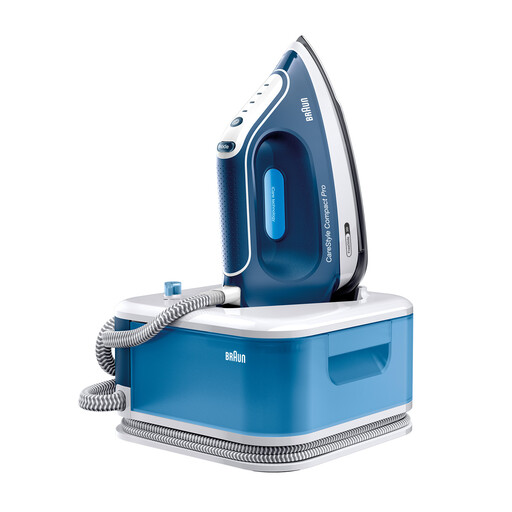
Consider this model if its stated 1.8L tank fits the length of your usual shirt-pressing session. The named variant is rated at 2800W; check its base dimensions, shared-use features and exact water-care instructions before buying.
 No image available
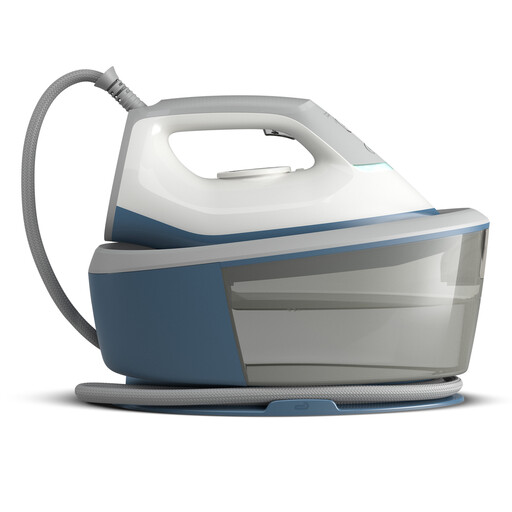
Consider this model when comparing a 1.5L tank with the space available for shared storage. Its named variant lists 7.5 bar pressure, FreeGlide 3D and iCare; check the exact model’s shut-off, storage and water-care instructions if those features affect your choice.
 No image available
Consider this 2400W model against the size of your shirt batches and the room available for its base. Check its tank and temperature controls, shut-off and water-care instructions for the exact PSG2000/20 variant before deciding.
Yes, if the extension device is suitable for the appliance load and used within its marked rating. Electrical Safety First advises using only one extension device per wall socket, not daisy-chaining leads, and fully unwinding a cable reel to achieve its current rating.
Use the water type and proportions specified for the exact model, so everyone refills it the same way. Morphy Richards advises against additives such as scented ironing water, vinegar and descaling chemicals unless the model’s instructions specifically call for them; do not fill past the tank’s MAX mark.
Contact the seller and explain the fault, keeping your order record. The Consumer Rights Act 2015 addresses remedies for faulty goods, including repair or replacement in applicable circumstances; a retailer’s returns process does not replace statutory rights.
Ask the retailer about electrical-equipment take-back when arranging the replacement. GOV.UK says retailers selling electrical items must offer take-back of waste equipment of the same type under the applicable scheme conditions; check the retailer’s collection or return arrangements before disposing of the old appliance.