Frequent-turnover holiday-let operators
Several garments may need pressing in one session between stays. Tank capacity, continuous steam and the time needed to care for the appliance all affect that routine.


For regular batches of cotton waistcoats, choose a steam generator by its continuous steam output, tank capacity and maintenance routine rather than its boost figure alone. For smaller batches or use by different people, straightforward temperature controls and manageable storage may matter more. Check every waistcoat’s care label: cotton outer fabric does not establish what its lining or trim can withstand.
Several garments may need pressing in one session between stays. Tank capacity, continuous steam and the time needed to care for the appliance all affect that routine.
Cotton waistcoats may also have linings, buttons or delicate details. You need controls you can use consistently while following each garment’s care instructions.
If pressing is occasional, a manageable storage arrangement and a maintenance routine you can follow may matter more than choosing the highest stated steam output.
Start with the number of waistcoats you normally press in a session, then consider garment care, descaling and where the appliance will cool and be stored.
| Concern | What to check | Who this matters to |
|---|---|---|
| Batch pressing | Compare continuous steam in g/min and tank capacity; check warm-up time if sessions are short. | When several waistcoats need pressing between stays, I want to avoid repeated pauses for water or stubborn creases. Around 36% of consumers put turnaround first. |
| Garment care | Check the waistcoat’s care label and whether temperature-management claims apply only to ironable fabrics. | If a waistcoat has a lining or trim, I need a method that respects those parts as well as the cotton outer fabric. For around 29% of consumers, garment care is the primary concern. |
| Clean steam | Look at the exact descaling procedure and the maker’s water instructions. | I need to keep residue away from garments prepared for guests, and I can only maintain an appliance if its cleaning routine fits my schedule. Around 21% of consumers prioritise scale management. |
| Storage and handling | Check dimensions and weight, plus any carry lock and automatic shut-off specified for the exact model. | With limited storage and only modest batches, I need somewhere suitable for the appliance to cool and be put away. Storage and handling come first for around 14% of consumers. |
A boost figure describes a short burst, not the continuous output used through a pressing session. Tank capacity and the appliance’s maintenance routine also affect repeated use.
Compare continuous steam, boost and tank capacity for the exact model. Treat claimed time savings as the maker’s claims, not a promised changeover time.
A cotton outer fabric does not establish the care requirements of its lining or trim. Makers’ no-setting claims are limited to ironable fabrics.
Read the whole garment’s care label and, if its construction is uncertain, test the intended method on an inconspicuous area.
Philips advises that scale can contribute to brown water, staining and leaks. Cleaning methods and water instructions differ between models.
Follow the selected model’s manual for water use and descaling, allowing the specified cool-down time before maintenance.
The Health and Safety Executive says visual examination is an essential part of electrical maintenance; it also says annual portable-appliance testing is not a universal legal requirement.
Check the plug, cord and appliance condition as part of a suitable maintenance routine. Confirm the requirements for the letting’s nation and operating arrangement rather than relying on a sticker alone.
These model examples illustrate different features to compare; a brand name alone does not establish how a particular iron will suit your waistcoats.
The Pro Express Protect GV9230 illustrates a high-output option for operators pressing several garments in a session.
The PerfectCare 7000 Series PSG7300/20 illustrates automatic steam and temperature management for ironable garments.
EasySteam+ and Power SteamElite Plus offer two sets of specifications to compare for modest or more sustained garment preparation.
These steam generator irons offer different named tank capacities and controls to consider for holiday-let waistcoat pressing. Check garment care and the exact model’s maintenance instructions whichever you choose.
 No image available
Consider this model when tank capacity matters for repeated pressing sessions. Its product name specifies a 1.8 L water tank and 2800 W; check the waistcoat’s care label before selecting a method for any lining or trim.
 No image available
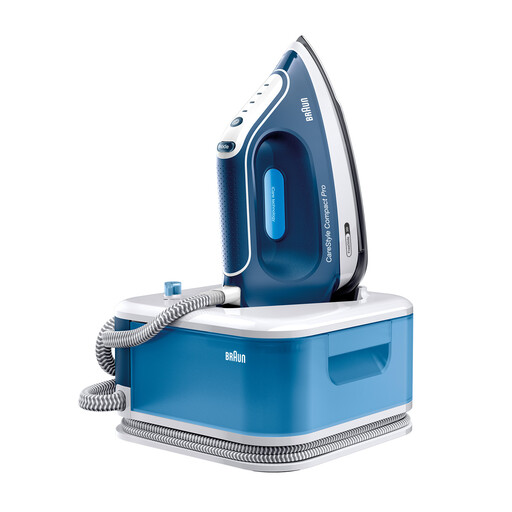
Consider this model if its named iCare control and 1.5 L tank suit your pressing routine. The product name also specifies 7.5-bar pressure and a FreeGlide 3D soleplate. Check the model manual’s water and maintenance instructions, as well as each waistcoat’s care label.
 No image available
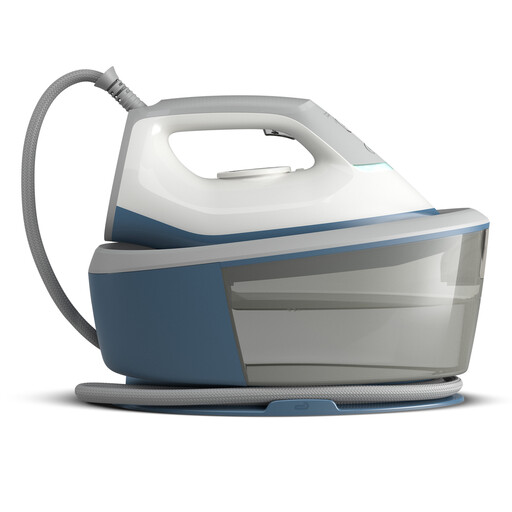
Consider this model for short preparation sessions if manually selecting the fabric temperature fits your routine. Its product name specifies 2400 W. Check the waistcoat’s care label before setting the temperature, particularly where it has a lining or trim.
No: the number of garments and the difficulty of their creases matter more than seeking the largest boost figure. For repeated batches, compare continuous steam and tank capacity; for modest sessions, consider how easily you can operate, clean and store the appliance.
No. Makers limit no-setting claims to ironable fabrics, and a cotton waistcoat may have a lining or trim with different care requirements. Check the instructions for the complete garment before pressing it.
Descaling helps manage residue that could reach the fabric: Philips says scale can contribute to brown water, stains and leaking. Follow your exact model’s procedure; Philips instructs users to unplug a hot appliance and let it cool for at least two hours before its specified descaling procedure.
An annual PAT test is not a universal legal requirement under the electrical-maintenance rules described by the Health and Safety Executive. For self-catering holiday homes in England, GOV.UK guidance directs operators to HSE electrical-safety guidance. Check the applicable nation, letting arrangement and equipment risks when setting an inspection and maintenance routine.
Let it cool and follow the model manual for emptying or maintaining it, then use a carry lock if that model has one. Inspect the plug, cord and appliance condition as part of the routine; the Health and Safety Executive identifies visual examination as an essential element of electrical maintenance.