Small-flat linen hosts
You press napkins for meals or guests but need to put the iron, base and accessories away afterwards. The complete stored footprint matters as much as the handpiece.


Choose a steam generator if you press several linen napkins or other items regularly and have room to use and store its separate base. For occasional napkins in a very small flat, a conventional steam iron may be easier to accommodate. Whichever you choose, press linen slightly damp and use only the temperature and steam permitted by its care label.
You press napkins for meals or guests but need to put the iron, base and accessories away afterwards. The complete stored footprint matters as much as the handpiece.
You press several napkins or a mix of laundry in one session. Sustained steam and a tank that is convenient to refill may matter more to you than keeping the appliance to one small unit.
You move between linen and other ironable fabrics and want a manageable setting and descaling routine. You are still prepared to check each textile’s care label.
Decide whether a separate base earns its space before comparing steam figures. Which? describes conventional steam irons as compact and easy to store, while steam generators have a separate tank; John Lewis & Partners notes that extra steam power may be unnecessary for the odd wrinkle.
Consider it when: You press several napkins or other items in a session and want sustained steam from a separate tank.
Accept: The base, hose and iron all need room on your ironing surface and in storage; a larger tank does not establish a smaller footprint.
Consider it when: You press only a few napkins at a time and cannot comfortably accommodate a separate base.
Accept: Its onboard tank is generally smaller, so repeated batches may mean more refill interruptions.
| Concern | What to check | Who this matters to |
|---|---|---|
| Storage and set-up | Compare the exact model’s stored dimensions with your shelf or cupboard, and check where its base will sit while you iron. | If I must clear the ironing area and put everything away after use, the space taken by the whole unit decides whether a generator is practical; around 36% of consumers would put storage first. |
| Steam for batches | Compare rated continuous steam separately from a short steam boost; check how the tank is refilled. | When I press a run of napkins for a formal setting, I want a manageable session rather than choosing by the biggest boost figure; around 29% of consumers would make batch pressing their primary concern. |
| Fabric control | Check the permitted temperature and steam on your napkins’ care labels, then read the iron’s instructions for its fabric settings. | If I switch between linen and other ironable items, I want straightforward controls without overlooking delicate details; roughly 21% of consumers would prioritise fabric handling. |
| Refilling and scale care | Check tank access and the exact model’s water and descaling instructions. | When the iron comes out for regular sessions, I need refilling and maintenance to fit my routine; about 14% of consumers would put upkeep first. |
LinenMe advises pressing linen while it is slightly damp, with steam and temperature governed by the textile’s care label. That routine is worth trying before buying a larger appliance solely to tackle dry creases; a firm, flat pressing surface still matters when you want precise folds.
A steam generator includes a base, tank and hose as well as the iron. Philips describes its PerfectCare 6000 Series as compact, but that description alone cannot establish whether a particular shelf or ironing board will accommodate it.
Measure your available space and check the exact model’s stored dimensions, base weight and cord or hose arrangement before ordering.
A boost is a short burst, not the continuous steam rating that describes output during a longer run of napkins. Manufacturer ratings also should not be treated as identical to independent ironing results.
Compare continuous output and refill arrangements separately from boost figures, then follow the napkin’s care label when using steam.
Manufacturer claims about one-temperature operation concern ironable fabrics under the stated conditions. Decorative details and individual napkin-care instructions still affect how an item should be pressed.
Read the napkin label first. Where appropriate for the textile, press dark linen on the reverse and protect delicate details with a clean pressing cloth.
Scale-management arrangements differ between models, and the required routine becomes part of owning a steam generator.
Read the chosen model’s water and descaling instructions before buying, and choose a process you can follow regularly.
These model-specific examples illustrate features to compare, rather than establishing how much space any brand’s range will take in your flat.
Philips positions its PerfectCare 6000 Series PSG6026/20 as a compact steam generator with one-temperature operation.
The Express Airglide SV8020G0 is a reference point for buyers comparing sustained steam, removable tanks and model-specific scale care.
The Vaporella Simply VS20.20 offers another separate-tank design to consider for a napkin-pressing routine. Good Housekeeping UK included the model in its March 2026 steam-generator selection.
The Speed SteamPro 1.6L 332102 is relevant to buyers considering a generator for larger pressing sessions; Good Housekeeping UK included it in its March 2026 tested selection.
These steam generators are options for pressing several linen napkins in a session. Compare each complete unit with your available storage and ironing space; the choice of a generator does not rule out a smaller conventional iron for occasional use.
 No image available
Consider this generator for pressing several napkins in one session if its base will fit your ironing surface and storage space.
The product name specifies 2800 W and a 1.8 L water tank; the listed colour is black and purple.
Follow each napkin’s care label rather than relying solely on a fabric-setting claim. Confirm the plug and voltage for your delivery region before buying.
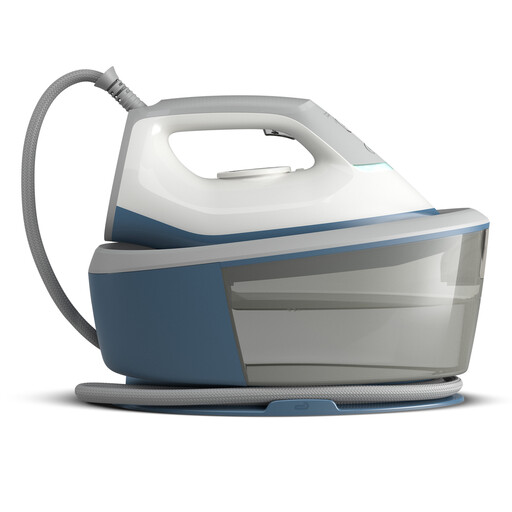 No image available
Consider this model for repeated napkin pressing if you are comfortable selecting a fabric temperature and can accommodate its separate base.
The product name specifies 2400 W. Check its exact stored dimensions and base weight against your intended shelf or cupboard.
Select the temperature according to the napkin’s care label, and confirm the plug and voltage for your delivery region.
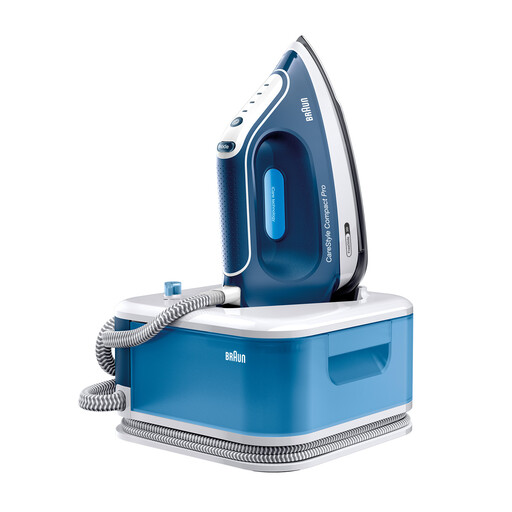 No image available
Consider this generator for batches of linen napkins if you have space for the base and want to assess its iCare controls for your other ironable fabrics.
The product name specifies a 1.5 L tank and 7.5-bar pressure, and identifies FreeGlide 3D and iCare technology. The listed colour is blue.
Check its stored dimensions, descaling instructions and carrying arrangement. Follow each napkin’s care label and confirm the plug and voltage for your delivery region.
No; you can leave linen’s natural creases if you prefer a relaxed look. For a smoother, more formal finish, LinenMe advises pressing while the fabric is slightly damp, using temperature and steam only as the care label permits.
A conventional steam iron is usually the more practical starting point if you only press a few napkins occasionally and storage is tight. A generator becomes more relevant when you also press regular batches and can give its separate base a stable place to use and store.
Read the exact model’s instructions for water, refilling and descaling before choosing a steam generator. For example, Philips lists Smart Calc Clean for PSG6026/20, while Tefal lists a Scale Draining System for SV8020G0; their names do not mean the routines are interchangeable.
Use an appropriate electrical-waste collection route rather than putting the appliance in general rubbish. Oxfordshire County Council identifies equipment with a plug as waste electrical and electronic equipment; check your local council or retailer for a suitable collection arrangement.