Frequent table-linen pressers
If you press several napkins or a tablecloth at a time, tank capacity and convenient refilling can matter alongside steam output.


Choose a steam generator with continuous steam, a tank that suits your usual ironing load and a descaling routine you can follow. A larger tank matters more if napkins are part of a family laundry session; automatic settings may be more useful when you move between ironable fabrics. Either way, allow space for the base and follow each napkin's care label.
If you press several napkins or a tablecloth at a time, tank capacity and convenient refilling can matter alongside steam output.
If napkins share an ironing session with shirts, uniforms and other fabrics, consider how the iron's controls fit those changes while still following each item's care label.
If scale is a concern at home, look for a cleaning procedure you can carry out regularly. Philips notes that scale develops faster where water is harder.
Start with the napkins and the size of your usual load, then decide how much setting adjustment, refilling and scale maintenance you are willing to manage. ARKET advises pressing linen while it is slightly damp; the napkin's own care label remains the starting point for heat and fabric restrictions.
| Concern | What to check | Who this matters to |
|---|---|---|
| Stubborn linen creases | Compare continuous-steam and boost figures separately, and check the napkin's care label before choosing a heat setting. | If napkins have dried with deep creases, I want to smooth them without repeatedly pressing the same area. Around 33% of consumers put crease handling first. |
| Longer ironing sessions | Check tank capacity, whether it is removable and where the base will sit during use and storage. | When I press several napkins alongside family laundry, stopping to refill interrupts the job. Around 27% of consumers make fewer interruptions their primary concern. |
| Mixed-fabric controls | Check whether steam and temperature are automatic or manually selected, and which ironable fabrics any automatic-setting claim covers. | If I switch between linen and clothing, I would rather not keep changing settings, provided I can still follow each care label. Around 20% of consumers prioritise simpler fabric changes. |
| Scale maintenance | Read the exact model's descaling and water instructions, including any cooling steps. | With hard water or frequent use, I need a cleaning routine I can realistically keep up. Around 20% of consumers put manageable scale care first. |
A boost is a brief burst; it does not describe the steam available throughout a batch of napkins. Tank design and the condition of the linen matter too.
Compare continuous steam and boost as separate specifications. ARKET advises ironing linen while it is still slightly damp rather than relying on steam to tackle fully dried-in creases.
Claims about a single setting apply to ironable fabrics within the manufacturer's stated conditions. A printed napkin, blend or decorative trim may need different treatment.
Read the care label first; where appropriate, test an inconspicuous area and use the reverse side or a pressing cloth for a surface you want to protect.
Philips says scale forms faster in harder water and can affect steam output or contribute to staining and leaks.
Choose a model whose cleaning procedure you can follow, and keep its manual for the correct water and descaling instructions.
A steam generator needs a stable place for its hot base as well as somewhere to cool and be stored. The Health and Safety Executive advises taking electrical equipment out of use if its plug or connector is damaged.
Check UK plug and supply suitability before buying. Do not use an appliance with a damaged plug or cable, and let it cool before maintenance or storage.
These ranges illustrate different features to compare. The figures below are manufacturers' specifications for the named models, not like-for-like test results.
The Pro Express range includes the GV9230, a larger-base option to consider for substantial household ironing loads.
PerfectCare models include controls aimed at reducing manual adjustments during mixed ironing loads.
The EasySteam+ range gives households another route to compare when tank size and scale care matter.
The Silence DG8960 is positioned by Rowenta around quieter operation and targeted steam delivery.
These two steam generators are options to consider for pressing linen napkins alongside routine household ironing. Compare their stated tank sizes, then check the controls, maintenance instructions and UK electrical suitability for the exact model before buying.
 No image available
Consider its stated 1.8 L tank if you press napkins as part of a larger ironing load.
The product name specifies 2800 W. Check the care label before pressing blends, prints or trims, and confirm UK plug and supply suitability for this model.
 No image available
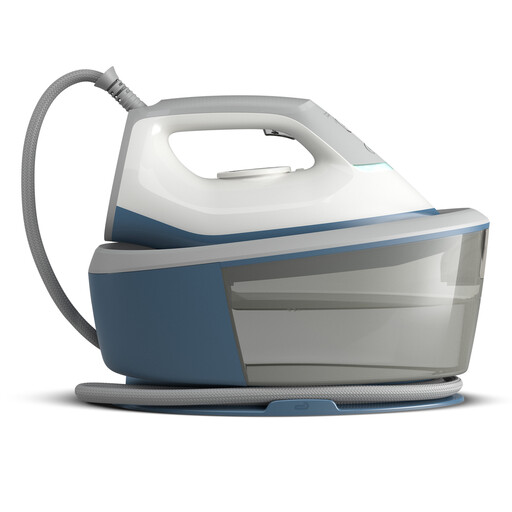
This steam generator is an option for routine linen-napkin pressing if its controls and refilling arrangement suit your ironing session.
The product name specifies 2400 W. If removable refilling matters to you, check the tank design; also confirm the model's UK plug and supply suitability.
No; linen is generally easier to iron while still slightly damp. ARKET advises a medium-to-hot setting and suggests ironing inside out to protect surface fibres, but follow the napkin's own care label, particularly for blends, prints and trims.
Yes, when the model's instructions call for it. Philips notes that scale develops faster in harder water; check the exact appliance manual for the cleaning procedure and any required cooling time.
No single water rule applies to every steam generator. Check the instructions for your exact model before using distilled, softened, scented or other treated water.
Confirm that the exact appliance is suitable for the UK electrical supply and inspect its plug and cable before use. The Health and Safety Executive advises removing electrical equipment from use if its plug or connector is damaged.