For regular batches of linen napkins in a shared house, choose a steam generator whose tank, storage footprint and descaling routine suit shared use. A compact base may suit a tight cupboard, while a larger removable tank can reduce refilling during longer sessions; for occasional napkins, a conventional steam iron avoids storing a separate base. Check each napkin’s care label before pressing it slightly damp.
Who is a steam generator for?
Shared-house batch pressers
If several napkins are pressed together or alongside household laundry, continuous steam and tank capacity matter because refilling interrupts the session. Compare those figures for the exact model rather than judging it by a steam-boost figure alone.
Small-space shared-house users
When the iron must be carried out and put away after each use, check the whole base’s stored size, how the tank is handled and whether the iron locks to the base for carrying.
Mixed-fabric household users
For an appliance shared across different ironable fabrics, straightforward temperature controls and clear descaling instructions may matter more than choosing the highest stated steam output. Fabric care labels still take precedence.
What matters when choosing?
If napkins are pressed only occasionally, compare the storage demands of a conventional steam iron before choosing a generator. For regular batches, decide which matters most: fewer refill stops, easier storage or simpler shared upkeep.
| Concern |
What to check |
Who this matters to |
| Batch pressing |
Compare continuous steam in g/min and tank capacity in litres for the exact model; check whether the tank removes for refilling. |
If I press several napkins at once, I want to finish without repeatedly stopping to refill. Around 50% of consumers would put uninterrupted batch pressing first. |
| Shared storage |
Check the stored dimensions and weight, plus whether the iron locks to its base for carrying. |
When cupboard space is limited and the iron goes away after use, I need to know I can store and move the whole unit. Roughly 33% of consumers would prioritise storage and handling. |
| Fabric care and upkeep |
Look for clear fabric settings and descaling instructions; follow both the appliance manual and each napkin’s care label. |
If several people use the iron on different fabrics, I want controls and cleaning steps everyone can follow. About 17% of consumers would make straightforward shared use their primary concern. |
Mistakes to avoid
-
Choosing by steam output alone
A steam generator has a separate base and tank to carry and store. For occasional napkins, that extra equipment may be less convenient than a conventional steam iron, which Which? describes as more compact.
Measure the shared cupboard and the space beside the ironing board. Consider a generator’s continuous steam and tank size in the context of how often you press a batch.
-
Leaving descaling to someone else
Which? notes that limescale build-up can reduce steam output. A shared appliance still needs someone to follow its maintenance instructions.
Check the model’s descaling procedure and water instructions, then agree who will carry out the routine. Do not improvise with cleaning liquids.
-
Ignoring a napkin’s care label
Automatic-temperature modes do not establish that every dyed, coated, embroidered or blended napkin can be pressed in the same way.
Follow the individual label. The Laundress advises that linen can be easier to iron while still slightly damp, where the item’s care instructions permit it.
-
Overloading an extension arrangement
Electrical Safety First warns that overloaded extension leads, cable reels and adaptors can overheat and cause a fire.
Use a suitable wall socket where possible. If an extension is needed, check its rating, do not daisy-chain extensions and fully unwind a cable reel.
Brands to consider
Philips
The PerfectCare 6000 Series PSG6064/86 combines a detachable tank with automatic-temperature and descaling features, according to Philips.
- Philips specifies a 1.8 L tank, 130 g/min continuous steam, Smart Calc Clean and a carry lock for the PSG6064/86.
- Check the exact model code and stored dimensions before choosing it for a shared cupboard.
Tefal
The Pro Express Renew GV9E21G0 is a model to compare when a removable tank matters for longer pressing sessions.
- Tefal UK Shop specifies a removable 1.8 L tank, 140 g/min continuous steam and an anti-calc system for the GV9E21G0.
- Its stated steam figures do not, by themselves, establish how it will handle a particular linen napkin; check storage fit as well.
Braun
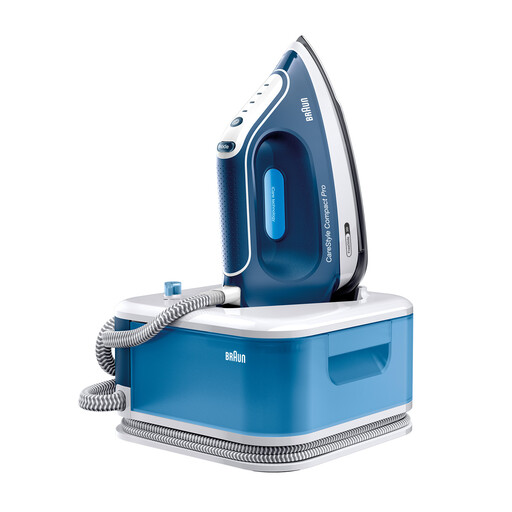
The CareStyle Compact Pro IS2565BL is relevant when the base must be stored between shared-house pressing sessions.
- Braun Household GB specifies a removable 1.5 L tank, up to 125 g/min continuous steam and Smart iCare mode for the IS2565BL.
- Confirm the model’s stored dimensions and maintenance routine against the space and arrangements in your household.
Joybuy steam generator irons
These steam generators offer different starting points for shared-house napkin pressing: compare the stated tank and controls with your batch size, cupboard space and maintenance routine. They are not interchangeable with the Tefal and Philips models discussed in the brand section.
 No image available
Braun CareStyle Compact Pro IS2565BL, 1.5 L
Consider this model if you regularly press napkin batches but need to put the generator away after use. Braun Household GB specifies a removable 1.5 L tank and up to 125 g/min continuous steam for the IS2565BL; the product title also states 7.5-bar pressure and iCare technology. Check the stored dimensions and descaling instructions, and follow each napkin’s care label.
View on Joybuy
 No image available
Tefal Express Vision SV8154G0, 1.8 L
The stated 1.8 L tank makes this a model to consider when several napkins are pressed in one session. Its product title also specifies 2800 W. Check whether the tank removes for refilling, how the unit fits your shared storage space and what maintenance its manual requires.
View on Joybuy
 No image available
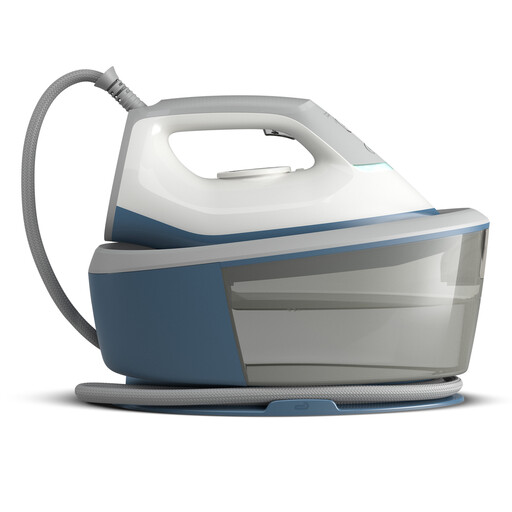
Philips 2000 Series PSG2000/20 Steam Generator
For a shared cupboard, check this model’s dimensions and carrying arrangements before deciding whether it fits. The product title specifies 2400 W; that figure alone does not tell you how often a napkin-pressing session will need a refill. Confirm the tank arrangement and follow the napkins’ care labels.
View on Joybuy
Frequently asked questions
Should linen napkins be completely dry before ironing?
No. The Laundress advises that linen can be easier to iron while still slightly damp. Follow the napkin’s own care label, particularly if it is dyed, embroidered, coated or blended.
Is a steam generator worthwhile for occasional napkins?
Not necessarily: if you press only a few napkins occasionally, a conventional steam iron avoids storing a separate generator base. Which? describes conventional steam irons as more compact and easier to store; a generator is more relevant when napkins are pressed in repeated batches or with other laundry.
How should housemates maintain a steam generator iron?
Follow the exact model’s water, storage and descaling instructions, and agree who is responsible for the routine. Which? notes that limescale can reduce steam output, so continued steam production is not a reason to skip maintenance.
Can we use a steam generator through an extension lead?
Use an extension only if its rating is suitable for the connected load and it can be used safely. Electrical Safety First advises against overloading or daisy-chaining extensions and says cable reels should be fully unwound.


