Careful tie pressers
If preserving a cotton tie’s shape and finish is your main concern, look for steam you can control and a soleplate you can move gently over a pressing cloth. Tieroom advises against ironing directly on a necktie.


For cotton ties, choose a steam generator you can use with a pressing cloth and light, moving passes; controllable steam matters more here than a large boost figure. A larger tank and sustained steam become more relevant if you also iron regular batches of household laundry. Whichever model you consider, check the tie’s care label, the appliance’s maintenance instructions and the space available for its base.
If preserving a cotton tie’s shape and finish is your main concern, look for steam you can control and a soleplate you can move gently over a pressing cloth. Tieroom advises against ironing directly on a necktie.
If ties are only part of your ironing, automatic temperature handling and tank capacity may matter alongside careful tie technique. Tefal, Philips and Morphy Richards describe these features on different named steam-generator models; check which combination the model you are considering offers.
If you expect to use the generator often, choose a maintenance routine you can follow. Tefal lists a removable scale collector on its SV9202, while Morphy Richards advises following the exact model’s instructions for water and cleaning.
Start with how you will protect the tie, then decide whether your wider laundry makes a separate generator base and tank worthwhile. Check the utility-room setup before settling on a model.
| Concern | What to check | Who this matters to |
|---|---|---|
| Protecting the tie | Check the tie’s care label, steam controls and whether you can handle the soleplate gently over a pressing cloth. | I want to smooth a narrow cotton tie without flattening its body or marking its finish. Around 40% of consumers put tie protection first. |
| Household ironing | Compare continuous steam separately from a brief boost, then consider tank capacity and refilling for your usual sessions. | When I press shirts or bedding as well as ties, I want a generator that suits a longer ironing session. Roughly 30% of consumers prioritise household-load efficiency. |
| Utility-room setup | Measure space for the base, read the model’s water and scale-care instructions, and check the electrical supply. | I need somewhere stable to use and store the base, with upkeep and a socket arrangement I can manage. Around 30% of consumers put setup and maintenance first. |
A short boost figure does not tell you how easily you can control steam on a constructed tie. More steam is not a reason to press harder or hold the iron still.
Compare continuous steam and controls for your wider laundry, but follow the tie’s care label and use a pressing cloth for the tie itself.
Permitted water types and cleaning methods differ by model, so a routine that suits one generator may not suit another.
Read the exact model’s manual before purchase, including its water, descaling and cooling instructions.
Morphy Richards says failure to maintain its Power SteamElite Plus 332013 can invalidate its guarantee.
A separate base needs a stable, heat-safe working position and storage space for the hose and cord. Morphy Richards lists the 332013 base at 27.8 × 37 × 45.6 cm and 4.95 kg.
Measure your worktop, shelf and ironing area, and check whether the cable reaches a suitable socket.
An overloaded lead, plug or socket can overheat. Electrical Safety First notes that extension leads have different current ratings.
Use a suitable wall socket where practical. If you need an extension lead, check its marked rating against the iron and every other connected load.
Tefal offers steam generators with no-setting operation and scale-care features, including the Express Protect SV9202.
Philips offers PerfectCare models aimed at mixed-fabric ironing with automatic handling.
Morphy Richards offers steam generators with different controls and maintenance systems; the Power SteamElite Plus 332013 has variable steam.
Laurastar’s Lift range includes models described for horizontal ironing and vertical steaming.
These steam generators offer different approaches to temperature control and household ironing. For a cotton tie, check its care label and use a pressing cloth regardless of the model you choose.
 No image available
Consider this model if you press ties alongside mixed-fabric household laundry and want to check its temperature-handling options. The product name specifies 2800 W and a 1.8 L water tank. Confirm the base fits your workspace and follow the model’s water and scale-care instructions; use a pressing cloth on the tie.
 No image available
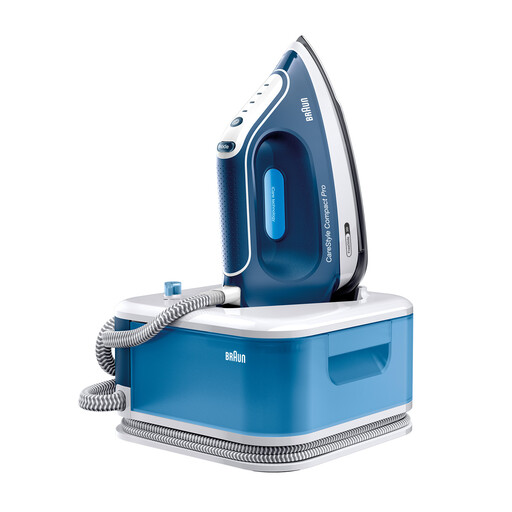
Consider this model for ties pressed alongside other ironable fabrics if its iCare controls suit the way you iron. The product name specifies 7.5 bar pressure, a 1.5 L tank and a FreeGlide 3D soleplate. Check the base dimensions and the exact water instructions before buying; do not press a tie directly or hold the iron in one spot.
 No image available
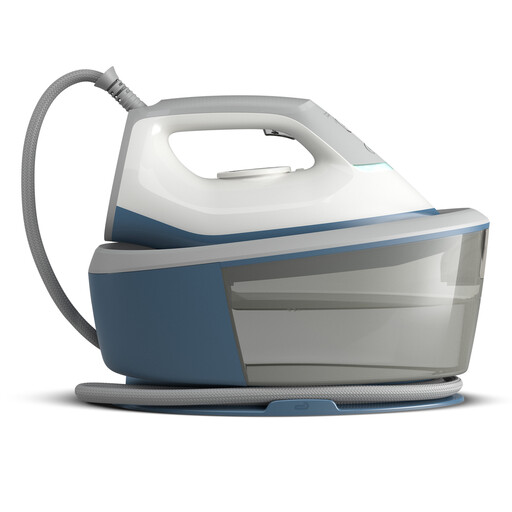
Consider this model if you prefer to select a setting for the fabric rather than rely on automatic temperature handling. The product name specifies 2400 W. Check that the iron head feels manageable around narrow tie sections, measure space for the base and read the model’s water and scale-care instructions.
Do not press it as though it were a flat cotton shirt. Tieroom advises placing cotton between the iron and the tie and moving gently rather than holding the iron on one point. Check the tie’s care label first, because its lining and finish also affect how it should be handled.
A large boost is not the main buying criterion for careful tie pressing. Compare how you can control steam on the tie, then consider continuous steam and tank capacity if you also iron regular household loads.
Follow the manual for the exact model, including its specified water type, cleaning routine and cooling steps. Morphy Richards advises against adding vinegar or descaling chemicals unless that model’s instructions call for them.
Use one only if its marked current rating accommodates the iron and all other connected appliances. Electrical Safety First notes that some older extension leads and cable reels have lower ratings than others; avoid overloading or daisy-chaining leads, and check the cable reel’s instructions before use.