Occasional garment customisers
If you are adding a patch to a jacket, bag or garment repair, start with the patch maker’s application method and the fabric’s care instructions. Steam output is not the deciding feature for that job.


A steam generator iron makes more sense if you also have regular laundry, uniforms or workwear to iron than if you only need to attach an occasional patch. For a heat-seal patch, check whether the exact appliance can follow the patch maker’s instructions for heat, pressure, timing and steam use; its steam output alone does not establish that the patch and garment are compatible.
If you are adding a patch to a jacket, bag or garment repair, start with the patch maker’s application method and the fabric’s care instructions. Steam output is not the deciding feature for that job.
If you apply patches repeatedly and also iron substantial loads, consider both the consistency of your patch-pressing method and the tank, scale-care and storage demands of a steam generator. For repeat patch application, Patches R Us also describes heat presses as a way to control application variables.
If ordinary laundry is the main reason for buying, temperature-management features may be relevant to that work. Check patch and garment compatibility separately rather than extending an appliance’s ordinary-ironing claims to heat-seal patches.
Settle the patch-and-fabric method before comparing steam features. If repeatable patch application is your main task rather than everyday ironing, also consider whether a dedicated heat press better suits the patch maker’s instructions.
| Concern | What to check | Who this matters to |
|---|---|---|
| Controlled dry pressing | Check the patch’s required heat, pressure and timing, and whether the iron’s manual permits the required no-steam method. | If I am attaching a heat-seal patch, I need to follow its bonding instructions rather than rely on a powerful steam setting. Around 33% of consumers put controlled dry pressing first. |
| Fabric compatibility | Read the garment label alongside the patch instructions; check finishes, stretch and heat-sensitive decoration. | When the garment has a delicate or coated finish, avoiding damage matters more to me than ironing convenience. Roughly 25% of consumers make fabric protection their primary concern. |
| Regular ironing workload | Compare stated tank capacity and continuous steam output for laundry, then check patch use separately. | I iron substantial household or workwear loads as well as applying patches, so the appliance needs to serve both tasks. Around 25% of consumers prioritise the regular ironing workload. |
| Upkeep and product checks | Check the model’s scale-care instructions, storage arrangement and exact model and batch against current recalls. | If I will use the generator frequently, I want to know how to maintain and store it and whether my exact unit is subject to a recall. Approximately 17% of consumers put these checks first. |
Patch guidance from Koo Style says not to use steam when applying its glue-backed embroidered patches. Patches R Us identifies heat, pressure, time and cooling as separate parts of application; a higher steam rating does not replace them.
Follow the instructions for your patch and garment. Choose steam output for the ordinary ironing you will do, and confirm that the exact iron can be used as the patch method requires.
A setting intended for ordinary ironable fabrics does not establish the heat tolerance of a particular adhesive, garment finish or embellishment.
Check the patch backing and garment label together. Where the instructions permit it, test a hidden area; if heat compatibility cannot be established, consider sewing or another suitable attachment method.
GOV.UK has published a recall for specified Philips pressurised steam-generator models and batches because a boiler seam can split and release hot steam. A similar-looking Philips model name does not establish that a particular unit is affected.
Check the full model and batch code against the current GOV.UK recall notice before purchase or use, and follow its instructions if your unit is listed.
A steam generator has a base and water system to accommodate alongside the iron. Scale-management features still need to be used according to the model’s instructions.
Check where you will store the unit, how its tank is removed and what the manufacturer specifies for water and descaling.
These brand examples describe steam-generator features for ordinary ironing, not approval for a particular heat-seal patch.
Tefal positions the Pro Express Protect GV9220 for larger ironing loads, listing a 1.8 L removable tank, a 7.5-bar boiler and 135 g/min continuous steam.
Philips lists motion-sensor automatic steam, a 1.5 L tank and up to 170 g/min steam for its PerfectCare 7000 PSG7300/20, positioning it for convenient ordinary ironing.
Morphy Richards presents its Speed Steam 333202 for larger ironing loads, listing a 1.7 L removable tank, 5.5-bar pump pressure and 140 g/min constant steam.
These steam generator irons are choices for households that also do regular ironing. For patch work, check each exact model’s manual against the patch maker’s method and the garment label before choosing.
 Image unavailable
Consider this model if patch projects sit alongside regular household ironing; check its manual for the no-steam method your patch requires.
The listed variant is 2800 W, with a 1.8 L water tank and a black-and-purple finish.
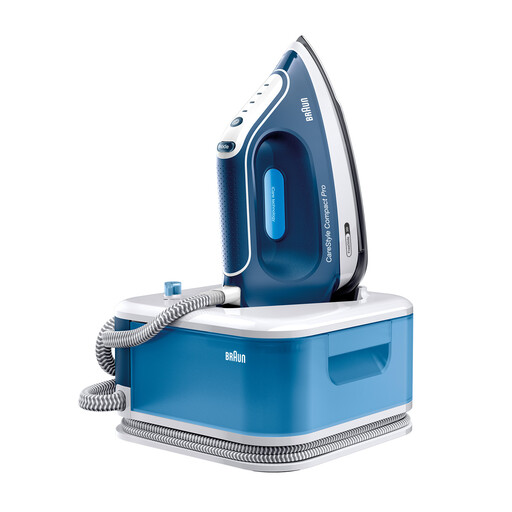 Image unavailable
Consider it for routine ironing as well as occasional patches, but check whether its manual allows the exact patch maker’s required pressing method.
The listed variant has 7.5-bar pressure, a 1.5 L tank, FreeGlide 3D and iCare technology.
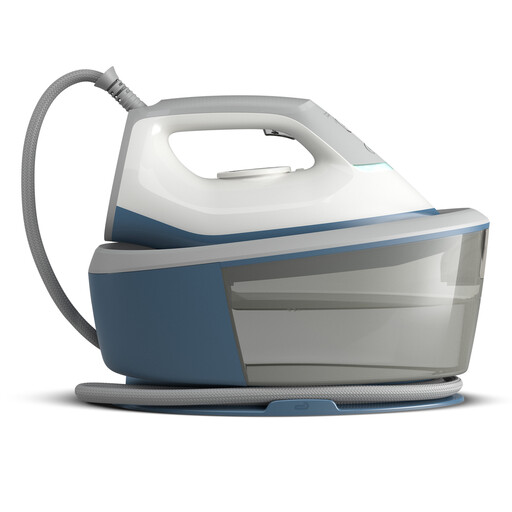 Image unavailable
Consider this model if ordinary ironing is part of the workload; confirm its dry-press operation and your patch and garment requirements separately.
The listed variant is 2400 W. Check its full model and batch code against current recall notices rather than relying on the brand name alone.
You can consider it only if the exact patch, garment and iron instructions allow the required method. Check heat, pressure, pressing time and cooling; Koo Style specifically instructs users not to use steam when applying its glue-backed embroidered patches.
Do not choose a higher steam boost on that assumption. Patch application depends on the patch maker’s heat, pressure and timing instructions, while steam output is chiefly a consideration for the ordinary ironing you plan to do with the appliance.
Check delicate, coated, waterproof, stretchy and synthetic garments against both the patch instructions and care label before applying heat. Patches R Us advises caution with coated, delicate, waterproof and synthetic fabrics; Koo Style excludes rainwear, highly elastic fabrics, rayon, nylon and tri-acetate from its own heat-seal appliqué instructions.
Identify the exact model and batch and check current GOV.UK recall notices, as well as the seller’s information and supplied plug and documentation for your delivery destination. GOV.UK’s Philips pressurised steam-generator recall concerns specified models and affected batches, not every Philips iron; follow the official instructions if your unit is listed.
Follow the exact model manual for water use and scale removal. Features such as a scale collector or cleaning system still require you to follow their operating instructions, so check the maintenance routine before choosing a model for regular loads.