
24/7 Customer Support

Free returns

Same-day & Next-day Delivery

Quality Guaranteed

Unlock Your Welcome Offers: FREE Delivery | Up to 80% OFF | Free 30-day JoyPlus trial
Download the APP
Choosing the best steam iron for your household is not simply a matter of picking the highest wattage or the largest steam number on the box. UK shoppers need to consider fabric types, ironing volume, storage space, limescale, safety and the practical cost of refilling or maintaining the appliance.
A compact steam iron may suit a professional who irons a few shirts each week, while a steam generator iron can be more suitable for families handling large laundry loads. The key is matching the specifications to your routine rather than paying for features you will rarely use.
A high wattage can support faster heat-up and stable temperature performance, but it does not automatically mean stronger crease removal. Steam output, steam pressure, soleplate design and water capacity also affect how quickly an iron works.
For everyday garments, continuous steam of around 30g/min can be suitable. If you regularly iron denim, linen, bedding or curtains, look for a stronger steam boost or consider a steam generator iron with a separate pressurised boiler.
A large steam boost figure may look impressive, but it is delivered in short bursts. Continuous steam is more relevant to the speed and consistency of ordinary ironing.
For example, a steam iron with up to 140g/min steam boost may handle occasional stubborn creases, whereas a steam generator offering 110g/min or more of continuous steam can deliver a steadier flow across a larger load.
Limescale is a practical concern in many UK homes. If scale builds up inside the steam system, performance may decline and the soleplate may leave residue or water marks.
Before buying, check for a Calc Clean function, removable scale collector or Smart Calc-Clean system. Also follow the manufacturer’s instructions regarding tap, filtered, softened or demineralised water. Do not assume that every model uses the same water type.
A powerful steam iron should be assessed using both continuous steam and steam boost figures. Continuous output is measured in grams per minute, while a steam generator may also list pump pressure in bar.
These figures are useful comparisons, but ironing results also depend on fabric care labels, the soleplate and how damp or dry the garment is.
A ceramic soleplate iron can offer smooth movement across fabrics and is generally easy to wipe clean. Shape is also important. A precision tip helps around collars, seams and buttons, while a curved or raised rear section may glide over pockets and fasteners when moving backwards.
Look for a soleplate that combines smooth gliding with practical steam-hole placement. Anti-drip protection is valuable when ironing at lower temperatures because it helps reduce water marks on garments.
A large water tank iron reduces interruptions, although a bigger tank can increase the appliance’s weight. Standard steam irons usually have a tank of around 240ml to 300ml, while steam generators may hold 1.4 litres or more.
A fast heat-up iron can be ready in approximately 30 to 35 seconds, whereas many steam generators take around two minutes. This difference matters if you iron one outfit at a time.
For households with children, check for an auto shut-off iron and a stable heel or locking system. Models with vertical steam can refresh hanging clothes, suits and curtains, but the steam remains hot and should never be directed towards a person or garment being worn.
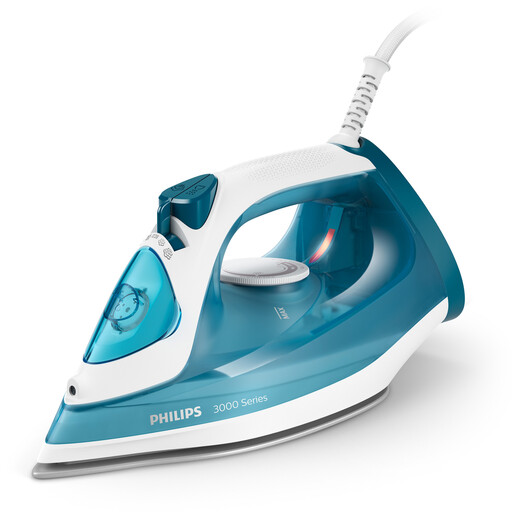
Why This Fits Their Persona: A practical choice for smaller homes, students or occasional ironing, with a 1.2kg body and a 300ml tank for routine clothing care.
Its specifications show both continuous steam of up to 30g/min and a steam boost of up to 140g, rather than relying on a single headline figure.
Ceramic soleplate, approximately 35-second heat-up, Drip Stop and built-in Calc Clean slider.
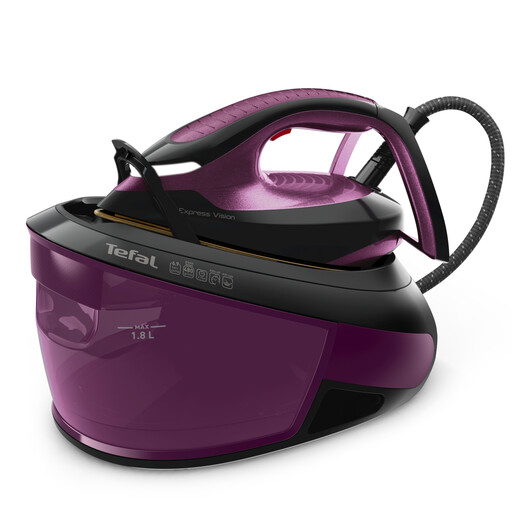
Why This Fits Their Persona: Suitable for busy UK households wanting a larger tank, steady steam and reduced interruptions during substantial laundry sessions.
The 1.8L removable tank, anti-drip system and removable scale collector address refill and maintenance issues.
6.9-bar pressure, 130g/min continuous steam, 480g boost, vertical steaming and an Eco mode.
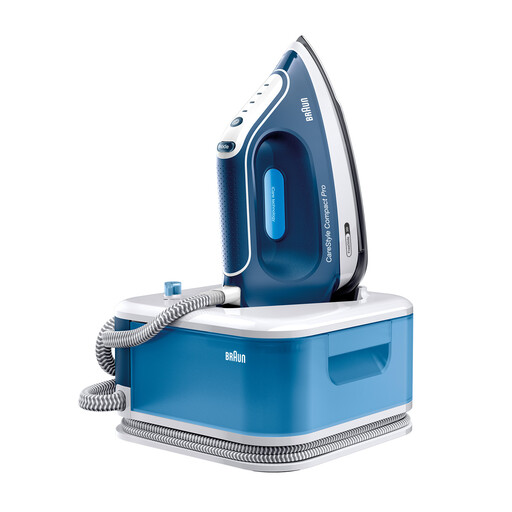
Why This Fits Their Persona: A match for frequent ironers dealing with thick cotton, denim, linen, bedding or large weekly laundry loads.
Its 7.5-bar pressure, 125g/min continuous steam and 1.5L removable tank provide clearer context than a steam-boost figure alone.
550g steam shot, FreeGlide 3D EloxalPlus soleplate and iCare temperature technology.
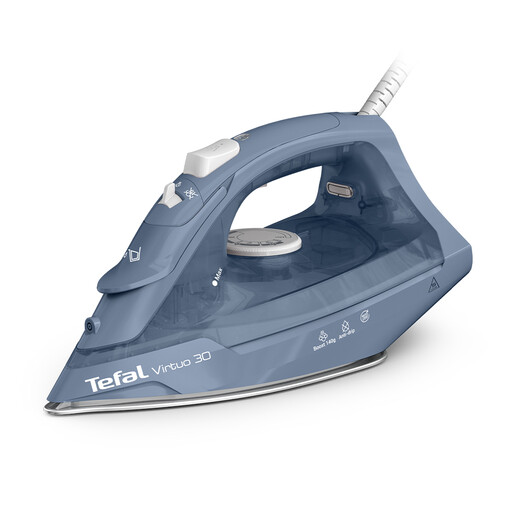
Why This Fits Their Persona: Designed for people who want a lightweight iron ready quickly for daily shirts, uniforms and smaller laundry piles.
Its 30-second heat-up, 240ml tank and 30g/min continuous steam make its intended everyday use clear.
Ceramic soleplate, 140g/min boost, vertical steaming, anti-drip protection and auto shut-off.
We have compiled a complete, real-time list of products that fully satisfy these strict selection criteria and UK safety regulations.
It can be worthwhile if you iron several loads each week, regularly handle thick fabrics or want a larger tank and steadier steam flow. For occasional ironing, a standard steam iron is generally easier to store and quicker to set up.
Use the water type specified in the product manual. Some models are designed for ordinary tap water, while others advise distilled, demineralised or softened water. Emptying the tank after use and following the recommended descaling routine can help limit scale build-up.
Running cost depends on wattage, heat-up time, ironing duration and the mode selected. A 2,400W appliance does not necessarily draw that amount continuously throughout a session. To reduce unnecessary consumption, prepare garments in batches, use an Eco setting where appropriate and switch the appliance off when finished.